wood lily Care (Lilium philadelphicum)

Also known as: Western Red Lily, Western Wood Lily, Prairie Lily
wood lily

About wood lily

Wood lily, Lilium philadelphicum, is a perennial wildflower native to North American prairies, open woods, and sandy meadows. It grows from a bulb and typically forms a single upright stem.

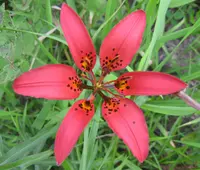
The plant is known for its bright orange to reddish, upward-facing flowers with dark spots and narrow, whorled leaves. It usually stays compact and does not spread aggressively.

Wood lily prefers sunny, well-drained sites with slightly acidic, low-fertility soil and consistent, moderate moisture. It can be moderately challenging for beginners, mainly because it dislikes root disturbance and poorly drained conditions, so learning how to care for wood lily helps long-term success.

Main Plant Requirements

Care Difficulty

Moderate Care

Light Preference

Full Sun

Water Requirements

Moderate Water

Temperature Preference

Cold Hardy

Hardiness Zone

3–8

Soil Texture

Sandy, Loamy, Rocky

Soil pH

Acidic (5.5–6.5), Slightly acidic (6.5–7.0)

Soil Drainage

Well-drained

Fertilization

Minimal (feed rarely)

Get Personalized Care Plan

Scan your plant to receive care tips personalized for your specific plant

Available on iOS and Android

How to Care for the wood lily

This North American native lily thrives in open, sunny sites with only light shade.

  • Provide 6–8 hours of direct sun daily; morning sun with light afternoon shade is ideal in hotter regions.
  • Tolerates bright, dappled shade for part of the day, but flowering decreases if direct sun falls below about 4 hours.
  • Avoid deep shade, which leads to weak, floppy stems, and monitor for leaf scorch during extreme heat or reflected midday sun; adjust exposure seasonally as nearby vegetation leafs out.

This species prefers evenly moist but never waterlogged soil during the active growing season.

  • Water when the top 3–5 cm of soil feels dry, focusing on the root zone rather than overhead foliage to reduce disease risk.
  • Use well-drained, sandy or loamy soil; standing water or heavy clay increases bulb rot and yellowing, even if surface soil looks dry.
  • In spring and early summer, monitor more closely during dry spells; reduce watering after flowering as foliage dies back, watching for wilting or crisp leaf tips as signs of underwatering.

This hardy lily tolerates a wide temperature range but grows and flowers best in moderate conditions.

  • Active growth is strongest in 60–75°F (16–24°C); cooler spring temperatures slow emergence but do not usually harm established bulbs.
  • Dormant bulbs withstand winter cold down to about -30°F (-34°C) under insulating soil or mulch, making the plant suitable for many northern climates.
  • During hot spells above 85°F (29°C), soil drying accelerates and flower longevity decreases, so provide mulch and slight afternoon shade to limit heat stress.

This lily handles typical outdoor humidity but benefits from slightly moist air in hot, dry regions.

  • Target 40–60% humidity, which most temperate outdoor locations naturally provide.
  • Plant in groups or near other perennials to slightly buffer very dry, windy air around wood lily foliage.
  • Watch for brown, crisp leaf tips in prolonged dry heat and mitigate by mulching soil and watering consistently at the root zone.

This species prefers loose, well‑aerated mineral soil that drains quickly yet does not dry to dust.

  • Use a sandy or sandy‑loam mix with 20–30% compost to provide nutrients without becoming heavy.
  • Ensure sharp drainage by incorporating coarse sand or fine gravel, especially in clay‑prone sites.
  • Aim for slightly acidic to neutral pH, roughly 5.5–7.0, avoiding liming unless soil is very acidic.
  • Avoid waterlogged, compacted, or peat‑heavy mixes that hold standing moisture around the bulbs.

This lily can be grown in containers, but the pot must support its deep, upright growth and avoid waterlogging.

  • Choose a tall container at least 30 cm deep so the bulbs sit well below the surface while roots can extend downward.
  • Select a heavy or weighted pot to prevent tipping when stems are in flower and exposed to wind.
  • Use a fast‑draining mix and elevate the pot on feet or bricks so drainage holes never sit in collected runoff.

This North American native needs only modest feeding, as wild wood lily typically grows in lean soils.

  • Apply a light layer of compost or leaf mold around emerging shoots in early spring, avoiding direct contact with stems.
  • Use a balanced, slow-release fertilizer (around 10-10-10) once in spring at half strength for container-grown plants.
  • Do not feed again after midsummer, so bulbs can harden off and prepare for dormancy.
  • Avoid fertilizing during fall and winter, when growth is dormant and nutrient uptake is minimal.

Lilium philadelphicum benefits from light, targeted pruning to maintain bulb strength and clean growth.

  • In late summer, deadhead spent flowers by cutting just below the seed pod to conserve energy in the bulb.
  • Remove yellow or damaged leaves at the base with clean, sharp pruners to limit disease spread.
  • Allow green stems and foliage to die back naturally, then cut them to ground level once fully brown.
  • Avoid cutting healthy green growth midseason, as this reduces photosynthesis and weakens next year’s flowering.

Transplanting this species is more common than repotting, as Lilium philadelphicum prefers growing in open ground.

  • Plan to divide and transplant clumps every 3–5 years in fall, once stems have died back and bulbs are dormant.
  • Choose plants with crowded shoots or reduced flowering as a sign the bulbs need more space and fresh soil.
  • Lift bulbs gently with a fork, keeping roots and scales intact, and replant at the same depth in well-drained soil.
  • Water thoroughly after transplanting, then keep soil evenly moist but not saturated to reduce transplant shock.

Lilium philadelphicum is typically propagated by seed or division of established bulbs for genetic diversity and clump renewal.

  • Sow fresh seeds in fall in a cold frame or outdoors; natural winter chilling supports germination in spring.
  • For division, dig mature clumps in fall dormancy and separate firm, healthy bulbs by hand.
  • Replant divided bulbs promptly at their original depth in well-drained, slightly acidic to neutral soil.
  • Label seed-grown plants, as flowering may take several years and seedlings may differ slightly from the parent.

This lily is cold hardy in much of its native range and usually needs minimal winter care once established in the ground.

  • In cold climates, apply a 5–7 cm mulch layer of leaves or straw over the root zone after the soil cools.
  • Allow stems to die back naturally, then remove dry stalks to reduce overwintering pests and diseases.
  • For containers, move pots to a sheltered, unheated but frost-free or slightly insulated area to prevent root freeze-thaw damage.

Care Tips

Site rotation

Rotate planting spots every 3–4 years to reduce soil-borne disease and bulb decline, especially if plants have shown virus symptoms or chronic poor vigor.

Bulb depth marking

When planting or dividing, mark the soil with a small stake at bulb positions so future digging or weeding does not damage the shallow root system and bulbs.

Rodent protection

In areas with voles or chipmunks, plant bulbs in hardware cloth baskets with 0.5 in mesh so roots can grow out while bulbs stay protected from chewing.

Seed head management

Remove most spent flowers before seed pods swell to conserve energy in the bulbs, but leave a few pods on strong plants if seed collection or naturalizing is desired when growing wood lily.

Lean-stem support

In exposed, windy sites, place low, unobtrusive twiggy branches or short plant rings around young shoots in spring to keep the relatively short but upright stems from lodging in storms.

Common Pests and Diseases

Lily beetle

This pest feeds on leaves, buds, and flowers, leaving irregular holes and sometimes stripping stems bare. Symptoms include bright red adult beetles, slimy orange larvae, and black frass on foliage.

Solution

Hand-pick adults, larvae, and egg clusters from leaves and buds and destroy them, checking plants every few days in spring and early summer. For heavier infestations, use a targeted insecticide containing spinosad or neem on foliage, following label directions and avoiding bloom times to protect pollinators.

Botrytis blight

This disease causes brown spots on leaves and petals that may enlarge and develop gray, fuzzy mold in cool, wet weather. Symptoms include leaf yellowing, premature leaf drop, and spotted, distorted flowers.

Solution

Remove and discard affected leaves and flowers as soon as they appear, and avoid overhead watering to keep foliage dry. Improve spacing and air circulation, and in persistently wet conditions use a labeled fungicide for botrytis on emerging shoots and during prolonged rainy periods.

Basal bulb rot

This disease affects the base of the bulb and lower stem, leading to yellowing, stunted growth, and eventual collapse of the plant. Symptoms include soft, discolored bulb scales and a rotting, foul-smelling basal plate.

Solution

Dig up and discard severely affected bulbs, and avoid replanting lilies in the same heavily infested spot. Ensure excellent drainage, plant bulbs at the correct depth in well-drained soil, and avoid overwatering; treat nearby bulbs with a labeled bulb fungicide dust before replanting if basal rot has occurred in the bed.

Aphids

These insects cluster on stems, buds, and the undersides of leaves, sucking sap and causing curling, distortion, and sticky honeydew that can attract sooty mold. Infested plants may show reduced vigor and deformed flowers.

Solution

Spray plants with a strong stream of water to dislodge aphids and repeat every few days as needed. For persistent populations, apply insecticidal soap or horticultural oil, ensuring thorough coverage of shoot tips and leaf undersides while treating during cooler parts of the day to avoid leaf burn.

Lily mosaic virus

This disease causes mottled, streaked, or distorted leaves and may reduce flower size and number over time. Symptoms include irregular light and dark green patterns on foliage and general decline over several seasons.

Solution

Remove and destroy symptomatic plants, including bulbs, since virus-infected plants cannot be cured. Control sap-feeding insects such as aphids, avoid reusing tools on infected plants without cleaning, and obtain new bulbs from reputable, virus-indexed stock to maintain healthy stands of Lilium philadelphicum.

Interesting Facts

Native prairie specialist

This species is one of the few North American true lilies adapted to dry prairies and open sandy woods, often persisting as a relict where native grasslands have been fragmented.

Specialized pollinator visitors

The bright orange, spotted flowers with outward-facing petals are structured to attract and fit large diurnal pollinators such as swallowtail butterflies, which contact the anthers and stigma while feeding on nectar.

Seed and bulb strategy

It combines a perennial bulb with prolific seed production, allowing individual plants to survive for many years while slowly colonizing nearby suitable patches through wind-dispersed seeds.

Botan icon

Did you know?

In several parts of its range, this lily is considered a conservation concern or legally protected, because widespread habitat loss of native prairies and open woodlands has caused significant local declines despite the species once being common.

FAQs about wood lily

Lack of flowering often comes from too much shade, nutrient-poor or very dry soil, or bulbs planted too deep. Stress from mowing, foot traffic, or transplanting can also reduce blooms for several seasons while the plant recovers.

Grow Healthy Plants with Botan Care

Keep your plants happy and healthy with plant identification, disease detection, and easy care guidance.

Botan plant care app — identify plants on mobile

Explore More Plants