dwarf huckleberry Care (Gaylussacia dumosa)

Also known as: Gopherberry
dwarf huckleberry

About dwarf huckleberry

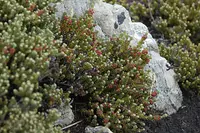
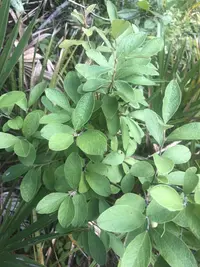
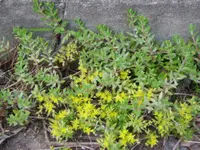
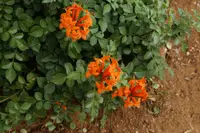
Dwarf huckleberry (Gaylussacia dumosa) is a small, deciduous shrub in the heath family, related to blueberries and cranberries. It usually forms low, compact clumps with fine branches and small leaves.

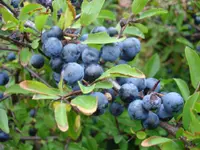
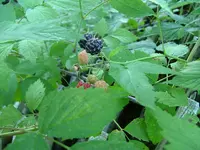
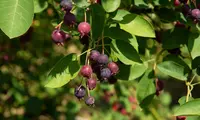
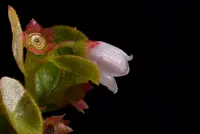
This species occurs naturally in eastern North America, often in sandy, acidic soils of pine barrens, bog edges, and open woodlands. It produces small white to pinkish bell-shaped flowers followed by dark blue to nearly black berries.

The plant is generally slow-growing but long-lived, with good cold tolerance and moderate drought resistance once established. To care for dwarf huckleberry, it helps to provide acidic, well-drained soil, consistent moisture, and sun to light shade, similar to other heath family shrubs.

Main Plant Requirements

Care Difficulty

Moderate Care

Light Preference

Partial Sun

Water Requirements

Regular Water

Temperature Preference

Cold Hardy

Hardiness Zone

3–8

Soil Texture

Sandy, Peaty, Organic-rich

Soil pH

Strongly acidic (4.5–5.5), Acidic (5.5–6.5)

Soil Drainage

Moist but well-drained

Fertilization

Minimal (feed rarely)

Get Personalized Care Plan

Scan your plant to receive care tips personalized for your specific plant

Available on iOS and Android

How to Care for the dwarf huckleberry

This low shrub prefers bright conditions that mimic open, acidic woodland edges.

  • Provide 4–6 hours of direct morning sun with light afternoon shade; filtered light under high, open trees suits dwarf huckleberry well.
  • Tolerates partial shade, but flowering and fruiting decline if it receives less than 3–4 hours of sun per day.
  • In hot summers, protect from intense afternoon sun to prevent leaf scorch; in cooler seasons, slightly increased direct light supports compact growth.

This species is adapted to consistently moist, acidic soils without prolonged flooding.

  • Allow the top 2–4 cm of soil to become just slightly dry, then water enough to moisten the root zone without leaving standing water.
  • During spring and summer growth, increase watering frequency, but in fall and winter let the soil surface dry a little more to reduce rot risk.
  • Yellowing, soft leaves often indicate overwatering or poor drainage, while dull, drooping foliage and dry, brittle twig tips suggest the plant needs water.

This shrub is naturally cold hardy but still benefits from moderate growing temperatures.

  • Active growth is strongest at 60–75°F (16–24°C), matching cool to mild woodland conditions.
  • Mature plants tolerate winter lows near 0°F (-18°C) when fully dormant, but young Gaylussacia dumosa plants should be protected from sudden deep freezes.
  • In summer, plants handle up to about 85°F (29°C) if soil stays moist; prolonged hotter, dry periods can stress foliage and reduce berry production.

This species prefers moderately moist air but usually adapts to typical outdoor humidity in its range.

  • Aim for 40–60% humidity, which matches most temperate outdoor conditions where dwarf huckleberry naturally grows.
  • Leaves that brown at the edges or curl while soil stays moist can indicate air that is too dry or wind exposure stress.
  • In exposed, dry sites, increase local humidity by using organic mulch and sheltering plants from drying winds rather than misting.

This heathland shrub needs acidic, moist, well-drained soil to thrive.

  • Use a loose, sandy to sandy-loam mix rich in organic matter, such as 50–70% peat or fine pine bark with added sand for structure.
  • Keep pH acidic, ideally 4.0–5.5, similar to conditions favored in Gaylussacia dumosa care, and avoid adding lime or wood ash.
  • Ensure rapid drainage by avoiding clay-heavy subsoils; elevate beds or use raised mounds where natural drainage is poor.
  • Improve aeration by incorporating coarse sand or fine pine bark, and avoid compacting the surface with heavy foot traffic or machinery.

This species can be grown in containers for a time if the pot closely mimics its naturally acidic, well-drained conditions.

  • Choose a deep, tall container so roots can grow downward and the lower profile stays cooler and evenly moist.
  • Use a thick-walled, non-glazed or insulated pot to reduce rapid moisture swings and protect roots from heat and cold stress.
  • Stabilize the container with weight at the base or by grouping pots, since the shrubby top growth can make tall pots prone to tipping in wind.

Native Gaylussacia dumosa usually needs minimal fertilization when grown in suitably acidic, organic soil.

  • In poor or sandy soils, apply a light layer of compost around the root zone once in spring.
  • Use an acid-forming, balanced NPK fertilizer (such as 10-10-10) at 1/2 strength if growth is weak.
  • Feed at most 1–2 times during the growing season; avoid summer overfeeding.
  • Do not fertilize in late fall or winter to prevent soft, cold-sensitive growth.

Gaylussacia dumosa benefits from light, periodic pruning to maintain a compact, productive shrub.

  • Best time is late winter to early spring, before new growth starts.
  • Remove dead, diseased, or damaged wood with clean, sharp bypass pruners.
  • Thin out crowded interior stems to improve light penetration and airflow.
  • Shorten overly long shoots to refine shape and encourage bushier new growth.

This species is usually grown in the ground, so care focuses on careful transplanting rather than frequent repotting.

  • Transplant in early spring or early fall, when temperatures are mild and soil is moist.
  • Move plants only when necessary, such as poor performance or site change, typically every several years.
  • Look for signs like very slow growth, poor foliage, or roots circling a container-grown plant.
  • Dig a wide root ball, keep roots shaded and moist, then replant at the same depth and water thoroughly.

Gaylussacia dumosa is most often propagated by semi-ripe cuttings or by seed for restoration and native plantings.

  • Take semi-ripe cuttings in late summer; use 5–8 cm shoots with a few leaves remaining.
  • Dip cut ends in rooting hormone and place in a sharply drained, acidic medium under high humidity.
  • Provide bright, indirect light and stable moisture at 65–75°F until roots form.
  • Sow cleaned seeds in fall outdoors or cold-stratify indoors, then surface-sow in acidic, well-drained mix.

This shrub is cold hardy in much of its native range and generally needs only basic winter care.

  • Tolerates typical frost in USDA zones 5–8 once established.
  • Apply a 5–8 cm layer of acidic organic mulch over the root zone in late fall.
  • Avoid heavy pruning or high-nitrogen feeding late in the season, which encourages tender growth.
  • For container plants in colder climates, move pots into a sheltered, unheated but frost-moderated area.

Care Tips

Soil acidity checks

Test soil pH every 1–2 years and keep it in the 4.0–5.5 range, adjusting with elemental sulfur or acid-forming fertilizer if the reading drifts higher.

Mycorrhiza support

When planting or transplanting, dust the root zone with an ericoid mycorrhizae inoculant to improve nutrient uptake in the characteristically poor, sandy soils this species prefers.

Mulch like heathland

Maintain a 5–8 cm layer of pine needles, shredded conifer bark, or oak leaves around the shrub to mimic its native heath habitat, buffering soil temperature and helping preserve acidity.

Firebreak spacing

In fire-prone regions, space plants with at least 60–90 cm between mature shrubs and clear dry debris annually so the low, twiggy growth does not become a continuous fuel bed.

Targeted rejuvenation

Every 3–4 years, thin out a portion of the oldest, most twiggy stems at ground level during late winter to stimulate new, more productive shoots, which is especially useful when growing dwarf huckleberry for fruit production.

Common Pests and Diseases

Blueberry maggot

This pest is a small fly whose larvae tunnel and feed inside the berries, causing them to soften, collapse, or drop early. Symptoms include tiny puncture marks on fruit skin and discolored, mushy berries with small white maggots inside.

Solution

Remove and dispose of infested or fallen berries promptly to break the life cycle, and avoid composting them. Use fine mesh netting over shrubs before fruit ripens, pick fruit regularly, and where pressure is high consider yellow sticky traps and, if needed, a targeted spinosad-based fruit spray applied according to local extension guidelines.

Blueberry gall midge

These insects are tiny flies whose larvae feed inside developing leaf and flower buds, leading to distorted, stunted, or blighted young shoots. Symptoms include browned or blackened tips and buds that fail to open normally in spring.

Solution

Prune and destroy affected shoot tips during the growing season to remove larvae and reduce future populations. Maintain good plant vigor with proper watering and mulching, and in sites with repeated issues time a targeted insecticide labeled for gall midges just before bud break, following local extension timing advice.

Mummy berry

This disease is a fungal infection that blights young shoots and flowers, then infects developing berries, which shrivel into hard, pale mummies. Symptoms include wilting, browned new growth in spring and small, light-colored berries that dry, harden, and drop to the ground or remain on the shrub.

Solution

Collect and destroy mummified berries on and under plants before spring to reduce spores, and apply a fresh mulch layer (5–8 cm) over fallen berries to block spore release. In sites with a history of mummy berry, monitor closely at bud break and use a registered fungicide timed to early shoot growth and bloom, combined with good spacing and airflow to keep foliage drier.

Phytophthora root and collar rot

This disease is caused by water-mold organisms that thrive in saturated, poorly drained, acidic soils favored by this species, leading to root decay and stem cankers near the soil line. Symptoms include gradual yellowing, reduced vigor, sudden wilt during warm periods, and brown, discolored roots or bark at the crown.

Solution

Improve drainage by planting on mounds or raised beds and avoid waterlogging, especially in heavy soils; do not plant in sites with standing water. Remove and destroy severely affected plants, and in high-value plantings with documented Phytophthora use resistant rootstocks where available and consider a phosphite-based soil drench applied according to label directions.

Leaf spot complex

These diseases are caused by several fungi that create small tan, red, or dark spots on leaves, sometimes with purple margins, which can merge and lead to premature leaf drop. Symptoms include scattered spotting, more intense in the lower canopy and in humid, shaded, or poorly ventilated sites common to heathland species.

Solution

Rake and dispose of fallen leaves in autumn to reduce fungal spores, and thin nearby vegetation to improve air movement and light penetration. During prolonged wet seasons or where Gaylussacia dumosa plant care is challenging due to poor airflow, a preventative fungicide labeled for blueberry leaf spots can be applied in early spring, combined with careful overhead watering avoidance.

Interesting Facts

Stem shows wintergreen scent

When the twigs of this shrub are crushed, they often release a faint wintergreen-like aroma due to aromatic compounds, a feature that helps field botanists separate it from some similar ericaceous shrubs.

Hairy, resin-dotted leaves

The leaves are characteristically pubescent (finely hairy) and dotted with tiny resin glands, which give the foliage a slightly rough texture and are a key diagnostic trait in identifying this species in the field.

Prefers nutrient-poor sands

This species is especially common on dry, acidic, nutrient-poor sandy soils in coastal plains and pine barrens, illustrating its adaptation to low-fertility, well-drained habitats where many other shrubs perform poorly.

Botan icon

Did you know?

Gaylussacia dumosa often co-occurs with both blueberries (Vaccinium spp.) and other huckleberries in fire-prone ecosystems, and its ability to resprout from underground structures after burning helps it persist in regularly burned pine barrens and heathlands.

FAQs about dwarf huckleberry

The small dark berries are edible and are traditionally used fresh, cooked, or in preserves. Flavor is mild to tart. Only harvest ripe, dark fruits and avoid plants growing in contaminated soils or road edges.

Grow Healthy Plants with Botan Care

Keep your plants happy and healthy with plant identification, disease detection, and easy care guidance.

Botan plant care app — identify plants on mobile

Explore More Plants