flowering quince Care (Chaenomeles speciosa)

Also known as: Chinese quince, Japonica
flowering quince

About flowering quince

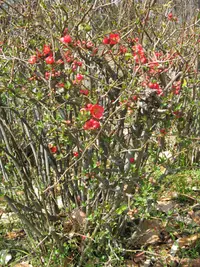
Flowering quince, Chaenomeles speciosa, is a deciduous shrub grown mainly for its early spring flowers. It usually forms a dense, thorny thicket with arching branches. Blooms appear on bare stems in late winter to early spring, in shades of red, pink, or white, followed by small, hard fruits. The plant is native to China and has been widely cultivated in temperate regions as a hedging and ornamental shrub. It tolerates a range of soils and urban conditions, which makes it relatively straightforward to care for flowering quince, provided it receives good light and moderate moisture.

Main Plant Requirements

Care Difficulty

Easy Care

Light Preference

Full Sun

Water Requirements

Moderate Water

Temperature Preference

Cold Hardy

Hardiness Zone

4–8

Soil Texture

Sandy, Loamy, Clay

Soil pH

Acidic (5.5–6.5), Slightly acidic (6.5–7.0)

Soil Drainage

Well-drained

Fertilization

Minimal (feed rarely)

Get Personalized Care Plan

Scan your plant to receive care tips personalized for your specific plant

Available on iOS and Android

How to Care for the flowering quince

This deciduous shrub needs plenty of bright outdoor light to form strong flowering wood and abundant buds.

  • Provide 6–8 hours of direct sun daily; morning sun with light afternoon shade is ideal in hot summer regions.
  • It tolerates light partial shade (3–4 hours sun), but flowering quince will bloom less and grow more open and leggy.
  • In very hot climates, protect from intense late-afternoon sun to reduce leaf scorch and flower fade, especially on reflective sites.

This shrub prefers evenly moist, well-drained soil, especially during establishment and dry spells.

  • During the first 1–2 growing seasons, water when the top 3–5 cm of soil is dry, then apply a slow, deep soak to wet the root zone.
  • Once established, Chaenomeles speciosa tolerates short dry periods; in summer drought, water when leaves start to dull or slightly droop.
  • Avoid soggy conditions; soil that stays wet, smells sour, or causes yellowing, soft leaves and dieback indicates poor drainage and overwatering.

This hardy shrub is adapted to temperate climates with cold winters and warm summers.

  • Active growth and flowering perform best around 55–75°F (13–24°C), with normal outdoor spring and fall fluctuations tolerated.
  • The plant is cold-hardy, often down to about -10°F to -20°F (-23°C to -29°C); flower buds may still be damaged by sudden late frosts.
  • In summer, it copes with 85–95°F (29–35°C) if soil moisture is maintained; prolonged extreme heat with drought can reduce flowering and vigor the following year.

Humidity is not a critical factor for Chaenomeles speciosa, which thrives in typical outdoor conditions.

Chaenomeles speciosa prefers moderately fertile, well-drained soil that does not stay waterlogged after rain or irrigation.

  • Use a loamy or sandy-loam soil with some organic matter to support root growth and flowering.
  • Aim for slightly acidic to neutral pH, roughly 6.0–7.0, to keep nutrient uptake efficient.
  • Blend garden soil with compost and coarse sand or fine gravel to improve drainage and aeration.
  • Avoid compacted clay or sites where water stands, which encourage root rot and weak growth.

This species can be grown in containers outdoors if the pot is large and stable enough.

  • Choose a wide, heavy container to balance the shrub’s spreading, sometimes top-heavy growth and reduce tipping in wind.
  • Select a deep pot that allows a substantial root system to anchor, as shallow containers dry too fast and stress the plant.
  • Use thick-walled or terracotta pots in hot climates to moderate root temperature and prevent rapid moisture fluctuations.

This shrub flowers well with modest feeding, mainly to support steady growth and bloom quality.

  • Apply a balanced slow‑release fertilizer (such as 8‑8‑8 or 10‑10‑10) once in early spring as new growth begins.
  • Use a light rate, about half the label recommendation, to avoid lush, weak shoots.
  • Supplement with a thin layer of compost around the root zone 1–2 times during the growing season.
  • Do not feed flowering quince in late fall or winter, when the plant is dormant.

Thoughtful pruning keeps Chaenomeles speciosa compact, healthy, and free‑flowering.

  • Time main pruning for just after spring flowering so next year’s flower buds are not removed.
  • Cut out dead, damaged, or crossing branches at the base using clean, sharp bypass pruners or loppers.
  • Thin some of the oldest stems to open the center, improving light penetration and air flow.
  • Shorten overly long shoots to shape the shrub, cutting back to an outward‑facing bud or side branch.

This shrub is usually grown in the ground, so care focuses on transplanting rather than frequent repotting.

  • Transplant in late fall or early spring when the plant is dormant and soil is workable.
  • Look for signs such as roots circling in the nursery container or very slow growth before moving it.
  • Shift container plants only every few years, into a pot 2–5 cm wider, using a free‑draining shrub mix.
  • Water deeply before and after transplanting, keep the root ball intact, and shade temporarily to reduce stress.

Chaenomeles speciosa is commonly propagated vegetatively to keep desired flower color and growth habit.

  • Take semi‑ripe stem cuttings in midsummer, using non‑flowering shoots with 2–3 nodes.
  • Insert cuttings into a moist, free‑draining mix under high humidity and bright, indirect light until rooted.
  • Try simple layering in spring by pinning a low, flexible stem under soil and severing once roots form.
  • Seeds can be sown after a cold stratification period, but offspring may vary from the parent plant.

This shrub is generally cold hardy in much of the US and needs only modest winter care outdoors.

  • Chaenomeles speciosa tolerates typical winter frosts in USDA zones around 5–8.
  • Apply a 5–8 cm mulch layer over the root zone in late fall, keeping it slightly away from the stems.
  • In very cold or exposed sites, wrap young shrubs with burlap to limit wind and freeze damage.
  • Move container‑grown plants to a sheltered, unheated but frost‑protected spot if winters are severe.

Care Tips

Flower-bud protection

In late winter, cover branches with heavy flower bud sets during hard frosts using breathable frost cloth or an old bedsheet to reduce bud loss and ensure a stronger spring display.

Spur management

After flowering, thin out some of the oldest, most congested flowering spurs along the branches so younger shoots receive more light and air, which improves bloom quality and reduces fungal issues over time.

Thorn-safe handling

When working around the plant, use thick leather or synthetic gauntlet gloves and long sleeves, and prune from the outside in small sections to avoid deep scratches from the dense thorns.

Barrier hedging use

If using the shrub as a security hedge, stagger plants in a zigzag double row spaced 45–60 cm apart and allow some basal shoots to remain unpruned to create a dense, thorny barrier.

Quince fruit hygiene

Collect and remove fallen fruits and heavily blemished or mummified fruits from the plant and soil surface in late summer and fall to reduce overwintering pests and diseases and improve long-term health when growing flowering quince.

Common Pests and Diseases

Fire blight

This disease causes blackened, scorched-looking shoots and flowers that wilt and bend into a characteristic shepherd’s crook shape. Symptoms include sudden dieback of young growth, often starting at blossoms and moving down the branch.

Solution

Prune out infected shoots 20–30 cm below visible damage during dry weather, disinfecting tools between cuts, and destroy all infected material. Avoid heavy nitrogen fertilization, improve airflow through regular thinning, and in areas with a history of fire blight, consider preventive copper or streptomycin sprays at bloom time according to local extension recommendations as part of broader flowering quince care instructions.

Quince rust

This disease produces bright orange to rust-colored spots, swellings, or distorted tissues on leaves, young shoots, and especially fruit. Symptoms include rough, corky fruit lesions that render fruit inedible and reduce ornamental value.

Solution

Remove and destroy infected fruit and twigs as soon as noticed and prune to open the canopy for better airflow and faster drying. Where the disease is recurrent, remove nearby alternate host junipers if practical and use labeled preventive fungicide sprays at early leaf-out and pre-bloom in wet springs.

Apple scab

This disease causes olive-green to dark, velvety spots on leaves and fruit that later turn brown and may crack. Symptoms include premature leaf drop and blemished, misshapen fruit in humid seasons.

Solution

Rake and dispose of fallen leaves and infected fruit in autumn to reduce overwintering spores and thin branches to improve light and air movement. In regions with consistent spring humidity, apply a suitable fungicide beginning at bud break and repeat through early leaf expansion, following label directions for ornamental quince.

Aphids

These insects cluster on young shoots and buds, sucking sap and causing curled, sticky, and distorted new growth. This pest also excretes honeydew that can lead to black sooty mold on leaves and stems.

Solution

Blast colonies off with a strong stream of water, especially on undersides of leaves, and encourage natural predators such as lady beetles by avoiding broad-spectrum insecticides. For persistent infestations, use insecticidal soap or horticultural oil, sprayed thoroughly over affected areas in cool, dry conditions.

Spider mites

These pests create fine webbing on leaves and cause a speckled, dull, or bronzed appearance, especially during hot, dry weather. This pest feeds on leaf cells, leading to gradual leaf decline and possible premature drop.

Solution

Increase humidity around the shrub with regular hosing and wash foliage thoroughly, focusing on leaf undersides, to physically remove mites. If damage continues, apply horticultural oil or a miticide labeled for ornamental shrubs, repeating as directed and avoiding applications during high heat to prevent leaf burn.

Interesting Facts

Early spring nectar source

This species often flowers in late winter to very early spring, providing one of the first reliable nectar and pollen sources for bees and other pollinators when few other shrubs are in bloom.

Edible but astringent fruit

Its small, hard pomes are technically edible but very astringent when raw; they are traditionally cooked with sugar or blended with apples to make highly aromatic jellies and preserves.

High pectin content

The fruit has naturally high pectin levels, which help jams and jellies set firmly, so it has long been valued as a flavoring and gelling aid in fruit preserves in Europe and East Asia.

Botan icon

Did you know?

Chaenomeles speciosa has been widely used in breeding ornamental hybrids, especially with Chaenomeles japonica, creating many modern flowering quince cultivars that combine large early blossoms with a compact, hedge-friendly habit.

FAQs about flowering quince

Sparse flowering often comes from heavy pruning at the wrong time, excess shade, or vigorous new growth from high-nitrogen fertilizer. Prune just after spring bloom, maintain good light, and avoid overfertilizing to protect flower buds.

Grow Healthy Plants with Botan Care

Keep your plants happy and healthy with plant identification, disease detection, and easy care guidance.

Botan plant care app — identify plants on mobile

Explore More Plants