


Encourage Bushy Shape
Pinch or lightly tip-prune young shoots in late spring to encourage branching and a denser, more floriferous shrub, rather than allowing a few long, leggy stems to dominate.

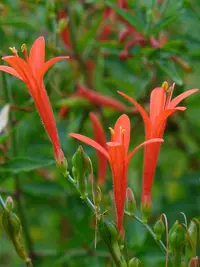
Wright's desert honeysuckle, Anisacanthus quadrifidus, is a compact, woody shrub native to arid regions of Texas and northern Mexico. It belongs to the acanthus family and is adapted to hot, dry conditions.
The plant typically forms an upright, branching clump with narrow leaves and many bright orange to red tubular flowers that attract hummingbirds. Its fine texture and long blooming season make it popular in waterwise and desert-style gardens.
This species tolerates heat, drought, and poor, rocky soils, which makes it relatively easy to maintain once established. Gardeners who learn how to care for Wright's desert honeysuckle usually find it a durable option for sunny, low-maintenance landscapes.

Care Difficulty
Easy Care

Light Preference
Full Sun

Water Requirements
Low Water

Temperature Preference
Warm Climate

Hardiness Zone
7–11

Soil Texture
Sandy, Loamy, Rocky

Soil pH
Slightly acidic (6.5–7.0), Slightly alkaline (7.0–7.5)

Soil Drainage
Well-drained

Fertilization
Minimal (feed rarely)
Scan your plant to receive care tips personalized for your specific plant
Available on iOS and Android
This sun-loving shrub performs best with strong, direct light in dry, open sites.
This drought-tolerant shrub prefers infrequent, deep watering once established.
This species is adapted to hot, dry climates and tolerates a wide temperature range once established.
This desert shrub tolerates very low humidity and rarely needs special moisture management indoors or outdoors.
This species prefers mineral, sharply drained soil that mimics its native rocky desert habitat.
This species is suitable for container growing in hot, sunny locations when drainage and stability are well managed.
This desert-adapted shrub needs only light feeding in most garden soils, so fertilizer use should stay modest.
Thoughtful pruning keeps Anisacanthus quadrifidus compact, long-lived, and floriferous.
This species is most often grown in the ground, with transplanting more common than container repotting.
New plants are usually produced from semi-hardwood cuttings or seeds taken from established shrubs.
This desert shrub is fairly cold hardy in mild climates but benefits from light winter precautions in colder areas.

Plant Health Check
Not sure what's wrong with your plant? Check your plant's health inside the app.
Wright's desert honeysuckle produces narrow, tubular orange to red flowers that match the bill shape and color preferences of hummingbirds, making it a key nectar source for species like the black-chinned and ruby-throated hummingbird in arid habitats.
This species has small, sometimes seasonally reduced leaves and a deep, fibrous root system that together reduce water loss and allow the plant to survive intense sun, high temperatures, and long dry periods in the Chihuahuan Desert region.
In its native range of Texas and northern Mexico, this shrub often responds to summer monsoon rains with flushes of new growth and flowers, a strategy that synchronizes nectar and seed production with the brief periods when moisture and pollinator activity are highest.

Genetic and field studies have shown that Wright's desert honeysuckle hybridizes naturally with closely related Anisacanthus species in overlap zones, creating intermediate forms that can make field identification difficult and may contribute to local variation in flower color and form.
This shrub is highly attractive to hummingbirds, butterflies, and many native bees due to its tubular orange-red flowers and long blooming season. It works well in wildlife or pollinator gardens in warm, dry climates.
Keep your plants happy and healthy with plant identification, disease detection, and easy care guidance.

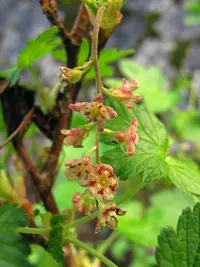
mapleleaf currant
Ribes acerifolium
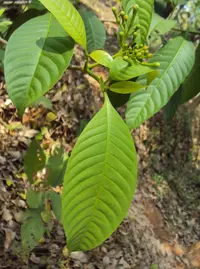
alternate-leaved crape jasmine
Tabernaemontana alternifolia
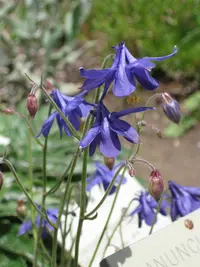
Einsel's Columbine
Aquilegia einseleana
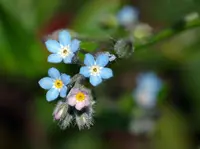
wood forget-me-not
Myosotis sylvatica
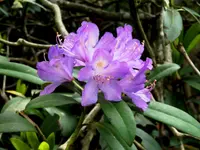
rhododendron
Rhododendron ponticum
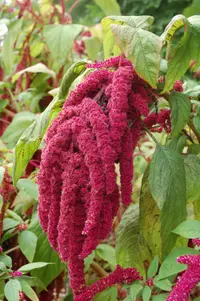
love-lies-bleeding
Amaranthus caudatus
Aralia decaisneana
Aralia decaisneana
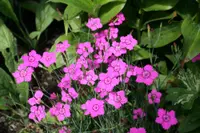
Maiden pink
Dianthus deltoides