Use windbreaks
In exposed sites, install a low, permeable windbreak such as shrub companions or mesh fencing on the windward side to reduce flower and young fruit damage from spring winds.

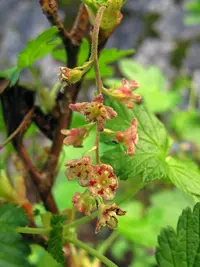
Mapleleaf currant, Ribes acerifolium, is a deciduous shrub native to western North America, often found in open forests and mountain slopes. It typically forms a rounded clump with lobed leaves that resemble small maple leaves and produces clusters of small, often reddish berries.
The plant has a generally hardy nature and tolerates cold, wind, and a range of soils, which makes it relatively straightforward to establish in suitable climates. It usually prefers full sun to light shade and moderately moist, well-drained soil.
Gardeners who want to care for mapleleaf currant benefit from its natural adaptability, but should still match its basic light and moisture needs for best growth and fruiting.

Care Difficulty
Moderate Care

Light Preference
Partial Sun

Water Requirements
Moderate Water

Temperature Preference
Cold Hardy

Hardiness Zone
4–8

Soil Texture
Loamy, Sandy, Rocky

Soil pH
Acidic (5.5–6.5), Slightly acidic (6.5–7.0)

Soil Drainage
Well-drained

Fertilization
Minimal (feed rarely)
Scan your plant to receive care tips personalized for your specific plant
Available on iOS and Android
This shrub prefers cool, bright sites with a balance of direct sun and light shade.
This species prefers consistent moisture in well-drained soil rather than frequent soaking.
This cold-hardy shrub is adapted to cool to moderate climates with distinct seasons.
This shrub handles a wide humidity range and rarely needs special humidity management outdoors.
This species prefers moderately moist, well-drained soil with a loose, crumbly structure.
This species can be grown in containers for small gardens or patios if the pot is chosen carefully.
This shrub is low-maintenance and usually needs only light feeding in average garden soil.
Ribes acerifolium responds well to light, timed pruning that maintains structure and fruiting wood.
This currant is usually grown in the ground, so focus on careful site planting and occasional transplanting rather than frequent repotting.
Ribes acerifolium is commonly propagated from cuttings and sometimes from seed for new plants.
This shrub is generally cold hardy and needs only modest winter care in most temperate climates.

Plant Health Check
Not sure what's wrong with your plant? Check your plant's health inside the app.
This currant has 3–5 lobed leaves that closely resemble small maple leaves, which is the origin of its common name mapleleaf currant.
It is native to cool, mountainous regions of western North America, where it grows on rocky slopes and open forests, showing good adaptation to short growing seasons and cold winters.
Its flowers and berries provide an important early-season resource for native pollinators and fruit-eating birds in high-elevation habitats, supporting local food webs before many other shrubs fruit.
Yes. The small spring flowers provide nectar and pollen for bees, native solitary bees, and some butterflies. Later, the berries offer food for birds, so this shrub supports a diverse range of garden wildlife.
Keep your plants happy and healthy with plant identification, disease detection, and easy care guidance.