Containment management
Install physical barriers or dedicate an isolated bed before planting, as this species spreads aggressively by seed and root suckers, and remove flower heads before seed set to limit unwanted colonization.

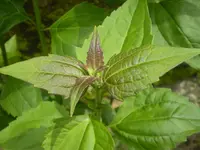
Jack in the bush (Chromolaena odorata) is a fast-growing perennial shrub, often found along roadsides, fields, and disturbed areas in tropical and subtropical regions. It forms dense, bushy clumps with soft, triangular leaves that have a distinct smell when crushed and fluffy clusters of pale lilac to white flowers.
In suitable climates it can spread aggressively, which makes it invasive in many countries. It is generally tough and drought-tolerant once established, so learning how to care for Jack in the bush focuses more on controlling growth than keeping it alive.
It usually grows best in full sun to light shade, with well-drained soil and moderate moisture, but adapts easily to many conditions.

Care Difficulty
Easy Care

Light Preference
Full Sun

Water Requirements
Moderate Water

Temperature Preference
Tropical / Frost Sensitive

Hardiness Zone
10–12

Soil Texture
Sandy, Loamy, Organic-rich

Soil pH
Acidic (5.5–6.5), Slightly acidic (6.5–7.0)

Soil Drainage
Well-drained

Fertilization
Minimal (feed rarely)
Scan your plant to receive care tips personalized for your specific plant
Available on iOS and Android
Chromolaena odorata thrives in warm, bright outdoor conditions with ample direct light.
Chromolaena odorata prefers consistently moist but not soggy soil once established outdoors.
This species grows best in warm, frost-free climates with stable seasonal temperatures.
This species grows best in moderately humid air but tolerates a broad humidity range.
Chromolaena odorata thrives in light, well-aerated mineral soils that do not stay waterlogged.
This species can be grown in containers, mainly for controlled cultivation or to limit spreading.
Chromolaena odorata is a vigorous grower that usually needs only light feeding, especially when grown as Jack in the bush in the ground.
Pruning supports manageable size and denser growth in Chromolaena odorata, especially where it grows vigorously.
Management usually focuses on transplanting Chromolaena odorata outdoors rather than long-term container culture.
New Chromolaena odorata plants are commonly produced from seeds or stem cuttings in warm conditions.
Winter care depends on climate, since Chromolaena odorata is frost-sensitive and performs best in warm regions.

Plant Health Check
Not sure what's wrong with your plant? Check your plant's health inside the app.
This species releases allelopathic chemicals from its leaves and roots that inhibit the germination and growth of surrounding plants, which contributes to its success as an invasive weed in many tropical regions.
Its tiny achenes (dry fruits) each carry a tuft of hairs called a pappus, allowing them to be carried long distances by wind and rapidly colonize disturbed sites such as roadsides and abandoned fields.
After burning or cutting, the plant often resprouts vigorously from its base and root system, which makes long-term mechanical control difficult without follow-up management.

In several countries of West Africa and Southeast Asia, this species has become so widespread and damaging to crops and plantations that it is listed among the world’s worst tropical invasive weeds and is a priority target for biological control programs using carefully selected herbivorous insects from its native range in the Americas.
This species spreads very aggressively by wind-dispersed seeds and root fragments. In warm climates it quickly forms dense thickets, outcompeting other plants. Regular cutting and strict seed control are essential to limit its spread in gardens.
Keep your plants happy and healthy with plant identification, disease detection, and easy care guidance.