hairy Indian mallow Care (Abutilon grandifolium)

Also known as: hairy abutilon
hairy Indian mallow

About hairy Indian mallow

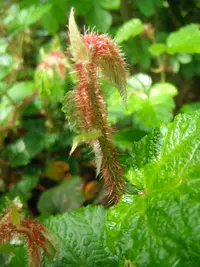
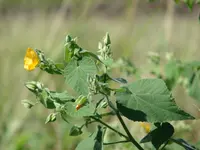
Hairy Indian mallow, Abutilon grandifolium, is a fast-growing, shrubby perennial from the mallow family. It often appears as a sprawling or upright bush with soft, hairy leaves and pale yellow, bell-shaped flowers.

This species is native to South America but has naturalized in many warm regions worldwide, sometimes behaving as a weed. It establishes quickly in open, disturbed sites and can become invasive in mild climates, which influences how to care for hairy Indian mallow in gardens.

The plant is generally easy to grow where frost is light, preferring full sun to light shade, moderately moist but well-drained soil, and protection from hard freezes.

Main Plant Requirements

Care Difficulty

Easy Care

Light Preference

Full Sun

Water Requirements

Moderate Water

Temperature Preference

Warm Climate

Hardiness Zone

9–11

Soil Texture

Sandy, Loamy, Organic-rich

Soil pH

Acidic (5.5–6.5), Slightly acidic (6.5–7.0)

Soil Drainage

Well-drained

Fertilization

Minimal (feed rarely)

Get Personalized Care Plan

Scan your plant to receive care tips personalized for your specific plant

Available on iOS and Android

How to Care for the hairy Indian mallow

Abutilon grandifolium grows best in bright, warm conditions with several hours of direct sun each day.

  • Provide 4–6 hours of direct sun daily, ideally with morning sun and light afternoon shade to reduce leaf scorch risk.
  • Tolerates partial shade, but flowering and compact growth decline if it receives less than about 3–4 hours of direct or strong filtered light.
  • In hot summers, protect hairy Indian mallow from harsh afternoon sun, using taller plants or structures to cast dappled shade.

Abutilon grandifolium prefers evenly moist, well-drained soil without staying saturated.

  • Water when the top 3–5 cm of soil feels dry, applying enough to moisten the root zone but allowing excess to drain away fully.
  • During hot, dry periods, expect to water more often, while in cooler seasons or rainy weather, extend intervals to prevent soggy soil.
  • Watch for yellowing, soft leaves as a sign of overwatering, and dry, curling leaves with wilt that does not improve after dusk as underwatering.

This species favors mild, frost-free climates and grows best with warm, stable temperatures.

  • Aim for active growth in 65–80°F (18–27°C), where foliage and flowering remain steady without excessive stress.
  • Protect from cold below 32°F (0°C); light frost may damage leaves and young stems, while repeated freezes can kill the plant to the base or entirely.
  • In very hot weather above 90°F (32°C), growth may slow, so combine good soil moisture with partial afternoon shade to limit heat stress.

This species prefers moderate humidity but adapts fairly well to typical indoor air.

  • Aim for 40–60% humidity to support steady growth and reduce leaf-edge browning.
  • It tolerates short spells of drier air, but prolonged humidity below 30% may cause leaf curl, crispy margins, and bud drop in hairy Indian mallow.
  • Increase humidity with a nearby humidifier, grouped plants, or a pebble tray, avoiding misting that keeps foliage wet for long periods.

This plant grows best in loose, well-drained, moderately fertile soil.

  • Use a loamy mix with 40–60% organic matter such as compost plus coarse material like perlite or sharp sand for drainage.
  • Ensure the structure stays crumbly, not compacted, so roots receive enough oxygen and excess water moves through quickly.
  • Target a slightly acidic to neutral pH around 6.0–7.0, which supports nutrient availability for Abutilon grandifolium.
  • Avoid heavy clay, waterlogged spots, or peat-only mixes; lighten dense soil with perlite, bark fines, or coarse sand to improve aeration.

This species is suitable for container growing when given enough root space and stable support.

  • Choose a heavy or wide-based pot to prevent the tall, shrubby top growth from tipping in wind or on balconies.
  • Select a container 30–40 cm wide with moderate depth to accommodate its spreading roots without causing constant dryness.
  • Use a fast-draining potting mix and ensure excess water can exit freely so the lower root zone does not stay saturated.

Abutilon grandifolium responds well to moderate feeding during the active growing season.

  • Use a balanced liquid fertilizer (such as 10-10-10) at half strength every 4–6 weeks in spring and summer.
  • Apply a thin layer of compost around the root zone once in spring to improve soil structure and nutrition.
  • For containers, a slow-release granular fertilizer can support steady growth without excessive flushing.
  • Reduce or stop feeding in late fall and winter when growth slows, especially in cooler conditions.

Pruning helps keep Abutilon grandifolium dense, manageable, and flowering well.

  • Best time for structural pruning is late winter or very early spring before vigorous new growth starts.
  • Remove dead, diseased, or crossing stems first, then thin crowded interior branches to improve light and airflow.
  • Shorten long, leggy shoots by up to one-third to encourage branching and more flower-bearing tips.
  • Use clean, sharp bypass pruners and make angled cuts just above outward-facing buds.

Hairy Indian mallow often grows in the ground, but young or container plants benefit from careful transplanting.

  • Transplant or shift to a larger pot in spring when roots circle the container base or growth becomes stunted.
  • Plan on moving container plants every 2–3 years into a pot only 1–2 in wider with good drainage holes.
  • Water thoroughly the day before, then slide the root ball out gently and loosen circling roots without tearing heavily.
  • Replant at the same soil level, firm gently, water well, and shade for a few days to limit transplant shock.

Abutilon grandifolium is commonly propagated by both seeds and softwood cuttings.

  • Sow fresh seeds in spring in a free-draining seed mix, keeping substrate lightly moist at 68–75°F.
  • Cover seeds very lightly or not at all, as light can support germination in this species.
  • Take 8–10 cm softwood or semi-ripe cuttings in late spring or summer from non-flowering shoots.
  • Insert cuttings into moist, airy mix, use optional rooting hormone, and maintain high humidity with bright, indirect light.

Winter care for Abutilon grandifolium depends strongly on local climate and planting method.

  • In mild climates without hard frost, plants can remain outdoors with minimal intervention.
  • In regions below about 25°F, apply 5–8 cm of organic mulch around the root zone in late fall.
  • Move container plants indoors or into a frost-free greenhouse before freezing nights and provide bright light.
  • Reduce watering in winter, keeping soil just slightly moist to prevent root rot in cool conditions.

Care Tips

Regular basal thinning

Remove a few of the oldest, woodiest stems at ground level each year to keep the shrub open, reduce self-seeding, and improve airflow around the remaining shoots.

Seed pod management

Deadhead spent flowers and remove forming seed pods before they ripen to limit invasive spread and to encourage the plant to direct more energy into new growth and flowering.

Wind and weight support

In windy sites or where stems become top-heavy, install discreet stakes or a low wire frame early in the season so shoots can grow through and gain support without snapping.

Root zone containment

In areas where this species is vigorous, install a deep root barrier or grow it in a large, heavy container to reduce unwanted suckering and make long-term population control easier.

Targeted pest scouting

Inspect the undersides of leaves and young shoots every 1–2 weeks for aphids, whiteflies, and spider mites, and treat small colonies promptly with a strong water spray or a labeled insecticidal soap as part of caring for hairy Indian mallow.

Common Pests and Diseases

Whiteflies

This pest is very common on hairy Indian mallow, especially in warm, sheltered spots and greenhouse conditions. These insects feed on sap, causing leaf yellowing, sticky honeydew, and sooty mold growth.

Solution

Reduce numbers by regularly shaking stems and using yellow sticky traps to catch adults, then spray the undersides of leaves with a firm stream of water or insecticidal soap every 5–7 days until populations drop. Remove heavily infested leaves and keep nearby weeds and volunteer Abutilon plants controlled to reduce reservoir populations, which is an important part of Abutilon grandifolium plant care outdoors and under cover.

Spider mites

This pest thrives on Abutilon foliage during hot, dry periods, especially on plants grown against walls or in containers. Symptoms include fine webbing, tiny pale stippling on leaves, and progressive leaf drop.

Solution

Increase humidity around the plant with regular hosing of foliage and avoid very dry, stagnant air, then wash both leaf surfaces thoroughly with water or insecticidal soap at 3–5 day intervals for several cycles. For severe cases, cut back and discard the most affected stems, and keep nearby dusty surfaces and stressed plants managed to discourage reinfestation.

Aphids

These insects cluster on young stems, buds, and leaf undersides, sucking sap and distorting new growth. Sticky honeydew and attendant ants are common around infested Abutilon plants.

Solution

Pinch or prune off heavily infested shoot tips, then rinse the plant with a strong but controlled stream of water to dislodge colonies. Follow up with horticultural oil or insecticidal soap on tender growth every 5–7 days as needed, and reduce ant activity around the plant so natural predators can reach the aphids.

Cercospora leaf spot

This disease has been recorded on Abutilon species and causes small, round to irregular brown spots that may merge, leading to premature leaf drop. Symptoms include more severe spotting on older leaves, especially in warm, humid weather or on crowded plantings.

Solution

Remove and dispose of affected leaves promptly and avoid overhead watering that keeps foliage wet for long periods. Improve air circulation by spacing or selectively thinning stems, water at soil level, and if the problem persists across seasons, apply a labeled copper or chlorothalonil fungicide according to directions during peak warm, humid periods.

Rust

This disease appears as raised orange to brown pustules on the underside of leaves, with pale or yellow spots on the upper surface. Symptoms include early leaf yellowing and drop, especially in sheltered, humid sites or in dense stands of hairy Indian mallow.

Solution

Prune and discard infected leaves and any self-sown Abutilon plants that act as disease reservoirs, then water at the base to keep foliage dry. Increase air movement, avoid overhead irrigation, and in persistent cases use a sulfur or other labeled rust fungicide on new foliage at the first sign of infection.

Interesting Facts

Wind‑dispersed seed fluff

This species produces many small seeds inside hairy capsules, and the attached silky hairs help the seeds travel long distances on the wind, which supports its spread in open, disturbed habitats.

Aggressive invasive shrub

Outside its native South American range, this plant is a declared or listed invasive species in several warm regions, including parts of Australia, New Zealand, and South Africa, where it forms dense thickets that displace native vegetation.

Malvaceae family traits

It belongs to the mallow family Malvaceae and shows typical family features such as palmate leaf veins, mucilaginous (slimy) sap, and five-petaled flowers with numerous stamens fused into a central column.

FAQs about hairy Indian mallow

This species self-seeds readily and can spread quickly, especially in warm climates with disturbed soil. In some regions it is considered invasive. Remove seed pods before they ripen and pull unwanted seedlings to keep it contained.

Grow Healthy Plants with Botan Care

Keep your plants happy and healthy with plant identification, disease detection, and easy care guidance.

Botan plant care app — identify plants on mobile

Explore More Plants