Shelter From Wind
Site plants behind a low hedge, fence, or rock border to break strong, drying winds that can scorch the fine foliage and cause branch dieback.

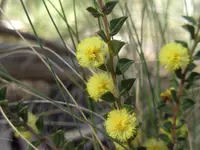
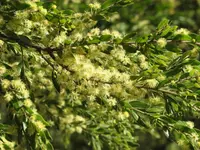
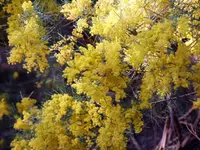
Ploughshare wattle (Acacia gunnii) is a small, compact shrub or low, spreading wattle with fine foliage and showy golden-yellow ball-shaped flowers. It typically forms a dense mound, making it suitable for rock gardens, native beds, or low hedging in mild climates.
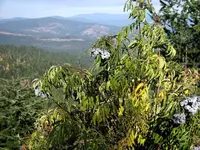
This species is native to southeastern Australia, where it grows in open woodland, heath, and rocky slopes. It is generally hardy and fast-growing once established, but young plants dislike waterlogged soil and poorly drained sites.
Acacia gunnii prefers full sun, moderately fertile, well-drained soil, and low to moderate moisture. Understanding how to care for ploughshare wattle mainly involves providing good drainage and avoiding heavy, constantly wet conditions.

Care Difficulty
Moderate Care

Light Preference
Full Sun

Water Requirements
Low Water

Temperature Preference
Warm Climate

Hardiness Zone
8–10

Soil Texture
Sandy, Loamy, Rocky

Soil pH
Acidic (5.5–6.5), Slightly acidic (6.5–7.0)

Soil Drainage
Well-drained

Fertilization
Minimal (feed rarely)
Scan your plant to receive care tips personalized for your specific plant
Available on iOS and Android
This Australian shrub prefers bright outdoor conditions with protection from harsh extremes.
This species prefers free-draining soil that dries slightly between waterings.
This hardy wattle grows best in cool to mild outdoor climates with moderate heat.
Acacia gunnii handles a wide humidity range but grows best in moderately dry air.
Acacia gunnii prefers lean, fast-draining mineral soil that does not stay wet.
This species can adapt well to container growing when drainage and root space are carefully managed.
Acacia gunnii is adapted to low-nutrient soils, so use light, infrequent feeding only to support container or young plants.
Pruning Acacia gunnii is mainly corrective, helping maintain a stable framework and good light penetration.
This species is more often planted in the ground, but container-grown plants or young stock may need careful transplanting.
New Acacia gunnii plants are most commonly raised from seed, with some growers also using semi-hardwood cuttings.
This species is moderately cold tolerant but benefits from basic winter precautions in cooler regions.

Plant Health Check
Not sure what's wrong with your plant? Check your plant's health inside the app.
This Tasmanian and southeastern Australian shrub naturally tolerates frosts and light snow, surviving brief drops below 20°F, which is unusual among many acacia species that prefer warmer, frost-free climates.
Instead of true leaves, it has small, hard, triangular phyllodes (leaf-like stems) with a sharp point, thought to reduce water loss and grazing, giving the plant its common name ploughshare wattle.
In its native range it flowers in late winter to early spring, producing small yellow globular flower heads that provide one of the earlier pollen and nectar sources for insects emerging after the cold season.

Acacia gunnii often colonizes disturbed, rocky, or compacted soils in its native habitat, acting as a pioneer species that stabilizes the substrate and enriches the soil with biologically fixed nitrogen through its symbiosis with root-dwelling bacteria.
Flowering is reduced by heavy shade, excessive nitrogen fertilizer, or hard pruning at the wrong time. Allow full recovery after planting, avoid frequent clipping, and prune lightly only after flowering so buds on new growth can form.
Keep your plants happy and healthy with plant identification, disease detection, and easy care guidance.