Maiden pink Care (Dianthus deltoides)

Also known as: Réti szekfű
Maiden pink

About Maiden pink

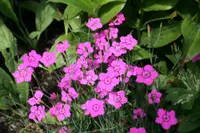
Maiden pink, Dianthus deltoides, is a low, mat-forming perennial often used as edging, groundcover, or in rock gardens. It forms dense cushions of fine, grassy foliage topped with many small, bright flowers. Bloom colors range from clear pink to deep magenta, often with a darker eye, giving a strong visual impact despite the plant’s compact size.

This species is native to Europe and western Asia but is widely grown in temperate regions. It prefers sunny, open sites with well-drained, rather lean soil, which helps explain how to care for Maiden pink in most garden settings.

Once established, it tends to be relatively easy to maintain, provided soil does not stay wet for long periods. It suits beginners who want a durable, flowering perennial in a sunny spot.

Main Plant Requirements

Care Difficulty

Easy Care

Light Preference

Full Sun

Water Requirements

Low Water

Temperature Preference

Cold Hardy

Hardiness Zone

3–9

Soil Texture

Sandy, Loamy, Rocky

Soil pH

Acidic (5.5–6.5), Slightly acidic (6.5–7.0)

Soil Drainage

Well-drained

Fertilization

Minimal (feed rarely)

Get Personalized Care Plan

Scan your plant to receive care tips personalized for your specific plant

Available on iOS and Android

How to Care for the Maiden pink

This perennial thrives in bright outdoor conditions and forms best flowers with strong sun exposure.

  • Provide 6–8 hours of direct sun daily; morning sun plus light afternoon shade works well in hotter regions to reduce stress on Maiden pink.
  • Allow light partial shade (3–4 hours sun) in warm climates, but expect fewer blooms and looser growth than in full sun.
  • In summer, protect from reflected heat off walls or pavement, and in winter avoid deep shade from buildings or evergreens that limits spring bud formation.

This plant prefers slightly dry, well-drained conditions rather than constantly moist soil.

  • In the ground, water only when the top 3–5 cm soil feels dry, aiming for a thorough soak that drains away within minutes.
  • During cool spring and fall, watering needs drop; in hot, dry spells, check soil every few days and water when foliage starts to lose its usual firmness.
  • Watch for yellowing, limp foliage and a sour smell as signs of overwatering in Dianthus deltoides; crisp, browning leaf tips usually indicate underwatering.

This hardy perennial tolerates a wide temperature range but flowers best in moderate conditions.

  • Optimal growth occurs around 60–75°F (16–24°C), with cool nights helping maintain compact, floriferous plants.
  • Established plants survive down to about -20°F (-29°C) in well-drained soil, though repeated freeze–thaw in wet ground can damage crowns.
  • Heat tolerance extends to about 85–90°F (29–32°C) if soil is not waterlogged; in hotter periods, mulch lightly and avoid overhead watering during peak midday heat.

This species prefers relatively dry air and usually does not need special humidity management outdoors.

  • Target 30–50% humidity, similar to typical indoor and outdoor conditions in temperate climates.
  • Dry air is tolerated well; persistent humidity above 70% around Maiden pink foliage encourages fungal spots and stem rot.
  • If grown in a sheltered, damp spot, increase air movement with spacing, pruning around the clump, or a small fan rather than adding humidity.

Soil for Dianthus deltoides should be lean, airy, and fast draining to prevent root and crown rot.

  • Aim for a sandy or gritty loam, with about 50–70% mineral material (sand, small grit) and modest organic matter to keep roots oxygenated.
  • Use a mix such as 2 parts sandy garden soil, 1 part coarse sand or grit, and 1 part compost, blending thoroughly before planting.
  • Keep pH slightly alkaline to neutral, around 6.8–7.5; add a small amount of garden lime if soil tests acidic.
  • Avoid compacted clay, heavy peat-based mixes, or spots that stay wet after rain, and raise the bed or add grit to improve drainage.

This species is well suited to container growing, especially for sunny patios and balconies.

  • Choose a shallow to medium-depth pot, as the root system is relatively fibrous and spreads more sideways than downwards.
  • Select a gritty, fast-draining container mix and elevate the pot slightly on feet so drainage holes never sit in collected water.
  • Use a heavier or clay pot in windy sites to anchor the low, spreading clumps and reduce tipping during strong gusts.

Dianthus deltoides benefits from light, balanced feeding but performs best in lean, well-drained soil.

  • Use a balanced, water-soluble fertilizer (for example 10-10-10) at 1/2 strength or a thin layer of mature compost in spring.
  • Feed every 4–6 weeks during active growth, stopping by late summer to avoid soft, frost-tender growth.
  • Apply a small amount of slow-release granules to poor soils only, keeping fertilizer off the foliage and crowns.
  • Do not feed Maiden pink in winter; the plant is semi-dormant and excess nutrients can cause weak, leggy growth.

Pruning helps Dianthus deltoides stay compact, extend flowering, and reduce disease risk.

  • Shear back spent flower stems by 1/3–1/2 in late spring and mid-summer to encourage repeat bloom and denser mounds.
  • Remove dead, diseased, or damaged foliage and stems whenever noticed using clean, sharp scissors or hand pruners.
  • Thin out crowded patches after flowering to improve air circulation and reduce fungal problems.
  • Lightly trim straggly edges in early spring to refresh shape, avoiding cutting into very old, woody centers.

This species is usually grown as a groundcover, so focus on transplanting clumps rather than frequent repotting.

  • Transplant or divide clumps every 3–4 years in early spring or early fall when temperatures are mild.
  • Look for thinning centers, reduced flowering, or crowded mats as signs that Dianthus deltoides needs lifting and replanting.
  • Lift clumps with a trowel, gently loosen roots, and divide into smaller sections with several healthy shoots each.
  • Replant divisions at the same soil depth in well-drained soil, water thoroughly, then keep evenly moist until re-established.

Dianthus deltoides is commonly propagated by seed, division, or softwood cuttings to maintain healthy, flowering patches.

  • Sow seeds in late winter–spring in trays with light, well-drained mix at 60–70°F, keeping the surface just moist until germination.
  • Divide mature clumps in early spring or early fall, replanting vigorous outer sections and discarding weak centers.
  • Take 5–7 cm non-flowering stem cuttings in late spring, dip in rooting hormone, and set in gritty, moist but not wet mix.
  • Provide bright, indirect light and good air flow for cuttings, avoiding high humidity that can cause rot.

This plant is generally cold hardy, so winter care is minimal in most temperate gardens.

  • Dianthus deltoides tolerates frost and freezing temperatures in the ground when soil drains well.
  • Apply a light mulch layer after the ground cools to insulate roots, keeping mulch off the plant crowns.
  • Leave some foliage in place over winter to shield crowns from freeze–thaw cycles, cutting it back in early spring.
  • Move container-grown plants to a sheltered, unheated spot such as a cold frame to reduce root freezing and waterlogging.

Care Tips

Extend Bloom Season

Shear back spent flower stems by 5–8 cm after the first main flush to encourage a second wave of blooms and keep the mat compact rather than letting seed pods form extensively.

Encourage Dense Mats

Pinch or lightly trim the outer edges of the clump in early spring to promote lateral shoots, which helps the plant form a thicker, weed-suppressing carpet rather than open, patchy growth.

Improve Winter Survival

In colder regions, top-dress around but not over the crowns with a thin layer of sharp grit or small gravel in late fall to improve drainage at the crown and reduce winter rot.

Smart Division Timing

Divide congested mats every 3–4 years immediately after flowering, replanting only the youngest, most vigorous outer sections to maintain strong, floriferous plants.

Use Gravel Mulch

Apply a 1–2 cm layer of mineral mulch such as pea gravel around plants to keep foliage dry, limit weed germination, and create the sharp drainage that supports long-term Dianthus deltoides plant care.

Common Pests and Diseases

Carnation tortrix

This pest is a small caterpillar that rolls or ties leaves and flower stems together and feeds inside, often damaging buds of maiden pink mats.

Solution

Cut off and dispose of rolled or webbed shoots and affected flower stems, then inspect regularly and hand-pick any visible larvae. In larger infestations, use a targeted biological insecticide containing Bacillus thuringiensis (Bt) in the evening, and keep surrounding weeds and debris low to reduce shelter sites.

Aphids

These insects cluster on young stems and flower stalks, sucking sap and causing distortion, sticky honeydew, and sometimes sooty mold on dense cushions of foliage.

Solution

Spray plants with a firm stream of water to knock aphids off, then follow with insecticidal soap or a ready-to-use horticultural oil, making sure to cover stems and leaf bases. Encourage natural predators such as lady beetles by avoiding broad-spectrum chemicals and by maintaining plant diversity around the border.

Leaf spot

This disease causes small brown to purple spots on narrow leaves, which can merge and lead to thinning patches in the mat, especially in damp, crowded sites.

Solution

Remove and discard heavily spotted leaves or entire stems, and thin or divide clumps to improve airflow so foliage dries quickly. Water at soil level, avoid overhead irrigation, and if the problem persists during wet spells, apply a labeled ornamental fungicide according to Dianthus deltoides care instructions.

Fusarium wilt

This disease leads to sudden wilting, yellowing, and dieback of individual shoots or clumps, often with brown discoloration inside the stems near the base.

Solution

Promptly remove and destroy affected plants including as much root and crown tissue as possible, and avoid replanting Dianthus in that exact spot for several years. Improve drainage, avoid overwatering, and source clean, disease-free plants or cuttings to limit reintroduction.

Powdery mildew

Symptoms include white, powdery patches on leaves and stems, which can cause yellowing and reduced flowering in humid but not overly wet conditions.

Solution

Increase spacing between clumps, trim back dense growth, and water at the base to keep foliage dry. At first signs, remove the worst-affected stems and apply a sulfur or potassium bicarbonate fungicide labeled for ornamentals, repeating as directed until conditions turn drier.

Interesting Facts

Natural grassland specialist

This species is native to dry, nutrient-poor grasslands and open rocky slopes across much of Europe, where its low, mat-forming growth helps it tolerate wind, shallow soils, and seasonal drought.

Fringed petal structure

Its small flowers have distinctly fringed or toothed petal edges and a darker central eye, which together act as visual guides that help day-flying pollinators such as small bees and butterflies find the nectar source.

Short-lived but persistent

Although often short-lived as an individual plant, it sustains populations through heavy self-seeding, allowing colonies to persist for many years in the same site when mowing or grazing are not too intensive.

Botan icon

Did you know?

In several parts of central and northern Europe, wild populations of this species are used as an indicator of semi-natural grasslands with long continuity of low-intensity management, so its presence can help botanists identify habitats of high conservation value.

FAQs about Maiden pink

This species is a short-lived perennial that often behaves like a self-seeding plant. Individual clumps usually stay productive for 2–4 years, then decline, but seedlings often appear nearby and keep the planting going.

Grow Healthy Plants with Botan Care

Keep your plants happy and healthy with plant identification, disease detection, and easy care guidance.

Botan plant care app — identify plants on mobile

Explore More Plants