purple false foxglove Care (Agalinis purpurea)

purple false foxglove

About purple false foxglove

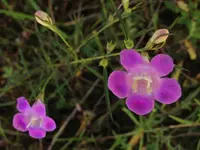
Purple false foxglove (Agalinis purpurea) is a slender annual wildflower native to moist meadows, prairies, and open wetlands in eastern North America. It belongs to a group of plants that often form partial root connections (hemiparasitic) to nearby grasses for extra nutrients.

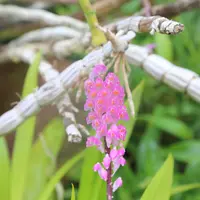
Plants usually stay low to medium in height, with fine, branching stems and many small, tubular purple flowers that bloom late in the season. The airy growth and delicate foliage give it a light, naturalistic look in informal plantings.

Because of its hemiparasitic nature and preference for undisturbed, moist, well-drained soil, it can be more challenging to establish than typical garden perennials. Gardeners who care for purple false foxglove often treat it like a specialty wildflower rather than a standard bedding plant.


Main Plant Requirements

Care Difficulty

Hard Care

Light Preference

Full Sun

Water Requirements

Keep Soil Moist

Temperature Preference

Cold Hardy

Hardiness Zone

5–9

Soil Texture

Sandy, Loamy, Organic-rich

Soil pH

Acidic (5.5–6.5), Slightly acidic (6.5–7.0)

Soil Drainage

Moist but well-drained

Fertilization

Minimal (feed rarely)

Get Personalized Care Plan

Scan your plant to receive care tips personalized for your specific plant

Available on iOS and Android

How to Care for the purple false foxglove

This wetland annual thrives in open, bright conditions similar to its native meadows and marsh edges.

  • Provide full sun for 6–8 hours per day; morning and midday sun promote compact growth and abundant flowering in purple false foxglove.
  • Tolerates light partial shade, such as 3–4 hours of filtered light, but flowering and density decline as shade increases beyond this.
  • Avoid dense shade, which leads to weak, elongated stems and few blooms; in hotter regions, slight afternoon shade can reduce heat stress in shallow soils.

This species prefers consistently moist to wet soil, reflecting its natural habitat in marshes and wet meadows.

  • Aim for soil that stays moist, not stagnant; in field conditions the root zone should not fully dry, especially during active growth and flowering.
  • Before watering in a garden setting, check the top 2–3 cm; if starting to feel just barely dry but still cool, add water to re-saturate the upper layer.
  • Watch for stress signals: underwatering causes wilting and dull, folding foliage, while overwatering in poorly drained sites leads to yellowing leaves and soft, darkened stems in Agalinis purpurea.

This temperate annual completes its life cycle within one growing season and tolerates a range of outdoor conditions.

  • Optimal growth occurs in mild to warm conditions around 65–80°F (18–27°C), especially during the main vegetative and flowering period.
  • Seeds germinate and plants establish as soil warms in spring; young plants handle cool nights down to about 45°F (7°C) without major setback.
  • Mature plants tolerate brief heat up to about 90°F (32°C) if soil stays moist; they are sensitive to frost below 32°F (0°C), which quickly ends the season.

This wetland native tolerates a broad humidity range but grows best in consistently moist air.

  • Aim for 50–70% humidity, similar to damp meadow or marsh conditions.
  • Tolerates short spells of drier air, but prolonged humidity below 40% can slow growth and reduce flowering in purple false foxglove.
  • Watch for curling, browning leaf edges as humidity stress; increase moisture with nearby water trays or grouping plants outdoors near other vegetation.

Soil should mimic a moist, open meadow or marsh edge with steady moisture and air around the roots.

  • Use a loamy, organic-rich mix with some sand, such as 50% composted soil, 25% coarse sand, 25% fine bark or leaf mold.
  • Ensure moisture-retentive yet aerated structure; soil should stay evenly damp but not stagnant or foul-smelling.
  • Target slightly acidic to neutral pH around 5.5–7.0 to support nutrient availability for Agalinis purpurea.
  • Avoid heavy, compacted clay or completely dry, fast-draining sandy soil that swings quickly between soggy and bone dry.

This species is possible but not ideal for container growing, mainly for short-term or experimental culture.

  • Choose a deep, narrow container to allow the taproot to extend downward without circling tightly near the base.
  • Use a stable, heavier pot material if exposed to wind, since the tall, slender stems can lever light pots over easily.
  • Maintain a shallow water reservoir in an outer tray only briefly, then drain, to imitate consistently moist ground without suffocating roots.

This native wildflower generally thrives in lean soils and usually needs no fertilizer when grown in the ground.

Pruning needs for Agalinis purpurea are minimal and mainly cosmetic.

  • In late fall or very early spring, clip back dead or broken stems with clean hand pruners.
  • Remove only obviously dead, diseased, or badly damaged growth to preserve natural form and seed set.
  • Light thinning of crowded stems after flowering can improve air flow but is not essential.
  • Disinfect tools before and after use to limit disease spread.

This species is typically grown in situ from seed, and transplanting established plants is often unsuccessful due to its semi-parasitic roots.

  • If container-grown, transplant only very young seedlings before roots tangle or circle the pot.
  • Time any move for early spring while plants are still small and conditions are cool and moist.
  • Lift with a wide root ball and disturb roots as little as possible to reduce transplant shock.
  • Water gently after transplanting and keep soil evenly moist until new growth resumes.

Propagation of this annual relies almost entirely on seed rather than vegetative methods.

  • Sow fresh seed of purple false foxglove outdoors in fall so it can experience natural winter cold stratification.
  • Choose a well-drained, low-fertility site that also supports suitable host grasses, as roots form semi-parasitic connections.
  • Scatter seed on the soil surface and press in lightly; do not bury deeply, as light aids germination.
  • Keep the area evenly moist in spring until seedlings appear, then reduce watering once established.

As a cold-hardy annual, this plant dies back after frost and usually needs no special winter care.

  • Allow seed heads to mature and remain on the plant until late fall to support self-seeding.
  • In naturalized plantings, avoid heavy fall cleanup so dropped seed can overwinter in place.
  • Container-grown plants can be left outdoors; the parent plants will die, but seeds in the soil may germinate next spring.

Care Tips

Host Root Management

Because this species is partially parasitic, interplant it with compatible native grasses or small forbs and avoid deep cultivation around the root zone so its haustoria (specialized feeding roots) can attach and remain undisturbed.

Annual Reseeding Strategy

Allow seed heads to dry on the plant, then gently shake or crumble them over the same area in late summer to early fall to maintain a self-sustaining population each year.

Site Rotation Planning

If stands thin out over time, lightly disturb the soil surface in a nearby sunny area and broadcast collected seed there to build a small rotation of patches rather than relying on a single spot.

Meadow Mowing Timing

In mixed meadows, delay mowing until after seed drop (usually late fall), and set mower blades high so remaining stems are cut above 10–15 cm to protect seedlings and emerging host plants.

Low-Input Pest Monitoring

Inspect plants briefly every 1–2 weeks during peak growth instead of using preventive sprays, and only intervene with targeted treatments if chewing damage, sap-sucking insects, or severe distortion becomes obvious when caring for purple false foxglove.

Common Pests and Diseases

Leaf spot fungi

This disease causes small tan to dark-brown spots on leaves that may coalesce, leading to premature yellowing and drop, especially in wet summers.

Solution

Remove and discard heavily spotted foliage to reduce spore load, avoid overhead watering, and maintain good spacing so foliage dries quickly; in restoration or garden settings, use a mulch layer to reduce splash-up and, if outbreaks are severe and recurrent, consult local extension guidance for an appropriate low-impact fungicide labeled for native wildflowers.

Rust

This disease produces orange to brown powdery pustules on leaf undersides and stems, sometimes causing leaves to yellow and dry early.

Solution

Prune and dispose of infected plant parts, keep surrounding vegetation thinned for better airflow, and avoid prolonged overhead irrigation; if rust recurs in the same site, rotate plantings, remove dense weeds that hold moisture, and consider a targeted fungicide only when needed and allowed for native plantings.

Aphids

These insects cluster on tender stems and buds, sucking sap and sometimes causing distortion, sticky honeydew, and sooty mold on nearby foliage.

Solution

Dislodge colonies with a firm stream of water, encourage natural predators such as lady beetles by avoiding broad-spectrum insecticides, and, if populations remain high, use a horticultural soap or neem oil spray applied thoroughly to stems and leaf undersides in the early morning.

Leaf-chewing caterpillars

This pest group feeds on foliage, leaving irregular holes or partially eaten leaves but usually does not kill established plants.

Solution

Handpick caterpillars where feasible and leave some feeding damage to support native pollinators and butterflies, since Agalinis purpurea plant care often balances aesthetics with ecological value; in high-value plantings, use row covers on young plants or spot-treat only heavily affected areas with a biological control such as Bacillus thuringiensis (Bt) when larvae are small.

Interesting Facts

Late-summer nectar source

This species flowers later in the season than many meadow plants, providing nectar and pollen for bees and butterflies in late summer to early fall when other floral resources are declining.

Semi-parasitic lifestyle

Agalinis purpurea is a hemiparasite that photosynthesizes but also taps into the roots of neighboring plants, especially grasses and asters, using specialized structures called haustoria to draw additional water and nutrients.

Wetland habitat specialist

It is strongly associated with moist to wet, often sandy or peaty soils in bogs, wet meadows, and coastal plain wetlands, and its presence can indicate relatively intact, low-nutrient native plant communities.

Botan icon

Did you know?

Agalinis purpurea belongs to the broomrape family (Orobanchaceae), a group known for parasitic and hemiparasitic species, and populations in some regions have declined enough that it is listed as a species of conservation concern in several U.S. states.

FAQs about purple false foxglove

This species is highly attractive to native bees, bumblebees, and various butterflies, especially in sunny, open sites. Its tubular flowers provide nectar and pollen, so it works well in wildlife-friendly meadows, prairies, and naturalized plantings.

Grow Healthy Plants with Botan Care

Keep your plants happy and healthy with plant identification, disease detection, and easy care guidance.

Botan plant care app — identify plants on mobile

Explore More Plants