Pinch For Bushiness
Pinch out the soft tips of young stems when plants are 10–15 cm tall to encourage dense branching and a heavier flower display through the season.

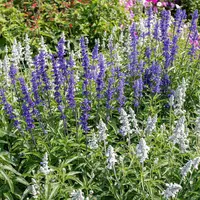
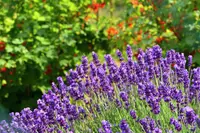
Mealycup sage, Salvia farinacea 'Victoria Blue', is a compact, upright perennial often grown as an annual, valued for its dense spikes of deep violet-blue flowers. The blooms rise above neat clumps of narrow, medium-green leaves, creating a strong vertical accent in beds, borders, and containers.
This species is native to dry, open regions of Texas and Mexico, so it copes well with heat and short dry spells once established. It is generally easy to grow, which helps new gardeners learn how to care for Mealycup Sage with confidence.
It performs best in full sun, with moderately fertile, well-drained soil and regular but not excessive moisture, making it a reliable choice for low-maintenance, pollinator-friendly plantings.

Care Difficulty
Easy Care

Light Preference
Full Sun

Water Requirements
Moderate Water

Temperature Preference
Tropical / Frost Sensitive

Hardiness Zone
8–10

Soil Texture
Sandy, Loamy, Organic-rich

Soil pH
Acidic (5.5–6.5), Slightly acidic (6.5–7.0)

Soil Drainage
Well-drained

Fertilization
Light (every 4–6 weeks)
Scan your plant to receive care tips personalized for your specific plant
Available on iOS and Android
Salvia farinacea 'Victoria Blue' grows best in bright, direct sun for strong flowering and compact growth.
Salvia farinacea 'Victoria Blue' prefers evenly moist, well-drained soil that dries slightly between waterings.
This salvia performs best in warm, mild conditions and is sensitive to hard frost.
This species handles typical outdoor humidity well, so moisture in the air is rarely a concern.
This plant prefers well-structured, free-draining soil that stays evenly moist but never waterlogged.
This species is well suited to container growing outdoors.
This sun-loving annual or tender perennial benefits from modest, consistent feeding in active growth.
Thoughtful pruning keeps Salvia farinacea 'Victoria Blue' compact and encourages strong flowering.
This salvia is most often grown in beds or seasonal containers, so focus on gentle transplanting at the right time.
Gardeners most often increase Salvia farinacea 'Victoria Blue' from seed, with cuttings also possible in warm conditions.
In many climates this salvia is treated as an annual, but in mild regions it can overwinter with simple protection.

Plant Health Check
Not sure what's wrong with your plant? Check your plant's health inside the app.
This cultivar was selected for its stable deep violet-blue flower spikes, which hold their color well in strong sun compared with many other blue salvias that fade more quickly.
In suitable climates, it can flower continuously from late spring until frost, providing a long nectar source that strongly attracts bees, butterflies, and hoverflies in managed landscapes.
Although often grown as an annual in cooler regions, in warm climates it behaves as a short-lived perennial, forming a woody base that can resprout after mild winters when soil drainage is good.

Salvia farinacea 'Victoria Blue' was one of the early bedding salvias widely adopted in public plantings because its compact, uniform habit and reliable blue color made it suitable for formal mass plantings long before many of the modern ornamental salvia hybrids were introduced.
Yes. The nectar-rich, tubular flowers are highly attractive to bees, butterflies, and many other beneficial insects. It works well in pollinator gardens, mixed borders, and near vegetables where enhanced pollination can improve yields and overall garden health.
Keep your plants happy and healthy with plant identification, disease detection, and easy care guidance.