Bulgarian Columbine Care (Aquilegia nigricans)

Also known as: Blackish Columbine
Bulgarian Columbine

About Bulgarian Columbine

Bulgarian columbine (Aquilegia nigricans) is a hardy, clump-forming perennial known for its nodding, spurred flowers and delicate, divided foliage. It typically grows in cool, mountainous regions of southeastern Europe, often in meadows, open woods, and rocky slopes.

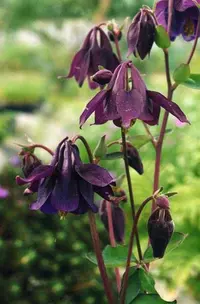
Plants have an airy, upright habit and bring a light, natural look to mixed borders or woodland-style gardens. Flower colors range from deep violet to nearly blackish tones, which contrast with the soft green leaves.

This species is generally easy to manage for gardeners familiar with how to care for Bulgarian Columbine. It prefers partial shade, consistent moisture, and well-drained, humus-rich soil, especially in climates with cooler summers.

Main Plant Requirements

Care Difficulty

Moderate Care

Light Preference

Partial Shade

Water Requirements

Moderate Water

Temperature Preference

Cold Hardy

Hardiness Zone

3–7

Soil Texture

Loamy, Silty, Organic-rich

Soil pH

Acidic (5.5–6.5), Slightly acidic (6.5–7.0)

Soil Drainage

Moist but well-drained

Fertilization

Minimal (feed rarely)

Get Personalized Care Plan

Scan your plant to receive care tips personalized for your specific plant

Available on iOS and Android

How to Care for the Bulgarian Columbine

This species prefers bright garden conditions with protection from intense midday sun.

  • Provide 4–6 hours of sun daily, ideally morning sun with light afternoon shade, to support flowering in Bulgarian Columbine.
  • Plant in a site with dappled or filtered light under open shrubs or trees in hotter zones to prevent leaf scorch.
  • In cooler climates it tolerates more direct sun, but in summer watch for pale, scorched foliage, a sign of excessive exposure.

This plant prefers evenly moist, never soggy, soil during active growth.

  • Before watering, let the top 3–5 cm of soil dry; moist deeper layers support Aquilegia nigricans without stressing the roots.
  • Increase watering during spring–early summer bloom, then reduce slightly after flowering while avoiding complete soil dryness.
  • Ensure well-drained, humus-rich soil; yellowing, limp leaves may indicate overwatering, while drooping, crisp edges suggest underwatering.

This perennial tolerates cool climates but still benefits from moderate growing temperatures.

  • Optimal growth occurs around 55–70°F (13–21°C), with steady spring conditions encouraging strong foliage and flowering.
  • The plant is hardy to about -20°F (-29°C) in the ground, surviving typical USDA zone 4 winters with snow cover or mulch.
  • Heat above 85°F (29°C) can stress plants; provide afternoon shade and mulch to cool roots during hot, dry spells.

This species handles a wide humidity range and rarely needs special adjustment outdoors.

  • Aim for 40–60% humidity; typical outdoor air in temperate climates is adequate for Bulgarian Columbine.
  • Plants tolerate short dry spells but prolonged very dry air with strong sun can crisp leaf edges.
  • If foliage browns at the tips, provide light shade and mulch the soil to reduce evaporative stress rather than misting.

Aquilegia nigricans prefers cool, moist but sharply draining soil with moderate fertility.

  • Use a loose loam rich in organic matter, combining garden soil with compost and a small portion of coarse sand or fine grit.
  • Ensure drainage is rapid; water should infiltrate quickly without puddling or leaving the soil waterlogged after rain.
  • Target a mildly acidic to neutral pH around 6.0–7.0, avoiding strongly alkaline or saline conditions that reduce nutrient uptake.
  • Improve aeration in heavy clay by incorporating 25–40% compost plus coarse sand or grit, and avoid compacted sites or spots that stay soggy.

This species can be grown in containers, particularly in cooler climates or where garden soil conditions are poor.

  • Choose a deep, stable pot at least 25–30 cm tall to accommodate the taproot and prevent wind rock of the flowering stems.
  • Use a free-draining mix of loam-based compost with added grit or perlite so water runs through quickly but the root zone stays evenly moist.
  • Position the container where it receives morning sun and afternoon shade, as potting mixes heat up faster and can stress roots in full afternoon sun.

Aquilegia nigricans benefits from modest feeding but performs well in reasonably fertile soil.

  • Apply a light dressing of compost or well-rotted manure around the plants in early spring to refresh soil nutrients.
  • Use a balanced, slow-release NPK fertilizer once in spring at half strength if growth or flowering seems weak.
  • Avoid high-nitrogen products, which encourage soft leafy growth at the expense of flowers.
  • Do not feed during winter dormancy; overfertilizing Bulgarian Columbine can shorten its lifespan.

Aquilegia nigricans needs light pruning to maintain tidy growth and sustain flowering.

  • In late spring to early summer, deadhead spent flower stems at their base to extend the blooming period.
  • After flowering, shear back untidy foliage by about one-third to encourage fresh, compact growth.
  • Remove dead, damaged, or diseased leaves whenever noticed using clean, sharp hand pruners or scissors.
  • In late fall, cut back dry, brown foliage near ground level to reduce pests and keep the clump neat.

This species is usually grown in garden beds, so focus on careful transplanting rather than frequent repotting.

  • Transplant in early spring or early fall when temperatures are mild to reduce stress on roots and foliage.
  • Move plants only when necessary; Aquilegia nigricans resents disturbance and does best left in place for many years.
  • Choose a well-drained site and replant at the same soil depth, watering thoroughly to settle soil around the roots.
  • For container-grown plants, repot only if roots circle the pot or growth slows markedly, shifting to a slightly larger container.

Aquilegia nigricans is most often propagated from seed, with occasional division of mature clumps.

  • Sow fresh seeds in late summer to fall in trays outdoors; natural cold exposure breaks dormancy and improves germination.
  • Use a free-draining seed mix and keep it evenly moist but not waterlogged until seedlings appear in spring.
  • Transplant young seedlings to individual pots once they have 2–3 true leaves, handling roots gently.
  • Divide older clumps in early spring, lifting carefully and replanting divisions promptly to minimize root damage and setback.

This hardy perennial usually needs minimal winter care in temperate climates.

  • Aquilegia nigricans tolerates typical garden frost and snow once established in well-drained soil.
  • After the first hard frost, cut back dead foliage close to ground level to limit overwintering pests and diseases.
  • Apply a light mulch layer, 3–5 cm deep, around the root zone in colder regions to moderate soil temperature.

Care Tips

Shade-root mulching

Apply a 3–5 cm layer of fine bark or leaf mold around the crown each spring to keep roots cool and moist, which this species prefers, and to reduce weed competition without burying the crown itself.

Self-seeding management

After flowering, leave a few of the healthiest seed heads to ripen fully, then shake them gently over nearby bare soil to renew the clump while deadheading the rest to prevent unwanted spreading.

Slugs and snails barrier

In early spring, place low ring barriers of rough grit or copper tape around young rosettes to protect the tender foliage from slug and snail damage, which can severely disfigure emerging leaves.

Crown division timing

If division is needed, split older clumps very early in spring while new growth is just emerging, replanting divisions immediately and watering them in well to minimize transplant shock.

Powdery mildew prevention

Space plants so air can move between them and remove lower, congested foliage after flowering, which reduces humidity around leaves and lowers the risk of powdery mildew when growing Bulgarian Columbine.

Common Pests and Diseases

Columbine leaf miner

This pest tunnels inside the leaves, creating pale, winding trails that cause foliage to look scorched and distorted. Symptoms include papery patches that eventually turn brown and reduce the plant’s vigor.

Solution

Remove and dispose of mined leaves as soon as damage appears to reduce larvae inside the foliage. Clean up and discard all columbine leaves in fall, and if damage is heavy, use a systemic insecticide labeled for leaf miners early in spring before severe tunneling develops.

Powdery mildew

This disease produces a white to gray, powdery coating on upper leaf surfaces, often starting on older foliage and spreading in humid, crowded conditions. Affected leaves may yellow, curl, and age prematurely.

Solution

Improve air circulation by thinning crowded stems and spacing plants properly, and avoid wetting the foliage when watering. Remove and discard badly affected leaves, then apply a sulfur or potassium bicarbonate fungicide labeled for powdery mildew at the first signs of infection if cultural changes are not sufficient.

Downy mildew

This disease causes yellow, angular blotches on upper leaf surfaces with a grayish, downy growth on the undersides, especially during cool, damp weather. Infected leaves often wilt and drop, and severe cases can defoliate plants.

Solution

Reduce leaf wetness by watering at soil level and improving drainage, and avoid overhead irrigation in the evening. Remove and dispose of infected leaves promptly, clean up plant debris in fall, and in recurring cases use a copper-based fungicide at label rates when conditions favor disease.

Aphids

These insects cluster on young shoots and flower stems, sucking sap and causing distorted growth, sticky honeydew, and sometimes sooty mold. Infestations can weaken plants and attract ants.

Solution

Dislodge colonies by spraying plants with a strong stream of water, and pinch off heavily infested shoot tips. If needed, apply insecticidal soap or a horticultural oil to thoroughly coat the insects, repeating as directed until populations drop, and encourage natural predators such as lady beetles by avoiding broad-spectrum insecticides.

Rust

This disease produces small, orange to brown pustules on the undersides of leaves, with yellow spots visible from above. Symptoms include premature leaf drop and reduced flowering when infections are severe.

Solution

Remove and destroy infected leaves as soon as pustules appear, and keep the area around the plants free of fallen debris to limit spores. Water at the base of the plant, increase spacing for better airflow, and in persistent cases apply a rust-labeled fungicide early in the season according to the product instructions as part of broader Aquilegia nigricans care.

Interesting Facts

Subalpine Balkan specialist

This columbine is naturally restricted to the Balkan Peninsula, where it grows mainly in subalpine meadows, rocky slopes, and forest clearings at higher elevations, often above 1,000 m. Its distribution is patchy, tied closely to cool mountain climates and calcareous or mildly acidic soils.

Darkly tinted flowers

The species is known for its unusually dark violet to almost blackish-purple flowers compared with many other columbines. The deep pigmentation helps the nodding flowers stand out for pollinators in open, high-altitude habitats.

Adapted to cold mountains

It is a cold-hardy perennial that survives snow cover and freezing temperatures by dying back to underground storage organs each winter. New shoots then emerge rapidly in spring to take advantage of the short mountain growing season.

Botan icon

Did you know?

Some wild populations hybridize naturally with nearby Aquilegia species in the Balkans, creating intermediate plants that show mixed flower colors and shapes, which makes accurate field identification challenging for botanists.

FAQs about Bulgarian Columbine

Lack of blooms often comes from too much shade, nutrient‑rich soil with excess nitrogen, or plants that are still immature. Division or transplant shock and hot, dry spring weather can also reduce flowering for a season.

Grow Healthy Plants with Botan Care

Keep your plants happy and healthy with plant identification, disease detection, and easy care guidance.

Botan plant care app — identify plants on mobile

Explore More Plants