Post-bloom handling
After the flowers fade, deadhead the spent blooms but leave the foliage intact until it yellows naturally so the bulbs can recharge for next year’s flowering.

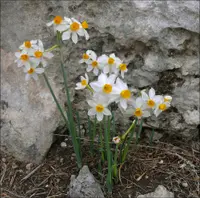
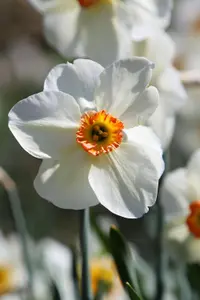
Cream narcissus, Narcissus tazetta, is a small bulb-forming perennial grown for its clusters of creamy white, fragrant flowers. It typically produces slender, upright leaves and multiple blooms on each stem, giving a full, elegant look in a compact space.
This species is native to the Mediterranean and parts of Asia but is widely cultivated in gardens and containers in mild climates. It is generally easy to grow, as the bulbs store energy and return yearly when conditions are suitable.
Narcissus tazetta prefers bright light, moderately moist but free-draining soil, and a cool to mild winter rest. Understanding these basic needs helps gardeners learn how to care for cream narcissus successfully.

Care Difficulty
Easy Care

Light Preference
Full Sun

Water Requirements
Moderate Water

Temperature Preference
Cool Climate

Hardiness Zone
8–10

Soil Texture
Sandy, Loamy, Organic-rich

Soil pH
Acidic (5.5–6.5), Slightly acidic (6.5–7.0)

Soil Drainage
Well-drained

Fertilization
Minimal (feed rarely)
Scan your plant to receive care tips personalized for your specific plant
Available on iOS and Android
Narcissus tazetta needs bright light to form strong stems and abundant blooms.
Water Narcissus tazetta so the soil stays moist during active growth but never waterlogged.
This bulb prefers cool to mild conditions and tolerates moderate winter cold once established.
This bulb tolerates typical indoor humidity but performs best in mildly moist air.
Narcissus tazetta prefers a loose, airy substrate that drains rapidly yet retains moderate moisture around the bulbs.
This species is well suited to container growing for both outdoor displays and seasonal forcing.
Narcissus tazetta benefits from light, targeted feeding rather than heavy fertilization.
Narcissus tazetta requires only minimal pruning focused on cleaning up spent growth.
Transplanting Narcissus tazetta bulbs is infrequent but helps maintain vigorous flowering in clumps.
Narcissus tazetta is most commonly propagated by bulb division rather than from seed.
Narcissus tazetta is moderately cold hardy in many regions but benefits from simple winter precautions, especially in colder zones.

Plant Health Check
Not sure what's wrong with your plant? Check your plant's health inside the app.
In Mediterranean-type climates, this species often flowers in mid to late winter, producing clusters of strongly scented white blooms when many other garden plants are dormant.
Unlike many daffodil species that carry a single flower per stem, this plant typically forms umbels with several flowers on each stalk, an adaptation that increases visual display for pollinators.
The species is native to a broad region from the Mediterranean through parts of the Middle East and into Central Asia, which explains its tolerance for varied soils and seasonal rainfall patterns.

This species was among the earliest narcissus types cultivated in East Asia, and historical records from China and Japan describe it grown in bowls of water and pebbles for New Year displays many centuries before modern bulb-forcing techniques were developed.
Lack of flowering is often due to overcrowded bulbs, insufficient cold period, or using high-nitrogen fertilizer. Allow foliage to die back naturally after bloom, then divide congested clumps every 3–5 years to restore flowering.
Keep your plants happy and healthy with plant identification, disease detection, and easy care guidance.