Staggered bulb planting
Plant corms in small batches every 10–14 days in late spring to stagger flowering and extend the overall bloom period for 4–6 weeks.

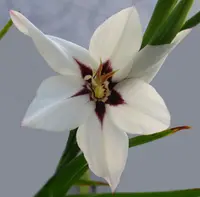
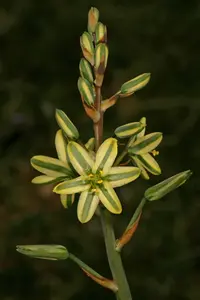
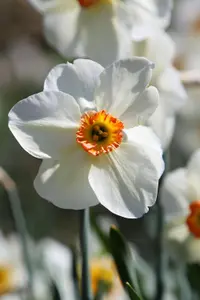
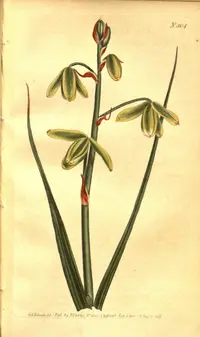
Abyssinian gladiolus, Gladiolus murielae, is a bulb-forming flowering plant grown for its elegant, nodding white blooms with a dark maroon center. It produces slender, upright fans of sword-shaped leaves and tall, arching flower spikes that give a light, airy look to borders and containers.
This species originates from the highlands of East Africa, where conditions are warm and well-drained. It is considered moderately easy to grow, as it needs good drainage, frost protection, and regular moisture while in active growth. Those who learn how to care for Abyssinian gladiolus usually focus on providing full sun, light soil, and avoiding waterlogged conditions.

Care Difficulty
Moderate Care

Light Preference
Full Sun

Water Requirements
Moderate Water

Temperature Preference
Tropical / Frost Sensitive

Hardiness Zone
7–10

Soil Texture
Sandy, Loamy, Organic-rich

Soil pH
Acidic (5.5–6.5), Slightly acidic (6.5–7.0)

Soil Drainage
Well-drained

Fertilization
Light (every 4–6 weeks)
Scan your plant to receive care tips personalized for your specific plant
Available on iOS and Android
This species needs strong light to flower well but benefits from some protection from intense afternoon sun.
This bulb prefers steadily moist but not saturated soil during active growth and drier conditions when dormant.
This plant grows best in warm conditions and is sensitive to frost and prolonged cold.
This species grows well in typical indoor humidity without special measures.
This bulb prefers loose, well-drained, moderately fertile substrate.
This species is very suitable for container growing outdoors in sunny spots.
This bulb performs best with moderate, targeted feeding during its active growth period.
Pruning for Gladiolus murielae focuses on deadheading and cleaning up spent foliage rather than shaping.
This species is usually grown from corms in beds or containers and benefits from thoughtful transplanting rather than frequent repotting.
Multiplication of Gladiolus murielae is commonly done by separating cormlets rather than by seed.
This bulb is not reliably hardy in cold climates and needs specific winter care in many regions.

Plant Health Check
Not sure what's wrong with your plant? Check your plant's health inside the app.
This species releases most of its strong, sweet scent from late afternoon into the evening, an adaptation that helps attract nocturnal moth pollinators in its native East African highlands.
Gladiolus murielae is naturally found in montane grasslands of Ethiopia and nearby regions, where it experiences cool nights and intense high-altitude sun, which explains its preference for bright light with moderate temperatures in cultivation.
The flower spikes arch and individual blooms nod slightly downward, a structure that helps protect pollen and nectar from rain in its native summer-wet habitats.

The species was first described under the name Acidanthera bicolor and was long sold under that older genus name in horticulture, so many older gardening books still list it as Acidanthera rather than Gladiolus murielae.
Lack of flowers usually comes from insufficient light, bulbs planted too shallow or deep, or depleted nutrients. Allow foliage to mature fully each year, feed lightly with balanced fertilizer, and avoid disturbing or dividing clumps too frequently.
Keep your plants happy and healthy with plant identification, disease detection, and easy care guidance.