Hedychium ellipticum Care

About Hedychium ellipticum

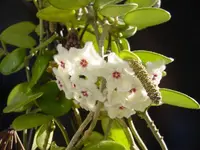
Hedychium ellipticum is a rhizomatous perennial from the ginger family, valued for its lush foliage and distinctive, brush-like white flowers with orange stamens. It forms upright clumps of broad, elliptic leaves that give a tropical look, even in small gardens or containers.

This species occurs naturally in parts of the Himalayas and Southeast Asia, usually in warm, humid, partially shaded sites. Its preference for moisture, warmth, and rich, well-drained soil makes it moderately easy where frost is light, but more demanding in colder or very dry climates. Understanding how to care for Hedychium ellipticum starts with providing consistent moisture, good drainage, and protection from harsh sun and freezing temperatures.

Main Plant Requirements

Care Difficulty

Moderate Care

Light Preference

Partial Shade

Water Requirements

Keep Soil Moist

Temperature Preference

Tropical / Frost Sensitive

Hardiness Zone

9–11

Soil Texture

Loamy, Silty, Organic-rich

Soil pH

Acidic (5.5–6.5), Slightly acidic (6.5–7.0)

Soil Drainage

Moist but well-drained

Fertilization

Moderate (every 2–4 weeks)

Get Personalized Care Plan

Scan your plant to receive care tips personalized for your specific plant

Available on iOS and Android

How to Care for the Hedychium ellipticum

This species prefers bright, gentle light similar to an open woodland edge.

  • Provide 4–6 hours of morning sun with light or dappled shade in the afternoon to prevent leaf scorch, especially in hot summers.
  • Tolerates partial shade, but in very dense shade flowering is reduced and stems may stretch and lean toward brighter areas.
  • In hotter regions, give filtered light under high tree canopies; in cooler climates it can handle more direct sun if soil stays evenly moist.

This rhizomatous ginger performs best in consistently moist but not waterlogged soil.

  • Water when the top 3–5 cm of soil feels slightly dry, then soak the root zone so moisture reaches the full rhizome depth.
  • During active growth in spring and summer, increase watering and use rich, well-drained soil; in autumn and winter, reduce frequency as growth slows.
  • Watch for yellowing, limp leaves and a sour soil smell as signs of overwatering, and crisp leaf edges or drooping stems as signs of underwatering in Hedychium ellipticum.

This plant prefers warm, frost-free conditions with a marked growing and resting season.

  • Optimal growth occurs around 70–85°F (21–29°C), with steady warmth promoting taller stems and more reliable flowering.
  • It tolerates brief drops to about 40°F (4°C), but foliage may be damaged; rhizomes are at risk if soil freezes solid.
  • In USDA zones 9–11 it can stay in the ground year-round; in cooler zones, lift or mulch rhizomes heavily before hard frosts below 32°F (0°C).

This species prefers moderately humid air and reacts quickly to very dry conditions.

  • Aim for 50–70% humidity to keep foliage lush and reduce tip burn on leaves.
  • Tolerates short dry spells, but prolonged air below 40% can cause brown, crispy leaf edges and curled tips.
  • Increase humidity with a nearby humidifier or grouping plants together rather than misting, which adds little lasting moisture.

This rhizomatous ginger grows best in deep, loose, moisture-retentive but draining soil.

  • Use a loamy mix with 40–50% compost or leaf mold, plus coarse sand or perlite to prevent waterlogging around the rhizomes.
  • Target slightly acidic to neutral pH around 6.0–7.0, which supports nutrient uptake and healthy root growth.
  • In heavy native clay, plant on a raised mound or in a bed amended with coarse grit and organic matter for extra aeration.
  • Avoid compacted, soggy, or purely sandy soil, which either suffocates roots or dries out too rapidly for Hedychium ellipticum.

This species is well suited to container growing in mild and warm climates.

  • Choose a stable, wide container to balance tall foliage and spreading rhizomes so wind is less likely to tip it over.
  • Select a pot at least 30–35 cm deep to allow rhizomes to expand and anchor without circling tightly near the surface.
  • Use a thick-walled terracotta or heavy ceramic pot when extra weight is needed to offset top growth and outdoor winds.

Consistent but moderate feeding supports strong foliage and flowering in Hedychium ellipticum during the warm growing season.

  • Apply a balanced, water-soluble fertilizer (around 10-10-10 or 20-20-20) at 1/2 strength every 4–6 weeks from late spring to late summer.
  • Alternatively, mix in slow-release granules or well-rotted compost at the start of the growing season for steady nutrients.
  • Always water before and after feeding to limit root burn, especially in container-grown clumps.
  • Stop fertilizing in fall and winter when growth slows or foliage dies back, to avoid weak, leggy shoots.

Targeted pruning keeps Hedychium ellipticum tidy, encourages fresh shoots, and supports reliable flowering.

  • In late winter or early spring, cut back dead or frost-damaged stems to just above ground level using clean, sharp pruners.
  • Remove spent flower spikes after blooming to direct energy into rhizome and leaf growth rather than seed production.
  • Thin crowded or crossing stems at the base to improve air movement and reduce foliar disease risk.
  • Disinfect tools between plants with alcohol or a 10% bleach solution to limit pathogen spread.

Dividing and transplanting clumps helps maintain vigor and manage the spread of Hedychium ellipticum in gardens or large containers.

  • Look for tight, congested clumps, reduced flowering, or roots circling inside containers as signs it needs more space.
  • Plan division and transplanting in early spring as new shoots emerge, typically every 3–4 years in good conditions.
  • Lift the clump carefully, then divide the rhizomes with a clean knife so each piece has at least 1–2 healthy buds and roots.
  • Replant divisions at the same depth in well-drained, fertile soil and water thoroughly, keeping evenly moist until re-established.

Rhizome division is the most reliable way to increase Hedychium ellipticum while maintaining identical plant characteristics.

  • In early spring, dig up a portion of the clump and gently shake or wash off soil to expose the rhizomes.
  • Cut rhizomes into sections with a sterile, sharp knife, each with firm tissue, visible buds, and several roots.
  • Dust cut surfaces with a fungicidal powder or ground cinnamon, then allow them to dry for a few hours before planting.
  • Replant sections in warm, well-drained soil, keep moisture steady, and provide bright, indirect light until new shoots grow strongly.

Cold-sensitive rhizomes of Hedychium ellipticum need protection in regions with freezing winters.

  • In mild climates (around USDA zones 9–11), leave clumps in the ground but apply a 5–10 cm mulch layer over the root zone after frost blackens foliage.
  • In colder areas, dig rhizomes after the first light frost, dry briefly, then store in barely moist peat or bark at 45–55°F.
  • For container plants, move pots indoors to a cool, frost-free, bright area and reduce watering so the soil stays slightly moist, not wet.

Care Tips

Rhizome division timing

Lift and divide clumps only when new red shoots just emerge in late spring, so each division keeps at least 2–3 healthy rhizome sections with active buds and can re-establish quickly.

Mulch for cool roots

Apply a 5–8 cm layer of coarse organic mulch around, but not on top of, the rhizomes to keep the root zone cool, conserve moisture, and reduce weed competition without causing rot.

Wind and stem support

In exposed sites, place discreet stakes or a low support ring around the plant before stems reach full height to prevent tall, fleshy shoots from bending or snapping in strong wind.

Frost protection strategy

In colder regions, cut stems back after the first light frost, then cover the rhizome area with a thick dry mulch layer or lift and store rhizomes in barely moist medium at 45–55°F for winter.

Slug and snail control

Protect emerging shoots in spring with physical barriers and regular hand-picking or iron phosphate bait, since tender new growth is especially attractive to slugs and snails when growing Hedychium ellipticum.

Common Pests and Diseases

Cardamom mosaic virus

This disease causes yellow streaking or mottling on leaves, stunted growth, and distorted foliage, especially in warm, humid conditions where gingers are grown near cardamom or other Zingiberaceae crops.

Solution

Remove and destroy symptomatic plants to reduce virus spread, control aphid vectors with targeted insecticidal soap or horticultural oil, and avoid planting Hedychium ellipticum close to known virus host crops or infected stock; always start with certified clean rhizomes when growing Hedychium ellipticum.

Leaf spot fungi

This disease produces brown to dark purple spots with possible yellow halos on older leaves, often intensifying in prolonged wet or overcrowded plantings.

Solution

Remove and discard heavily spotted leaves, water at soil level to keep foliage dry, increase spacing and airflow, and use a copper-based or chlorothalonil fungicide labeled for ornamental gingers if the problem recurs over several weeks.

Rhizome nematodes

These microscopic worms attack underground rhizomes, leading to poor shoot emergence, yellowing foliage, and weak, stunted clumps that fail to flower well.

Solution

Discard badly affected clumps, solarize or replace infested soil where possible, and replant only clean, firm rhizome sections; rotating the planting area and improving drainage can lower nematode pressure over time.

Aphids

These insects cluster on young shoots and flower stems, sucking sap and causing curled or distorted new growth while leaving sticky honeydew that can attract sooty mold.

Solution

Wash colonies off with a strong stream of water, then treat remaining clusters with insecticidal soap or neem oil, repeating every 5–7 days until populations are controlled and monitoring nearby ginger relatives for reinfestation.

Red spider mites

This pest feeds on the undersides of leaves, especially in hot, dry conditions, causing fine stippling, dull foliage, and in heavy infestations delicate webbing between leaves and stems.

Solution

Increase humidity around the plant, hose down foliage thoroughly to dislodge mites, and apply horticultural oil or insecticidal soap to leaf undersides at 5–7 day intervals, continuing until new growth appears clean and mite activity drops.

Interesting Facts

Brush-like flower spikes

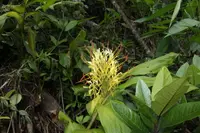
This species produces distinctive upright inflorescences where the white flowers emerge from opposite sides of the spike, giving a combed or brush-like appearance that differs from the more radial flower clusters of many other Hedychium species.

Creamy white and orange contrast

Its flowers are creamy white with a prominent orange or yellow-orange stamen column, creating strong color contrast that is visually striking and useful for quick field identification compared with other white-flowered gingers.

Montane forest native

The species is native mainly to moist montane and submontane forests of the eastern Himalayas and parts of Southeast Asia, where it often grows in partially shaded, humid habitats along forest margins and clearings.

FAQs about Hedychium ellipticum

This ginger is highly attractive to pollinators. Its showy, scented flowers provide nectar for bees, butterflies, and sometimes moths, especially in warm weather. Planting several clumps can noticeably increase pollinator activity in that part of the garden.

Grow Healthy Plants with Botan Care

Keep your plants happy and healthy with plant identification, disease detection, and easy care guidance.

Botan plant care app — identify plants on mobile

Explore More Plants