orange wild tulip Care (Tulipa orphanidea)

orange wild tulip

About orange wild tulip

The orange wild tulip (Tulipa orphanidea) is a small, bulb-forming perennial grown mainly for its vivid spring flowers. It is part of the wider tulip group but stays more compact and natural-looking than many large hybrid tulips.

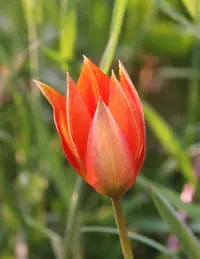
Plants produce narrow, gray-green leaves and slender stems topped with star-shaped orange to reddish-orange blooms, often with a contrasting dark center. The flowers open wide in sun and close in dull weather, giving beds and rock gardens a changing, naturalized look.

This species occurs naturally in rocky, open habitats in parts of southeastern Europe and western Asia. It is generally considered easy to grow in temperate climates, provided it has good light, free-draining soil, and a dry rest in summer. Gardeners often find that learning how to care for orange wild tulip is straightforward once these basics are understood.

Main Plant Requirements

Care Difficulty

Moderate Care

Light Preference

Full Sun

Water Requirements

Moderate Water

Temperature Preference

Cool Climate

Hardiness Zone

4–8

Soil Texture

Sandy, Loamy, Rocky

Soil pH

Acidic (5.5–6.5), Slightly acidic (6.5–7.0)

Soil Drainage

Well-drained

Fertilization

Minimal (feed rarely)

Get Personalized Care Plan

Scan your plant to receive care tips personalized for your specific plant

Available on iOS and Android

How to Care for the orange wild tulip

This small bulbous species thrives in cool, bright conditions typical of open rocky slopes and light meadows.

  • Provide 6–8 hours of direct sun in spring, with a preference for morning sun and light afternoon shade in warmer regions.
  • Tolerates light partial shade, but flowering of orange wild tulip is best in full sun on an open, unobstructed site.
  • Avoid dense shade, which leads to weak stems and fewer blooms, and protect from intense reflected heat near walls or paving in hot climates.

This tulip prefers a wet-to-dry seasonal cycle that mimics its natural winter-wet, summer-dry habitat.

  • During active growth in late winter and spring, allow the top 3–5 cm of soil to dry between rains or irrigations, then water deeply.
  • Ensure sharply drained soil; standing water or heavy clay causes bulb rot, soft bulbs, and yellowing leaves in Tulipa orphanidea.
  • Once foliage begins to yellow and die back after flowering, stop watering and keep the soil almost dry through summer dormancy.

This species performs best in climates with cool to cold winters and mild springs.

  • For active spring growth, aim for 45–65°F (7–18°C), which supports sturdy stems and long-lasting flowers.
  • Bulbs need a cold period around 35–45°F (2–7°C) in winter for proper flowering, and can tolerate short drops close to 15°F (-9°C) when well mulched.
  • In summer dormancy, bulbs handle 70–85°F (21–29°C) if soil stays dry; prolonged heat above 90°F (32°C) with moisture increases rot risk.

Humidity is not a significant factor for Tulipa orphanidea, which thrives in typical outdoor air conditions of 30–60%.

Tulipa orphanidea prefers light, well-drained soil that stays barely moist and never waterlogged.

  • Use a sandy or gritty loam with at least 30–50% sharp sand or fine gravel to speed drainage around the bulbs.
  • In heavier garden soil, mix in coarse sand and compost to improve aeration and prevent compacted, soggy conditions.
  • Aim for slightly acidic to neutral pH around 6.0–7.0, avoiding strongly acidic or alkaline sites that limit nutrient uptake.
  • Avoid low-lying, puddle-prone areas or pure clay, which increase bulb rot risk and shorten bulb lifespan.

This species is suitable for container growing if bulbs are kept cool and substrate drains rapidly.

  • Choose a pot at least 20–25 cm deep so roots can extend below the bulbs and stay insulated from heat swings.
  • Select a heavy, frost-resistant container to prevent tipping in wind and protect bulbs from rapid temperature shifts.
  • Raise the pot on feet or bricks so drainage holes remain clear and excess water leaves the root zone quickly.

Tulipa orphanidea grows well in moderately fertile soil and benefits from light feeding during active growth.

  • Apply a balanced, slow-release bulb fertilizer or compost in early spring as shoots emerge, following label rates.
  • Use a low to medium NPK formulation, avoiding high-nitrogen products that promote weak, floppy foliage.
  • Stop feeding once leaves begin yellowing after flowering, and do not apply fertilizer during summer dormancy or winter.

Tulipa orphanidea needs minimal pruning, focused mainly on spent flowers and declining foliage.

  • Deadhead faded blooms promptly by cutting just below the flower to reduce seed set and support bulb strength.
  • Leave green leaves intact until they yellow and collapse, then remove them at the base with clean scissors or hand pruners.
  • Do not cut healthy foliage early, as this reduces photosynthesis and can weaken future flowering.

This species is usually grown in the ground, so focus on lifting and transplanting clumps rather than frequent repotting.

  • Transplant bulbs in late summer to early fall, once foliage has fully died back and bulbs are dormant.
  • Lift crowded clumps every 3–5 years, when flowering declines or bulbs appear congested in one patch.
  • Gently dig around and under the bulbs, keeping roots and basal plates intact to minimize stress.
  • Replant at original depth in well-drained soil and water lightly once after planting to settle the soil.

Propagation of Tulipa orphanidea is mainly done by bulb offsets, with seeds used mainly for specialty growing.

  • Lift dormant clumps in late summer, separating small offset bulbs from the parent bulb by hand.
  • Replant offsets at the same depth in well-drained soil, spacing to allow future clump development.
  • For seed propagation, sow in pots or trays outdoors in fall, exposing seeds to natural winter chilling for germination.
  • Keep seed containers evenly moist but not waterlogged, and expect flowering only after several years of growth.

Established bulbs are hardy in many temperate climates and usually need only simple winter care.

  • In regions with cold but stable winters, bulbs can remain in the ground without lifting.
  • Apply a light mulch layer (2–5 cm) over the planting area in late fall to buffer freeze–thaw cycles.
  • For pots, move containers to a sheltered, unheated spot where they stay cold but avoid waterlogged or deeply frozen soil.

Care Tips

Mark Dormant Clumps

Place small, durable labels where bulbs are planted as soon as foliage appears so the exact spots are easy to find for future dividing, lifting, or protection once the plant dies back in summer.

Lift To Prevent Rot

In regions with wet summers or poorly drained soil, lift bulbs after foliage has fully yellowed, dry them in a shaded, airy place for 7–10 days, then store them in breathable paper bags at 45–55°F until replanting in fall.

Use Gritty Collar

When planting, mix a band of sharp sand or fine horticultural grit around and just under each bulb to reduce basal rot and improve survival in heavier soils.

Staggered Flowering Zones

Plant bulbs in small groups facing slightly different aspects (south, east, and west-facing spots) to create a naturally extended bloom period and reduce the risk of all flowers being damaged by a single frost or heatwave.

Mesh Protection From Rodents

In areas with voles, squirrels, or chipmunks, plant bulbs inside shallow wire-mesh cages or under a layer of 1–2 cm metal mesh to deter digging while still allowing roots and shoots to pass through, which is particularly helpful when growing orange wild tulip in mixed borders.

Common Pests and Diseases

Tulip fire

This disease causes brown spots, twisting, and distortion of leaves and flower stems, often giving plants a scorched or blighted look. Symptoms include poor emergence in spring and deformed, streaked flowers.

Solution

Remove and destroy all affected plants and nearby plant debris, then avoid replanting tulips in the same spot for several years. Space bulbs for good airflow, avoid overhead watering, and use clean, healthy bulbs; in areas with a history of tulip fire, a labeled preventive fungicide on emerging foliage can reduce infection.

Basal bulb rot

This disease starts at the base of the bulb, turning it soft, brown, and foul-smelling, often leading to weak shoots or complete failure to emerge. Symptoms include yellowing foliage that collapses early in spring.

Solution

Discard all soft or discolored bulbs and do not compost them. Plant only firm, clean bulbs in sharply drained soil, avoid planting in sites that stay wet, and rotate tulip plantings so bulbs are not grown repeatedly in the same saturated beds.

Bulb mite

These pests feed inside or around stored or in-ground bulbs, causing them to dry, soften, or rot and resulting in weak shoots or no sprouting. This pest often builds up in bulbs that are already slightly damaged or stressed.

Solution

Inspect bulbs before planting and discard any with soft spots, mold, or visible mites and dust. Store lifted bulbs cool and dry, separate from other stock, and use hot-water treatment or a labeled bulb dip only when necessary and according to directions to reduce mite populations.

Aphids

These insects cluster on young leaves, buds, and flower stems, sucking sap and causing curling, distortion, and sticky honeydew that can encourage sooty mold or virus spread. Symptoms include stunted growth and misshapen flowers.

Solution

Wash colonies off with a firm stream of water, then encourage natural predators such as lady beetles by avoiding broad-spectrum insecticides. For persistent infestations, apply insecticidal soap or horticultural oil thoroughly to the undersides of leaves and developing buds, repeating as needed.

Tulip viruses

This disease group includes viruses that cause streaked or mottled flower petals, distorted leaves, and reduced vigor over time. Symptoms include irregular color patterns on flowers that do not match the expected form of the variety.

Solution

Remove and destroy symptomatic plants as soon as they are noticed, along with any obviously weakened nearby bulbs. Use only certified virus-free bulbs, control aphids that spread viruses, and avoid reusing bulbs from suspect clumps when growing orange wild tulip for several seasons in the same bed.

Interesting Facts

Variable flower coloration

This species shows natural color variation, with flowers ranging from orange to brick-red, often with a darker basal blotch that helps guide pollinators to the nectar source.

Rocky habitat specialist

In the wild it typically grows on rocky slopes, open scrub, and light woodland in the eastern Mediterranean, showing good adaptation to shallow, stony, well-drained soils.

Early-season pollinator resource

It flowers in early to mid-spring, providing nectar and pollen for early-flying bees and other insects at a time when few other wild bulbs may be in bloom.

Botan icon

Did you know?

Some botanists recognize several subspecies within Tulipa orphanidea, reflecting its strong geographical variation across its native range in Greece and neighboring regions.

FAQs about orange wild tulip

Lack of flowers often results from bulbs being too young, planted too shallow, or weakened by last year’s foliage being cut back too early. Crowded clumps and excessive shade also reduce flowering; divide and replant bulbs after foliage dies down.

Grow Healthy Plants with Botan Care

Keep your plants happy and healthy with plant identification, disease detection, and easy care guidance.

Botan plant care app — identify plants on mobile

Explore More Plants