Jones' columbine Care (Aquilegia jonesii)

Jones' columbine

About Jones' columbine

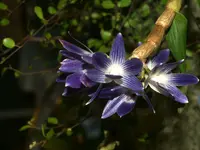
Jones' columbine (Aquilegia jonesii) is a tiny alpine perennial known for its compact mounds of bluish-green foliage and short stems topped with blue, nodding flowers. It stays very low to the ground and forms small, tight clumps rather than tall, airy growth.

This species is native to high, rocky ridges of the western United States, where it grows in crevices with sharp drainage and harsh weather. It can be challenging to grow in gardens because it dislikes heat, excess moisture, and rich, heavy soil.

Gardeners who want to care for Jones' columbine should aim to mimic its cool, sunny, rocky habitat with excellent drainage and only moderate moisture.

Main Plant Requirements

Care Difficulty

Hard Care

Light Preference

Full Sun

Water Requirements

Low Water

Temperature Preference

Cold Hardy

Hardiness Zone

3–6

Soil Texture

Sandy, Rocky, Loamy

Soil pH

Acidic (5.5–6.5), Slightly acidic (6.5–7.0)

Soil Drainage

Well-drained

Fertilization

Minimal (feed rarely)

Get Personalized Care Plan

Scan your plant to receive care tips personalized for your specific plant

Available on iOS and Android

How to Care for the Jones' columbine

This high-elevation alpine perennial prefers bright light with protection from intense afternoon sun.

  • Provide 4–6 hours of direct morning sun with light shade or filtered light in the afternoon, especially in warmer, lower-elevation gardens.
  • Allow partial shade (especially dappled shade) in summer to prevent leaf scorch, as Jones' columbine can burn in strong, prolonged sun.
  • In cooler climates, site plants in an open, south- or east-facing position; in hot regions, increase afternoon shade and avoid reflective heat from walls or rocks.

This species prefers evenly moist but not constantly wet soil, especially during active growth and flowering.

  • Water when the top 2–3 cm of soil feel dry, applying a deep soak rather than light sprinkling so moisture reaches the root zone.
  • Ensure sharply drained, gritty or rocky soil; standing water, soggy spots, or a sour smell indicate drainage problems and risk of root rot for Aquilegia jonesii.
  • Reduce watering in late summer and fall, allowing the soil to dry a bit more between waterings; wilting, crisp foliage suggests underwatering, while yellowing, soft leaves suggest excess moisture.

This alpine perennial is cold-hardy but prefers cool conditions, especially at the root zone.

  • Optimal growing temperatures are around 50–70°F (10–21°C), with flower development best in the cooler part of this range.
  • Plants tolerate winter lows near -30°F (-34°C) under snow cover, but repeated freeze–thaw cycles without insulation can damage crowns.
  • In summer, sustained heat above 80°F (27°C) stresses plants; provide mulch to keep roots cool and some afternoon shade to limit heat buildup.

This alpine species prefers relatively dry air and usually does not need special humidity management in typical home or outdoor conditions.

  • Target 30–50% humidity, similar to most heated indoor spaces or dry outdoor mountain air.
  • Dry air is usually tolerated, but combine it with slightly cooler temperatures to reduce leaf edge browning.
  • If foliage shows curled, crispy tips during hot, very dry spells, group pots together or place near a shallow pebble tray to slightly raise local humidity.

This species needs very lean, sharply drained, rocky soil that mimics an alpine scree or gravel slope.

  • Use a very sandy, gritty mix: roughly 50–60% coarse sand or fine gravel, 20–30% grit or perlite, and only 10–20% low-nutrient compost.
  • Aim for pH 6.5–7.5; testing is useful because Aquilegia jonesii struggles in strongly acidic or highly alkaline substrates.
  • Ensure extreme drainage by avoiding fine peat-heavy mixes that stay wet; the soil should drain in seconds, not minutes, after watering.
  • Improve aeration by incorporating angular grit rather than rounded pea gravel so the mix holds stable air pockets around the roots.

This species can be grown in containers, but it performs best in low, wide pots that dry rapidly and mimic shallow alpine conditions.

  • Choose a squat, heavy clay or ceramic pot to prevent tipping and to help excess moisture evaporate quickly from the root zone.
  • Fill the bottom third with coarse gravel to keep the root crown above any brief water accumulation after heavy rain or watering.
  • Raise the container on pot feet or bricks outdoors so drainage holes stay clear and runoff exits freely, even on compacted surfaces.

This alpine species needs only light feeding to stay healthy and avoid weak, lush growth.

  • In lean, rocky soil, use a small amount of balanced slow-release fertilizer (e.g., 10-10-10) in early spring as growth begins.
  • Apply at half the label rate to avoid forcing soft foliage that shortens plant lifespan.
  • During the main growing season, one light feeding is usually enough; skip extra fertilizer if growth looks normal.
  • Do not feed Jones' columbine in late fall or winter, when the plant is dormant.

Pruning Aquilegia jonesii focuses on cleaning and modest shaping rather than heavy cutting.

  • Deadhead spent flower stems in late spring to early summer to tidy the plant and sometimes encourage light rebloom.
  • Remove dead, damaged, or diseased leaves at any time using clean, sharp scissors or hand pruners.
  • Thin out crowded basal foliage after flowering to improve air movement and reduce fungal problems.
  • Cut back dry, brown foliage in late fall or very early spring before new growth emerges.

This alpine columbine dislikes frequent disturbance, so transplant only when clearly necessary.

  • Transplant in early spring or early fall, when temperatures are cool and the plant is not in peak bloom.
  • Look for signs such as roots circling a container, soil drying very fast, or noticeably slowed growth in good conditions.
  • Move the plant with a deep, intact root ball into gritty, sharply drained soil to mimic its natural rocky habitat.
  • Water gently after transplanting, then keep soil just lightly moist to limit root stress and encourage reestablishment.

Propagation of Aquilegia jonesii is possible but somewhat specialized, mainly done from seed.

  • Collect ripe seeds in late summer and sow fresh for best viability.
  • Provide cold stratification by placing moist seed in a refrigerator for 4–6 weeks if sowing later.
  • Sow in a gritty, well-drained mix, keeping it evenly moist in bright, cool conditions until germination.
  • Division is usually stressful and risky for this deep-rooted species, so is rarely used except by specialists.

This species is very cold hardy and usually needs minimal winter care in the ground.

  • Tolerates substantial frost when planted in well-drained, rocky soil that prevents waterlogging.
  • After hard frosts, allow foliage to die back naturally, then trim away dry leaves if desired.
  • In very exposed or container situations, apply a light gravel or bark mulch around the crown to buffer freeze–thaw cycles.

Care Tips

Rock crevice planting

Site plants in narrow rock crevices or between stacked stones with gritty backfill to mimic native alpine scree, which stabilizes the crown and improves winter survival.

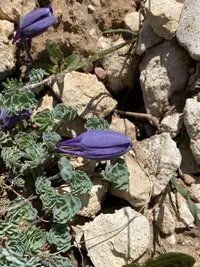
Crown protection grit

After planting, top-dress around the crown with a 1–2 cm layer of sharp gravel or grit to keep leaf bases dry, reduce rot, and deter slugs from tender spring growth.

Snow and ice management

In cold climates, allow consistent snow cover to insulate plants but gently break up late, compacted ice in spring so emerging shoots are not crushed or suffocated.

Seed head timing

Allow a few early flowers to set seed for population renewal, then deadhead later blooms promptly to conserve the plant’s limited energy in hot or low-altitude gardens when growing Jones' columbine.

Careful companion spacing

Avoid planting vigorous groundcovers or tall perennials directly upslope of plants so they are not shaded, overrun, or smothered by leaf litter accumulating around the small rosettes.

Common Pests and Diseases

Leaf miners

This pest tunnels inside the leaves, creating pale, winding trails that reduce the plant’s ability to photosynthesize efficiently.

Solution

Remove and destroy affected leaves as soon as mines appear, then use a targeted control such as spinosad or neem oil, making sure to cover both leaf surfaces. Reduce nearby weed hosts and maintain good plant vigor, as strong plants tolerate minor damage better when growing Jones' columbine outdoors in rock garden conditions.

Powdery mildew

This disease shows as a white, powdery coating on leaves, which can cause yellowing and premature leaf drop, especially in crowded or shaded plantings.

Solution

Improve air circulation by spacing plants well and removing dense surrounding vegetation, then prune and discard heavily infected foliage. If needed, apply a sulfur or potassium bicarbonate fungicide labeled for ornamentals, coating all leaf surfaces and repeating as directed during humid periods.

Rust

This disease produces orange to brown pustules on the undersides of leaves, often with yellow spots on the upper surface, leading to gradual decline of the plant if severe.

Solution

Promptly remove and discard affected leaves to reduce spore spread, and avoid overhead watering that keeps foliage wet. In persistent cases, use a labeled ornamental fungicide and rotate products if treating repeatedly to slow resistance development.

Aphids

These insects cluster on young stems and flower stalks, sucking sap and causing distortion, sticky honeydew, and sometimes sooty mold growth.

Solution

Wash colonies off with a strong but controlled stream of water, repeating every few days as needed, and encourage natural predators such as lady beetles by avoiding broad-spectrum insecticides. For persistent infestations, apply insecticidal soap or horticultural oil, thoroughly coating stems and the undersides of leaves.

Columbine sawfly

This pest’s larvae feed heavily on foliage, often skeletonizing leaves and giving plants a ragged, chewed appearance in a short time frame.

Solution

Inspect plants regularly in spring and early summer, handpick or shake larvae into soapy water, and remove heavily damaged foliage. If damage is severe, use a targeted control such as spinosad, applying in the evening to reduce impact on pollinators and repeating only as label directions allow.

Interesting Facts

High alpine specialist

This species is native to high-elevation limestone and rocky scree slopes in the Rocky Mountains of the western United States and is naturally found only in a few small, scattered populations.

Compact cushion habit

Unlike many other columbines, it forms a tight, low mound of bluish-green foliage with relatively large blue flowers held just above the leaves, an adaptation that helps reduce damage from harsh alpine winds.

Limestone affinity

It is strongly associated with calcareous, well-drained substrates and often grows in crevices and gravel pockets where competition from other plants is minimal, which is important to understand for Aquilegia jonesii care.

Botan icon

Did you know?

This species is considered one of the rarest North American columbines in the wild, and some of its natural populations are of conservation concern due to their very limited geographic range and sensitivity to habitat disturbance.

FAQs about Jones' columbine

Lack of blooms often comes from plants being too young, stressed by heat, or planted too deep. Poor soil drainage and excessive fertiliser, especially high nitrogen, also reduce flowering. Stable cool conditions and lean, gritty soil improve performance when growing Jones' columbine.

Grow Healthy Plants with Botan Care

Keep your plants happy and healthy with plant identification, disease detection, and easy care guidance.

Botan plant care app — identify plants on mobile

Explore More Plants