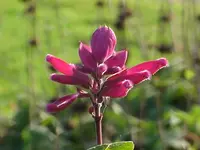
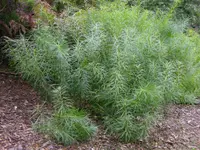
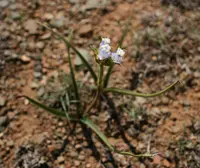
green princesplume Care (Stanleya viridiflora)

Also known as: Green-flowered Prince's Plume
green princesplume

About green princesplume

Green princesplume, Stanleya viridiflora, is a long-lived herbaceous plant native to arid regions of the western United States. It belongs to the mustard family and has a naturally upright, clumping habit.

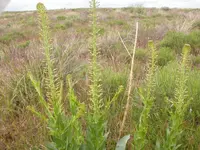
Plants form tall flower spikes with many small, greenish-yellow blossoms that give a soft, feathery look. Narrow leaves and an open structure make it well suited to dry, sunny landscapes.

This species is adapted to poor, rocky, or sandy soils and tolerates drought once established, but it dislikes heavy, wet conditions. Understanding these dryland adaptations helps gardeners know how to care for green princesplume and avoid overwatering.

Main Plant Requirements

Care Difficulty

Moderate Care

Light Preference

Full Sun

Water Requirements

Low Water

Temperature Preference

Cold Hardy

Hardiness Zone

4–8

Soil Texture

Sandy, Loamy, Rocky

Soil pH

Neutral (7.0), Slightly alkaline (7.0–7.5)

Soil Drainage

Well-drained

Fertilization

Minimal (feed rarely)

Get Personalized Care Plan

Scan your plant to receive care tips personalized for your specific plant

Available on iOS and Android

How to Care for the green princesplume

This sun-loving perennial thrives in bright, open sites typical of dry western habitats.

  • Provide full sun for 6–10 hours daily; green princesplume flowers and stems stay sturdier with unobstructed exposure.
  • Allow only light afternoon shade in very hot regions; plants in more than 3–4 hours of shade grow lanky and set fewer blooms.
  • Avoid sites shaded by buildings or dense shrubs in winter; low sun angles already shorten day length and can reduce vigor.

This drought-tolerant species prefers dry, fast-draining conditions rather than frequent moisture.

  • Water only when the top 5–8 cm of soil is completely dry; in native-like dry beds this may mean long gaps between waterings.
  • Ensure rocky or sandy, sharply drained soil so water does not pool around the roots, which raises rot risk for Stanleya viridiflora.
  • In the first growing season, watch for dull, limp foliage as a sign to water deeply; yellowing, mushy stems indicate overwatering.

This plant is adapted to continental climates with cold winters and hot, dry summers.

  • Aim for active growth in 60–80°F (16–27°C); flowering and foliage quality are best within this range in late spring and early summer.
  • Mature plants tolerate winter lows near 0°F (−18°C) with good drainage, but repeated freeze–thaw in wet soil increases crown damage.
  • In summer, it handles dry heat up to 95–100°F (35–38°C) if roots are deep; prolonged hot, humid conditions can stress plants and shorten lifespan.

Humidity is not a significant factor for Stanleya viridiflora, which is adapted to very dry air.

Stanleya viridiflora prefers lean, very well-drained, mineral soils that mimic arid native habitats.

  • Use sandy or gravelly soil with little organic matter, such as 60–70% coarse sand or grit blended with 30–40% low-peat potting soil.
  • Ensure extremely sharp drainage; raised beds or mounded planting spots help excess water move away from the crown.
  • Aim for slightly alkaline to neutral pH around 7.0–8.0, adding crushed limestone or fine gravel if your soil is acidic.
  • Avoid heavy clay, compacted, or water-retentive mixes that stay wet for more than a day after rainfall or irrigation.

This species can be grown in containers if the pot and medium prevent any prolonged moisture around the roots.

  • Choose a deep, narrow container to accommodate the taproot while limiting surplus side volume that can hold excess water.
  • Use a heavy, stable pot or add surface gravel so the tall flowering spikes do not tip the container in wind.
  • Elevate the pot on feet or bricks so drainage holes stay clear and water can escape rapidly after rain or watering.

This nutrient-efficient native, green princesplume, generally needs only light feeding in poor soils.

  • In lean, sandy or rocky sites, apply a thin layer of compost around the root zone once in spring.
  • Alternatively, use a low-dose balanced NPK fertilizer at half strength at the start of the growing season.
  • Avoid midsummer and fall feeding so growth hardens before winter and remains drought tolerant.

Pruning needs for Stanleya viridiflora are minimal and mainly focused on cleanup.

  • Cut back spent flower stalks after blooming to keep the plant tidy and direct energy to root reserves.
  • Remove dead, damaged, or diseased stems at ground level using clean, sharp hand pruners.
  • Leave some dry stems over winter in cold areas to provide crown protection, then trim in early spring.

This species is usually grown in the ground and dislikes frequent disturbance of its deep roots.

  • Transplant only when necessary, such as poor site choice or severe crowding by other plants.
  • Schedule moves for early spring or early fall so roots can re-establish in cool, moist conditions.
  • Dig a wide, deep hole, lifting a generous root ball to keep the taproot and side roots intact.
  • Water thoroughly after transplanting, then keep soil lightly moist but not waterlogged for several weeks.

Propagation of Stanleya viridiflora is mostly done from seed rather than by division or cuttings.

  • Collect mature seed pods when they dry and begin to split at the end of the growing season.
  • Sow seeds in fall outdoors or in pots left in a cold frame to allow natural cold stratification.
  • Provide sharply drained, sandy substrate and full sun exposure for germination and seedling growth.

This cold-hardy perennial usually needs little winter care in its suitable climate range.

  • Tolerates typical frost in many temperate regions when grown in well-drained soil.
  • In colder areas, apply a light mulch after the ground cools to buffer root temperature swings.
  • For container plants, move pots to a sheltered, unheated area to reduce freeze–thaw stress on roots.

Care Tips

Deep root training

In the first growing season, water less frequently but thoroughly to encourage a deep taproot, which improves drought resilience and reduces the need for staking later.

Grit mulch band

Apply a 5–8 cm ring of coarse gravel or crushed stone around the crown to keep the root collar dry, reduce soil splashing on foliage, and discourage rot in wet spells.

Wind hardening

In breezy sites, gradually expose young plants to stronger wind over 1–2 weeks or use a low, temporary windbreak so stems thicken and stay upright without permanent supports.

Targeted seed collection

If seed is desired, bag only a few maturing seed spikes with fine mesh to prevent loss to birds while leaving the rest unbagged to maintain airflow and reduce fungal risk.

Low-competition zone

Keep a 20–30 cm weed-free buffer around each plant using shallow hand-weeding or a light gravel mulch so the deep-rooted rosette does not compete with turf or vigorous perennials when growing green princesplume.

Common Pests and Diseases

Flea beetles

These insects chew many small round holes in leaves, often giving foliage a shot‑holed or lacy appearance and reducing photosynthetic area.

Solution

Use row covers or fine mesh barriers in spring to exclude adult beetles, and keep the area around plants free of dense weeds that harbor them. For existing infestations, rinse foliage with a strong stream of water, then spot-treat leaves with a low-impact product such as neem oil or spinosad, following label directions and avoiding applications during peak pollinator activity.

Cabbage aphids

This pest forms dense grayish colonies on young stems, flower spikes, and leaf undersides, causing distortion, sticky honeydew, and sooty mold growth.

Solution

Prune off heavily infested shoots and discard them in the trash, then hose remaining plants with water to dislodge surviving aphids. If needed, apply insecticidal soap thoroughly to all plant surfaces during cooler parts of the day and repeat at 5–7 day intervals until populations decline.

Downy mildew

This disease causes pale or yellow leaf spots that may later brown, often with fuzzy grayish growth on the underside of leaves during humid or cool, wet periods.

Solution

Improve air movement by thinning nearby vegetation and avoid overhead watering so foliage dries quickly. Remove and dispose of affected leaves and plant debris, and in areas with recurring issues, use a copper-based or phosphorus acid fungicide preventively according to label instructions as part of broader Stanleya viridiflora care instructions.

Alternaria leaf spot

This disease produces small dark leaf spots that enlarge into circular or irregular lesions, sometimes with concentric rings and a yellow halo, which can lead to premature leaf drop.

Solution

Collect and remove infected leaves promptly and keep the soil surface clean of old plant debris to reduce spore sources. Water at soil level in the morning, not at night, and in persistent cases rotate to a new planting area and consider a labeled foliar fungicide applied at the first sign of spotting.

Interesting Facts

Colorado Plateau specialist

This species is naturally restricted to the Colorado Plateau region of the southwestern US, where it grows on dry, often rocky slopes and in open shrublands with sparse vegetation.

Desert brassicaceae member

Although in the mustard family (Brassicaceae), which includes many cool-season crops, it is adapted to arid, high-elevation climates with low water availability and strong sun exposure.

Green flower adaptation

Its narrow, greenish flowers are adapted for pollination by specific native bees and other insects that are active in its dry, open habitats rather than by showy, brightly colored petals.

FAQs about green princesplume

Lack of flowers usually comes from plants being too young, recently transplanted, or stressed by rich watering and fertilizing. This species blooms best when fully mature, kept on the dry side, and exposed to strong light and seasonal temperature shifts.

Grow Healthy Plants with Botan Care

Keep your plants happy and healthy with plant identification, disease detection, and easy care guidance.

Botan plant care app — identify plants on mobile

Explore More Plants