Mounting on Slabs
Mount plants on cork or hardwood slabs with a thin layer of long-fiber sphagnum around the roots to improve air movement and reduce rot risk in warm, humid collections.

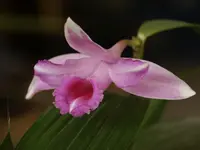
Dendrobium virotii is an epiphytic orchid, typically growing on trees rather than in soil. It forms slender, upright canes with narrow leaves and elegant, colorful flowers.
This species is native to tropical regions of Southeast Asia, where it experiences warm temperatures, bright but filtered light, and good air movement. Its moderate care needs make it suitable for growers who already understand basic orchid culture.
To care for Dendrobium virotii, it helps to provide bright indirect light, quick-draining orchid media, and regular moisture followed by light drying, similar to many other Dendrobium species.

Care Difficulty
Hard Care

Light Preference
Bright Indirect Light

Water Requirements
Moderate Water

Temperature Preference
Tropical / Frost Sensitive

Hardiness Zone
Unknown

Soil Texture
Peaty, Organic-rich

Soil pH
Acidic (5.5–6.5)

Soil Drainage
Well-drained

Fertilization
Moderate (every 2–4 weeks)
Scan your plant to receive care tips personalized for your specific plant
Available on iOS and Android
This orchid prefers bright, filtered light that mimics high, lightly shaded forest canopies.
Watering should balance consistent moisture with rapid drainage to protect the roots.
Stable intermediate to warm temperatures support reliable growth and flowering.
This orchid needs moderately high humidity to maintain healthy leaves and flowers.
This epiphytic orchid needs a very open, airy growing medium rather than compact soil.
This species is well suited to growing in containers, including small orchid pots and baskets.
This orchid benefits from light, balanced feeding during active growth but is sensitive to excess salts.
Pruning focuses on hygiene and spent canes rather than reshaping the plant.
This species prefers a snug pot and is repotted mainly to refresh the orchid medium or relieve root crowding.
Propagation is usually done vegetatively to keep the same characteristics as the parent plant.
This orchid is not frost tolerant and needs mild, protected conditions in winter.

Plant Health Check
Not sure what's wrong with your plant? Check your plant's health inside the app.
This species was formally described only in 2018 from material collected in New Caledonia, so it is still relatively little studied compared with many other Dendrobium species.
It is endemic to New Caledonia, meaning it occurs naturally only there, reflecting the island’s highly distinctive and isolated orchid flora.
Published field records show it confined to specific native habitats in New Caledonia, indicating a narrow ecological niche that may make it sensitive to habitat disturbance.
Lack of flowering is often linked to insufficient light, no distinct cool, drier rest period, or plants that are overcrowded and need division. Older, well-ripened canes usually bloom best, so avoid removing them too soon.
Keep your plants happy and healthy with plant identification, disease detection, and easy care guidance.