Offset management
Inspect the base monthly and remove or pot up offsets once they reach 5–7 cm to prevent overcrowding and maintain strong root health in the mother plant.

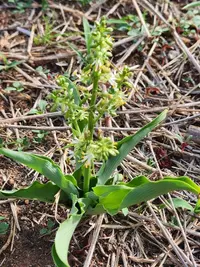
Chlorophytum gallabatense is a clumping, grass-like perennial from arid and semi-arid regions of northeastern Africa. It forms dense rosettes of narrow, arching leaves and a modest root system.
In cultivation it tends to stay compact, with a neat, fountain-shaped habit that suits containers or mixed plantings. The foliage is usually plain green, with a clean, simple look rather than strong variegation.
This species is adapted to bright, open habitats with periodic dry spells, which can make it relatively forgiving of occasional missed waterings. It generally prefers bright indirect light, free-draining soil, and moderate watering, so how to care for Chlorophytum gallabatense is similar to many other drought-tolerant, rosette-forming houseplants.

Care Difficulty
Moderate Care

Light Preference
Partial Shade

Water Requirements
Moderate Water

Temperature Preference
Warm Climate

Hardiness Zone
Unknown

Soil Texture
Loamy, Sandy, Organic-rich

Soil pH
Acidic (5.5–6.5), Slightly acidic (6.5–7.0)

Soil Drainage
Moist but well-drained

Fertilization
Minimal (feed rarely)
Scan your plant to receive care tips personalized for your specific plant
Available on iOS and Android
This species prefers bright, indirect light with some protection from harsh midday sun.
Watering should aim for evenly moist but never waterlogged soil.
Stable, mild warmth supports healthy growth and root activity.
This species tolerates typical indoor humidity but benefits from slightly moist air.
Chlorophytum gallabatense prefers a light, airy, well-drained mix that stays evenly moist but not waterlogged.
This species is well suited to container growing for both indoor and sheltered outdoor settings.
This species benefits from light, consistent feeding during active growth but does not require heavy fertilization.
Pruning is mainly cosmetic and helps keep this plant tidy and vigorous.
This plant tolerates slightly tight roots but benefits from repotting or division when it becomes crowded.
Division is the most reliable method for increasing plants and maintaining vigor in established clumps.
This species is frost sensitive and needs protection in regions with cold winters, especially when grown in containers.

Plant Health Check
Not sure what's wrong with your plant? Check your plant's health inside the app.
This species is native to dry savanna and woodland margins of northeast Africa, especially around the Sudan–Ethiopia region near Gallabat, which is reflected in its name gallabatense.
Compared with the common spider plant, it has narrower, more fibrous leaves adapted to seasonally dry habitats, giving it a more grasslike appearance and higher tolerance to intense sun in its native range.
Instead of producing long stolons with plantlets like the common houseplant Chlorophytum comosum, this species usually forms tighter clumps from its basal rosette, with fewer arching offshoots under typical cultivation.
This species adapts to both, but performance depends on stable warmth and protection from harsh sun or frost. In many US climates it stays healthier indoors or in sheltered patios where temperature and moisture can be controlled more easily.
Keep your plants happy and healthy with plant identification, disease detection, and easy care guidance.