Mounting strategy
Use a narrow cork slab or hardwood mount with a shallow moss layer so roots can grip tightly while still drying quickly, then hang it slightly tilted so water drains away from the stem crevices.

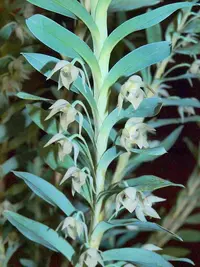
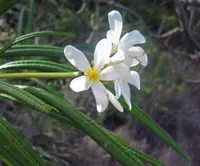
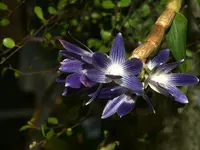
Dichaea glauca is a small epiphytic orchid that typically grows on tree trunks and branches in humid forests of Central and South America. It forms slender, cane-like stems with overlapping leaves and produces delicate, often bluish to greenish flowers.
The plant has a compact, upright to slightly arching habit, making it suitable for mounting or small orchid setups. It prefers bright filtered light, good air movement, and consistently moist but not waterlogged roots.
Due to its fine roots and need for stable humidity, it is moderately challenging and suits growers with some orchid experience. Learning how to care for Dichaea glauca usually involves careful attention to watering and airflow rather than complex feeding routines.

Care Difficulty
Hard Care

Light Preference
Partial Shade

Water Requirements
Keep Soil Moist

Temperature Preference
Tropical / Frost Sensitive

Hardiness Zone
11–13

Soil Texture
Peaty, Organic-rich, Loamy

Soil pH
Acidic (5.5–6.5)

Soil Drainage
Moist but well-drained

Fertilization
Light (every 4–6 weeks)
Scan your plant to receive care tips personalized for your specific plant
Available on iOS and Android
This orchid prefers bright, filtered light that mimics light under a forest canopy.
This species prefers evenly moist conditions but is sensitive to stagnant water.
This orchid grows best in intermediate to warm conditions with only mild seasonal changes.
This epiphytic orchid needs high, stable humidity to thrive indoors.
This species grows best mounted or in a very loose, airy orchid medium rather than dense potting soil.
This orchid can be grown in containers or small baskets if drainage and aeration are carefully managed.
This miniature epiphytic orchid benefits from light, precise feeding tailored to its fine roots.
Pruning focuses on hygiene and structure rather than reshaping this small epiphytic orchid.
Handling the root system gently is essential when adjusting the mount or pot of this fine-rooted orchid.
This orchid is usually propagated by division rather than from seed in home conditions.
This tropical orchid is not frost hardy and needs warm, stable winter conditions.

Plant Health Check
Not sure what's wrong with your plant? Check your plant's health inside the app.
This species is a small epiphytic orchid from high-humidity cloud forests of Central and parts of South America, where it grows on tree branches rather than in soil.
Its thin, cane-like stems produce leaves and flowers along the length, often creating hanging, chain-like growth that can form loose, pendant mats on host trees.
The leaves have a characteristic blue-green to glaucous tone, which reflects the species name glauca and likely helps reduce excess light in its bright but diffused forest canopy habitat.
Lack of blooms often results from insufficient humidity, unstable temperatures, or too little air movement. This orchid also prefers moderate light and regular but light feeding. Correcting these factors usually restores flowering over the next growth cycle.
Keep your plants happy and healthy with plant identification, disease detection, and easy care guidance.