Mulch For Dormancy
Apply a loose 3–5 cm layer of leaf mold or fine bark over the root zone in late fall to buffer freeze–thaw cycles and keep the shallow rhizomes from being heaved out of the soil.

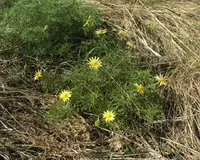
Adonis villosa is a small, early-flowering perennial from the buttercup family, valued for its bright yellow, bowl-shaped blooms. It forms low clumps of finely divided, feathery foliage that die back after flowering, giving it a distinctly seasonal presence in the garden.
This species is native to cold, open habitats in parts of East Asia, where it experiences snowy winters and cool springs. It can be challenging to grow, as it dislikes heat, disturbance, and poorly drained soil. Gardeners who learn how to care for Adonis villosa usually provide cool conditions, light shade, and evenly moist, humus-rich soil.

Care Difficulty
Moderate Care

Light Preference
Partial Shade

Water Requirements
Moderate Water

Temperature Preference
Cold Hardy

Hardiness Zone
3–7

Soil Texture
Loamy, Silty, Organic-rich

Soil pH
Acidic (5.5–6.5), Slightly acidic (6.5–7.0)

Soil Drainage
Moist but well-drained

Fertilization
Minimal (feed rarely)
Scan your plant to receive care tips personalized for your specific plant
Available on iOS and Android
This early spring perennial prefers bright, cool conditions with protection from harsh midday sun.
This woodland-edge plant prefers steadily moist but not waterlogged soil.
This species is adapted to cold climates with cool springs and tolerates winter frost well.
This species prefers cool, moderately moist air but does not have demanding humidity needs.
Adonis villosa grows best in loose, humus-rich soil that stays evenly moist yet never waterlogged.
This species can be grown in containers, but it performs best in deep, cool, stable conditions that mimic woodland soil.
This woodland perennial needs only light feeding in reasonably fertile soil.
Pruning needs are minimal and focus on cleanliness rather than shaping.
This species dislikes disturbance, so transplant only when clearly necessary.
New plants are usually raised from seed, with division used only on well-established clumps.
This hardy perennial tolerates typical cold winters in the ground with minimal intervention.

Plant Health Check
Not sure what's wrong with your plant? Check your plant's health inside the app.
This species flowers very early in spring, often pushing its silky, finely divided foliage and pale yellow blossoms through melting snow in its native habitats of Siberia, the Russian Far East, northern China, and Japan.
It is naturally adapted to cold, continental climates with long, freezing winters and relatively dry, open woodland or steppe-edge conditions, which makes it more cold-hardy than many other early-flowering perennials.
Adonis villosa belongs to the Ranunculaceae, a family known for chemically diverse species, and like many of its relatives it contains bioactive compounds that make the plant potentially toxic if ingested.

In Japan, Adonis villosa is sometimes cultivated as an early spring ornamental in cold regions, valued for its ability to flower reliably in low temperatures when few other garden plants are in bloom.
This species usually blooms very early in spring, often as snow recedes. Flowering is brief, typically 2–3 weeks, depending on temperature and moisture. Cooler, stable conditions help the blossoms last closer to the upper range.
Keep your plants happy and healthy with plant identification, disease detection, and easy care guidance.