Large-flowered Butterwort Care (Pinguicula grandiflora)

Large-flowered Butterwort

About Large-flowered Butterwort

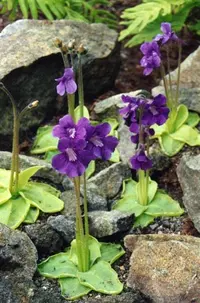
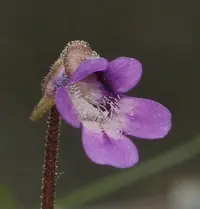
Large-flowered butterwort (Pinguicula grandiflora) is a hardy, insect-eating perennial from wet meadows and bogs in western Europe. It forms low rosettes of soft, sticky leaves that trap small insects, which supply extra nutrients. In spring, it sends up delicate purple to violet flowers held above the foliage, giving the plant a surprisingly ornamental look for a carnivorous species. This species prefers cool conditions, constant moisture, and nutrient-poor, lime-free substrates that mimic its natural bog habitat. Once those needs are met, it can be fairly reliable, though how to care for Large-flowered Butterwort is slightly more demanding than common houseplants due to its strict moisture and soil requirements.


Main Plant Requirements

Care Difficulty

Hard Care

Light Preference

Partial Shade

Water Requirements

Keep Soil Moist

Temperature Preference

Cool Climate

Hardiness Zone

6–8

Soil Texture

Peaty, Organic-rich, Silty

Soil pH

Strongly acidic (4.5–5.5), Acidic (5.5–6.5)

Soil Drainage

Waterlogged tolerant

Fertilization

Minimal (feed rarely)

Get Personalized Care Plan

Scan your plant to receive care tips personalized for your specific plant

Available on iOS and Android

How to Care for the Large-flowered Butterwort

This temperate carnivorous plant prefers bright, gentle light rather than intense, direct sun.

  • Provide 3–5 hours of soft morning sun with bright, indirect or lightly dappled light for the rest of the day; avoid harsh afternoon sun, especially in summer.
  • Grow Large-flowered Butterwort in sites with partial shade in hotter regions and more open exposure in cool, cloudy climates to maintain compact growth and strong leaf coloration.
  • Watch for bleaching, crisping, or red, stressed leaves as signs of too much sun, and weak, pale, stretching rosettes as signs of insufficient light, adjusting exposure seasonally.

This species is adapted to constantly moist, low-nutrient, boggy conditions rather than alternating wet–dry cycles.

  • Keep the substrate evenly moist at all times; the surface may look slightly damp but should never dry more than the top 0.5–1 cm.
  • In the growing season, use rainwater, distilled, or reverse-osmosis water and maintain a shallow, consistently moist zone around the roots without deep standing water.
  • Reduce water slightly in cool winter dormancy so the soil is moist, not waterlogged; yellowing, limp leaves suggest overwatering and rot risk, while drooping, curling leaves indicate insufficient moisture for Pinguicula grandiflora.

This cool-temperate butterwort prefers mild summers and chilly, but not extreme, winters.

  • Aim for active growth in 55–70°F (13–21°C); short periods up to 75°F (24°C) are tolerated if humidity and moisture remain stable.
  • During winter rest, it can handle about 35–45°F (2–7°C), forming a tight hibernaculum; brief light frosts are tolerated if the crown is not waterlogged and is insulated by surrounding material.
  • Avoid prolonged heat above 80°F (27°C) or hard freezes below about 25°F (-4°C), which can damage leaves and crowns, especially in exposed or poorly drained sites.

This species benefits from consistently moist air but does not require extreme humidity.

  • Aim for 50–70% humidity to support active leaf glands and reliable carnivorous function in Large-flowered Butterwort.
  • It tolerates brief dips to 35–40%, but prolonged very dry air reduces mucilage, so leaves look dull and less sticky.
  • Crisping leaf edges, stalled growth, and reduced insect capture indicate low humidity; group pots, use a nearby tray of water, or run a small humidifier.

This carnivorous plant needs permanently moist, low-nutrient, airy substrate rather than standard houseplant mixes.

  • Use a mix such as 2 parts peat or sphagnum moss to 1 part coarse sand or perlite for a loose, fine-textured medium.
  • Ensure very fast drainage yet constant moisture by using a shallow pot with many holes and keeping the lower layer just damp, not waterlogged.
  • Target slightly acidic conditions around pH 5.0–6.0, avoiding any added fertilizer, compost, or manure that would burn sensitive roots.
  • For Pinguicula grandiflora, avoid dense, clay-based, or bark-heavy blends; any mix that compacts or stays stagnant around the roots increases rot risk.

This species is well suited to container cultivation when the pot supports stable moisture and aeration.

  • Choose a broad, shallow pot so the fine roots spread in a cool, moist layer rather than sinking into deep, saturated substrate.
  • Use rigid plastic or glazed ceramic to slow evaporation in the upper zone while still allowing a moist tray beneath the pot.
  • Set the container in a low water tray that can be emptied quickly after the surface darkens, preventing prolonged standing water at root level.

This carnivorous species gains most nutrients from captured insects, so fertilizer use must be minimal and carefully controlled for Pinguicula grandiflora.

  • Use a very weak orchid or carnivorous-plant fertilizer at 1⁄4–1⁄8 strength, never a general-purpose balanced NPK product in the soil.
  • Apply only during active growth, 1–2 times per month, and only as a very light foliar spray or single drop near leaf edges.
  • Avoid any compost or slow-release granules, which burn roots and disrupt the sensitive bog-like substrate.
  • Do not feed during winter dormancy; let the plant rest with cool temperatures and just moist conditions.

Pruning needs for Pinguicula grandiflora are light and focus on hygiene rather than shaping.

  • In late winter or early spring, gently remove dead or blackened leaves by pulling them off at the base with clean fingers or tweezers.
  • Trim only clearly dead flower stalks after they dry, leaving healthy foliage undisturbed to sustain growth.
  • Avoid cutting live leaves, as this reduces insect-trapping area and weakens the plant.
  • Disinfect any small scissors or tweezers before use to limit disease spread in the moist substrate.

Container-grown plants benefit from careful repotting to keep the delicate roots healthy and the carnivorous leaves effective.

  • Plan to repot every 1–2 years in late winter or early spring, just before strong new growth begins.
  • Look for signs such as slow growth, sour smell, or roots circling a cramped pot to decide when repotting is needed.
  • Use a low-mineral mix such as 2:1 sphagnum peat:sand or perlite, and pre-soak with low-mineral water.
  • Handle the root ball gently, keep the crown at the same depth, water thoroughly, then shade lightly for a week to reduce stress.

New plants are most often produced vegetatively, which keeps desirable traits consistent between generations.

  • Leaf pullings in late winter–spring are the main method; gently detach outer leaves with a small piece of base tissue attached.
  • Lay leaves flat on damp peat:sand or perlite, keep in bright indirect light, and maintain high humidity with good air movement.
  • Tiny plantlets form at the leaf base in several weeks; separate and pot them once roots and several leaves develop.
  • Seed propagation is possible under cool, moist, bright conditions, but Pinguicula grandiflora plant care from seed is slower and more variable.

This species forms a compact winter rosette and is relatively cold hardy when grown in appropriate conditions.

  • Most hardy forms tolerate light to moderate frost if soil stays moist but not waterlogged.
  • In cold climates, apply a light mulch of dead leaves around outdoor plants to insulate the root zone without smothering the crown.
  • Move container plants into a cold frame, unheated porch, or bright cool windowsill around 35–50°F for dormancy.
  • Reduce watering in winter so the medium is barely moist, preventing rot in the resting rosettes.

Care Tips

Seasonal Dormancy Setup

Provide a cool, bright dormancy in winter by moving plants to an unheated but frost-free space (around 40–50°F) and switching to a slightly drier, mineral-based mix so the non-carnivorous winter rosettes stay compact and healthy.

Water Table Management

Use a shallow tray with 0.5–1 cm of low-mineral water during active growth and let it briefly dry between refills to keep roots oxygenated and reduce rot, especially in tightly packed bog planters.

Bog Planter Design

In container bogs, install a hidden overflow hole 1–2 cm below the rim so excess rainwater can drain, preventing prolonged flooding that can damage the fleshy leaves and crown.

Feeding Zone Optimization

Position pots near a window or outdoors in a sheltered spot where small flying insects naturally pass, and avoid cleaning off stuck prey so the leaves can fully digest and absorb nutrients.

Division And Renewal

Refresh old clumps every 2–3 years by gently dividing, replanting only firm, healthy rosettes, and discarding soft or blackened tissue to maintain vigorous growth and simplify caring for Large-flowered Butterwort in the long term.

Common Pests and Diseases

Fungus gnats

This pest is strongly attracted to the constantly wet, organic media used for this carnivorous species, especially in tray-grown pots. Symptoms include tiny black flies around the pot and translucent larvae in the upper 1–2 cm of the substrate.

Solution

Allow the tray to dry slightly between waterings while keeping the medium evenly moist, then top-water once to flush larvae. Apply a biological control such as Bacillus thuringiensis israelensis (BTi) to the water and remove decaying plant material from the pot to reduce breeding sites.

Grey mold (Botrytis)

This disease thrives in cool, still, very humid conditions around the rosette and spent flowers. Symptoms include soft, water-soaked leaves and a fuzzy grey mold that often appears on old leaves or flower stalks first.

Solution

Remove and discard all affected leaves and spent flowers, then increase airflow around the plant and avoid overhead watering onto the rosette. In persistent cases, space plants farther apart, keep humidity moderate rather than extreme, and use a low-impact fungicide labeled for ornamental use as a spot treatment on remaining tissue.

Aphids

These insects are attracted to the soft flower stalks and young leaves, especially on plants grown in cooler greenhouse or outdoor bog conditions. Symptoms include distorted new growth, sticky honeydew, and clusters of small green, black, or brown insects on flower stems and leaf bases.

Solution

Rinse the plant gently with a fine stream of water to dislodge aphids from flowers and foliage, taking care not to damage the delicate leaves. Follow with a targeted treatment such as insecticidal soap or horticultural oil applied in the evening, and remove heavily infested flower stalks to break the life cycle while still maintaining the plant’s ability to grow Pinguicula grandiflora healthily.

Spider mites

This pest becomes more of a problem when plants are grown indoors in warm, dry air where humidity is lower than the species prefers. Symptoms include very fine webbing, dull or stippled leaves, and slow decline of the rosette.

Solution

Increase ambient humidity and improve air movement without blowing directly on the plant, then rinse both upper and lower leaf surfaces with lukewarm water. Repeat washing every few days and, if needed, use insecticidal soap or a miticide labeled for spider mites, ensuring thorough coverage of the undersides of leaves.

Interesting Facts

Butterfly‑pollinated specialist

Its large violet flowers are adapted for pollination mainly by butterflies and day‑flying moths, with a long nectar spur that matches the length of their proboscis.

Distinct mountain subspecies

The high‑altitude subspecies Pinguicula grandiflora subsp. rosea, with pinkish flowers, is naturally restricted to a small area of the Pyrenees, making it of particular conservation interest.

Carnivory with sticky glands

Its leaves are densely covered in two types of glands that first trap insects with sticky secretions and then release digestive enzymes to absorb nutrients from the prey.

Botan icon

Did you know?

This species is one of the few European carnivorous plants that often forms dense, clonal colonies in calcareous, lime‑influenced wetlands, where its presence can indicate long‑standing, relatively undisturbed mire or flush habitats.

FAQs about Large-flowered Butterwort

Lack of winter dormancy, insufficient light, or overly rich soil commonly reduce flowering. This species needs a cool rest period, nutrient-poor conditions, and consistent moisture. Replicating these conditions is essential for reliable blooms and overall Pinguicula grandiflora care.

Grow Healthy Plants with Botan Care

Keep your plants happy and healthy with plant identification, disease detection, and easy care guidance.

Botan plant care app — identify plants on mobile

Explore More Plants