Use shallow pots
Choose a broad, shallow pot with good side drainage so the fine, surface‑oriented roots can spread evenly and the rhizome does not sit in a deep column of wet mix.

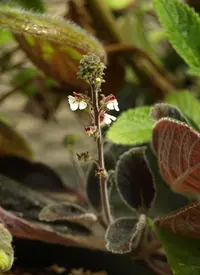
Gloxinia erinoides is a small, rhizomatous perennial from cloud forests of Peru and nearby Andean regions. It belongs to the Gesneriaceae family, the same group as African violets. The plant forms low rosettes of softly hairy, often patterned leaves and produces delicate tubular flowers held just above the foliage. It is compact and usually grown in pots or terrariums. This species prefers stable warmth, high humidity, and gentle, filtered light, so it is best suited to controlled indoor conditions. Due to its sensitivity to dry air, cold, and inconsistent watering, it is moderate in difficulty and rewards careful growers. Understanding how to care for Gloxinia erinoides helps reduce stress and leaf damage.

Care Difficulty
Hard Care

Light Preference
Bright Indirect Light

Water Requirements
Keep Soil Moist

Temperature Preference
Tropical / Frost Sensitive

Hardiness Zone
11–12

Soil Texture
Loamy, Peaty, Organic-rich

Soil pH
Acidic (5.5–6.5), Slightly acidic (6.5–7.0)

Soil Drainage
Moist but well-drained

Fertilization
Moderate (every 2–4 weeks)
Scan your plant to receive care tips personalized for your specific plant
Available on iOS and Android
This species prefers bright, filtered light that mimics a forest understory.
This plant prefers evenly moist but not waterlogged soil around its fine roots.
This species grows best in stable, warm conditions similar to a humid, tropical understory.
This species benefits from consistently high humidity to maintain healthy foliage.
This plant prefers a loose, airy, organic-rich mix that drains quickly but holds light, even moisture.
This species is well suited to container growing due to its compact root system and foliage habit.
This small tuberous species benefits from light, steady feeding during active growth but reacts poorly to heavy fertilizer applications.
Gloxinia erinoides needs only light pruning to keep the plant compact and encourage healthy flowering.
Tuberous plants like this stay compact, so repotting focuses on renewing substrate and managing root health rather than pot size increases.
This species is usually propagated vegetatively to keep traits consistent, although seed is also possible under controlled conditions.
This tropical species is frost-sensitive and is best treated as an indoor or heated greenhouse plant in cold-winter climates.

Plant Health Check
Not sure what's wrong with your plant? Check your plant's health inside the app.
This species is known for its soft, velvety leaves that often appear dark green to almost black, a texture created by dense, fine hairs that help reduce water loss and protect the leaf surface from intense light in its native understory habitat.
Many forms show contrasting silver, bronze, or reddish venation on the upper leaf surface, with the patterns becoming more pronounced under bright but indirect light, which has made it a niche favorite among collectors growing Gloxinia erinoides.
The plant produces small tubular flowers, often pink to reddish with lighter throats, that are reported by growers to have a light, pleasant fragrance, a trait not shared by all related species in the Gesneriaceae family.
This species usually performs better indoors or in sheltered greenhouses, where humidity, warmth, and light are more stable. Outdoors, it struggles with temperature swings, strong sun, and wind, except in very mild, consistently humid climates.
Keep your plants happy and healthy with plant identification, disease detection, and easy care guidance.