Branch training
Lightly tie young, flexible branches to a small trellis or bamboo fan to create an open, vase-shaped canopy that improves flowering and reduces fungal risk by increasing air movement through the plant.

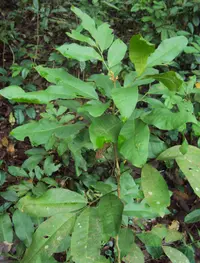
Orangeberry, Glycosmis pentaphylla, is a small evergreen shrub or compact tree from tropical Asia, often grown for its glossy foliage and clusters of pale pink berries. It has a dense, bushy habit with smooth leaves and small, scented white flowers that attract pollinators in warm climates.
In its native range, it occurs in lowland forests, thickets, and coastal areas with warm, humid conditions. It adapts reasonably well to containers, which makes it suitable for patios, conservatories, or bright indoor spaces.
This species is moderately easy to grow if it receives consistent warmth, good light, and well-drained soil. Understanding how to care for orangeberry mainly involves providing stable temperatures and avoiding waterlogged conditions.

Care Difficulty
Moderate Care

Light Preference
Partial Sun

Water Requirements
Moderate Water

Temperature Preference
Tropical / Frost Sensitive

Hardiness Zone
10–11

Soil Texture
Sandy, Loamy, Organic-rich

Soil pH
Acidic (5.5–6.5), Slightly acidic (6.5–7.0)

Soil Drainage
Moist but well-drained

Fertilization
Light (every 4–6 weeks)
Scan your plant to receive care tips personalized for your specific plant
Available on iOS and Android
This shrub prefers bright, indirect light with some gentle direct sun for best growth.
Glycosmis pentaphylla prefers evenly moist, well-drained soil that never stays soggy.
This species thrives in consistently warm, frost-free conditions.
This subtropical shrub prefers moderate to slightly elevated humidity but usually adapts to typical household levels.
This plant prefers a loose, well-drained, slightly acidic to neutral substrate that stays lightly moist but not wet.
This species is well suited to container growing for patios, balconies, or small gardens.
Glycosmis pentaphylla benefits from modest, balanced feeding during its active growing season.
Pruning helps maintain a healthy, compact form and encourages denser branching in Glycosmis pentaphylla.
This species is often grown in the ground but can adapt to containers that are managed thoughtfully.
Glycosmis pentaphylla is usually propagated from seeds or semi-ripe cuttings under warm, stable conditions.
This subtropical shrub is frost-sensitive and needs protection in regions with cold winters.

Plant Health Check
Not sure what's wrong with your plant? Check your plant's health inside the app.
This species belongs to the same plant family as oranges and lemons (Rutaceae) and produces small, translucent pink berries that resemble miniature citrus fruits in flavor and aroma.
In suitable tropical and subtropical climates it naturally forms a dense, many-stemmed evergreen shrub that can be lightly pruned into a hedge or small specimen tree while still flowering and fruiting.
The soft, sweet berries are readily eaten by birds in its native range, and the seeds pass through the digestive tract and germinate away from the parent plant, helping the species colonize new sites.

In some parts of South and Southeast Asia, this plant is commonly grown near homes and along paths as a handy nibbling fruit for children, who eat the berries straight from the shrub like tiny citrus-flavored snacks.
Lack of flowering usually comes from insufficient light, nutrient-poor or very high-nitrogen fertilizer, or heavy pruning at the wrong time. Root stress in small containers and irregular watering can also reduce bud formation and flowering reliability.
Keep your plants happy and healthy with plant identification, disease detection, and easy care guidance.