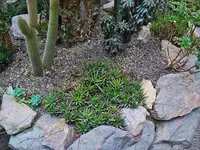
Tillandsia flabellata Care

Tillandsia flabellata

About Tillandsia flabellata

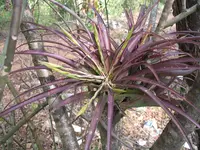
Tillandsia flabellata is an epiphytic air plant in the bromeliad family, usually growing attached to trees rather than in soil. It forms upright rosettes of narrow, arching leaves and produces tall, colorful flower spikes that add strong vertical accents.

This species is native to humid forests of Mexico and Central America, where it receives bright filtered light, high air humidity, and good air movement. Its lack of true roots in soil and its ability to take up water and nutrients through the leaves make it relatively easy to grow indoors once its basic needs are understood. With stable conditions and moderate attention, it is straightforward to care for Tillandsia flabellata.

Main Plant Requirements

Care Difficulty

Moderate Care

Light Preference

Bright Indirect Light

Water Requirements

Moderate Water

Temperature Preference

Tropical / Frost Sensitive

Hardiness Zone

10–12

Soil Texture

Rocky, Sandy, Organic-rich

Soil pH

Acidic (5.5–6.5)

Soil Drainage

Well-drained

Fertilization

Light (every 4–6 weeks)

Get Personalized Care Plan

Scan your plant to receive care tips personalized for your specific plant

Available on iOS and Android

How to Care for the Tillandsia flabellata

This species prefers bright, indirect light with brief periods of gentle direct sun.

  • Provide 4–6 hours of filtered or dappled light daily, such as morning sun and afternoon shade under a tree canopy or shade cloth.
  • Allow early morning direct sun but protect from harsh midday and afternoon sun, which can scorch leaves and cause bleaching or crispy tips.
  • In brighter summer conditions, increase shade or distance from the light source; in winter, move Tillandsia flabellata to a brighter spot to compensate for shorter days.

This air plant absorbs water mainly through its leaves, so moisture around the foliage matters more than roots.

  • Soak or thoroughly mist 2–3 times per week in warm, dry periods, then let the plant dry fully within 2–3 hours to avoid rot at the base.
  • Reduce watering to once or twice weekly in cool, humid weather, always ensuring good air movement so no water sits trapped between leaf bases.
  • Signs of underwatering include curling, brittle, or dull leaves; signs of overwatering include limp, darkening leaves and a soft, browning center.

This species thrives in warm, frost-free conditions with moderate temperature swings between day and night.

  • Aim for 65–80°F (18–27°C) for strong growth, with slightly cooler nights helping maintain a natural rhythm.
  • Protect the plant from temperatures below 45°F (7°C); exposure near freezing can cause leaf damage and tissue collapse, even without visible frost.
  • In hot spells above 90°F (32°C), increase air movement and humidity while keeping it shaded, as extreme heat with direct sun can cause rapid leaf desiccation.

This species prefers moderate to high humidity and reacts quickly to very dry air.

  • Aim for 50–70% humidity, with regular air movement to prevent trapped moisture on the leaves.
  • Dry, crispy leaf tips and leaf curling indicate humidity stress or insufficient misting frequency.
  • Increase humidity by daily misting in the morning and placing the plant near (not over) a humidifier.
  • Reduce humidity stress by soaking the plant in room‑temperature water for 15–20 minutes during very dry periods.

Tillandsia flabellata is an epiphytic air plant and must not be grown in regular potting soil.

  • Mount the plant on bark, cork, or other inert, rough materials that allow roots and leaf bases to dry quickly between waterings.
  • If a substrate is desired, use a very loose blend of large orchid bark, chunky perlite, and a small amount of sphagnum, keeping the base above any constantly damp material.
  • Ensure maximum aeration by leaving open space around the plant so air can circulate freely through and around the leaves.
  • Avoid dense, peat-heavy or compacted media, and never bury the plant base, which promotes rot in the leaf sheaths.

This species can be grown in containers if mounted or loosely supported rather than potted in dense media.

  • Use shallow, wide containers filled with decorative gravel or large bark pieces to anchor the plant while keeping the base fully exposed to air.
  • Choose heavier materials such as ceramic or stone when the inflorescence is tall, to prevent the container from tipping over.
  • Ensure any decorative vessel either has drainage holes or is used as a cachepot, so water can be poured off within a few minutes after soaking.

This epiphytic bromeliad benefits from light feeding during active growth but does not depend on heavy fertilization.

  • Use a balanced NPK orchid or air-plant fertilizer diluted to 1⁄4–1⁄2 strength in water.
  • Apply every 4–6 weeks in spring–summer, misting or soaking the foliage and base, then letting it dry well.
  • Reduce feeding to 1 light application in fall and usually skip winter fertilization indoors.
  • Avoid slow-release granules or compost on Tillandsia flabellata, as residues can retain excess moisture and cause rot.

Pruning needs for Tillandsia flabellata are minimal and focus on cleanliness rather than shaping.

  • Best time is after flowering or during spring when the plant is actively growing.
  • Gently remove dead or dried leaves at the base and spent flower spikes to improve appearance and airflow.
  • Use clean, sharp scissors to cut close to the base without damaging firm green tissue.
  • Limited removal of damaged or crowded leaves can reduce fungal issues and keep the rosette more open for light and air.

This air plant is usually mounted or placed loosely rather than potted, so transplanting focuses on remounting and adjusting support rather than root disturbance.

  • Remount when the clump outgrows its support, leans, or dries out too quickly between waterings.
  • Best timing is spring–early summer, allowing fast recovery in warm, bright conditions.
  • Typical frequency is every 2–4 years, or when offsets make the cluster unstable or shaded in the center.
  • During transplanting, gently detach the base, avoid breaking the small holdfast roots, secure onto new bark or cork, and keep stress low with shaded, humid conditions for 1–2 weeks.

Most home growers multiply Tillandsia flabellata by offsets rather than by seed.

  • Allow pups to reach about 1⁄3–1⁄2 the size of the mother before removing for best survival.
  • Gently twist or cut pups from the base in spring–summer, when warmth and light support growth.
  • Place divisions on a new mount with good air movement and bright, indirect light until they establish.
  • Seed propagation is possible under warm (70–80°F), bright, consistently humid conditions but is slow and mainly of interest to advanced growers.

This tropical air plant is frost sensitive and needs mild conditions in winter, especially in cooler climates.

  • Move outdoor plants indoors before temperatures drop near 40°F, choosing a bright, airy spot.
  • Avoid exposure to freezing or near-freezing drafts around windows or doors.
  • Keep winter humidity moderate and watering lighter, allowing the plant to dry quickly after each soak or misting.

Care Tips

Drying airflow

After each soaking, place plants on a mesh rack or tilted surface so water runs off the leaf bases and the center rosette dries fully within 3–4 hours to prevent rot.

Mounting strategy

Attach plants to cork, hardwood, or inert stone using plastic-coated wire or a small dot of non-toxic waterproof glue, leaving the basal area free so pups can emerge and air can circulate.

Pup management

Wait until offsets reach about one-third to one-half the size of the parent before gently twisting them off, which maintains stronger clones and reduces stress on both pup and parent.

Indoor air rotation

Rotate plants every 2–4 weeks between slightly different locations such as near a kitchen window or bathroom with a fan to provide varied air movement and reduce stagnant, pest-prone conditions.

Salt and residue control

If tap water is hard or heavily treated, occasionally rinse plants with collected rainwater or distilled water to flush mineral and fertilizer residues from leaf surfaces and trichomes when caring for Tillandsia flabellata.

Common Pests and Diseases

Mealybugs

This pest often hides in the leaf bases and between tightly overlapping leaves, sucking sap and weakening the rosette. Symptoms include cottony white clusters, sticky residue, and distorted or stunted growth.

Solution

Isolate the affected air plant, then rinse thoroughly under a strong but gentle stream of lukewarm water, focusing on leaf bases and inner whorls. Follow with targeted spot treatment using a cotton swab dipped in isopropyl alcohol, repeat weekly until no new insects appear, and increase air circulation to discourage re-infestation.

Scale insects

These insects attach along the leaves and at the base, appearing as small brown, gray, or translucent bumps that do not brush off easily. This pest removes sap, leading to dull, yellowing foliage and reduced vigor.

Solution

Manually remove visible scale with a soft brush or cloth after rinsing the plant, then dab remaining insects with isopropyl alcohol on a cotton swab. Keep the plant in brighter, airy conditions and inspect regularly, repeating mechanical removal over several weeks as part of consistent Tillandsia flabellata care instructions.

Fungal leaf spot

This disease develops mainly on plants kept too wet with poor air movement, causing small dark spots that may enlarge and merge into irregular blotches. Symptoms include softened tissue and sometimes a faint yellow halo around lesions.

Solution

Improve airflow and reduce misting frequency so the plant dries fully within a few hours after watering, then trim and discard badly spotted leaves with sterilized scissors. After allowing the plant to dry, a light application of a copper-based fungicide or broad-spectrum ornamental fungicide can be used according to label directions, avoiding runoff accumulation in the leaf base.

Bacterial rot

This disease often begins in the central leaf funnel after water sits for long periods, leading to soft, dark, foul-smelling tissue that spreads outward. Symptoms include sudden collapse of the central leaves while outer leaves may still look relatively normal at first.

Solution

Remove and discard the most affected plants, as advanced bacterial rot cannot be reversed, and avoid contact with healthy specimens. For early cases, cut away soft tissue with sterile tools, let the plant dry in bright, airy conditions, and adjust watering so excess water is shaken out and the rosette dries quickly after soaking or rinsing.

Spider mites

These insects may affect plants kept in very dry, stagnant indoor air, causing fine speckling, dull coloration, and very thin webbing between leaves. This pest is tiny and often detected only after discoloration becomes noticeable.

Solution

Rinse the plant thoroughly under running water, including the leaf undersides and inner whorls, then maintain slightly higher ambient humidity with better air circulation. For persistent infestations, repeat forceful rinsing and use an insecticidal soap or horticultural oil spray diluted according to the label, ensuring the plant dries fully within a few hours after treatment.

Interesting Facts

Cloud-forest specialist

This species is native to humid montane forests of southern Mexico and Central America, where it often grows on trees in cool, misty habitats rather than in arid environments typical of many air plants.

Absorbs water via leaves

Like other bromeliads, it has specialized leaf scales called trichomes that take up water and dissolved nutrients directly from rain, fog, and debris that collects around the rosette.

Long-lasting scarlet spikes

Mature plants can produce tall, bright red to orange inflorescences that remain colorful for several weeks, with tubular flowers emerging sequentially along the spike to extend the blooming period.

Botan icon

Did you know?

In its native range, this species often forms loose clumps high in the canopy, where its arching rosettes help trap organic debris; over time, this creates small, suspended pockets of humus that support micro-ecosystems of insects and other tiny organisms.

FAQs about Tillandsia flabellata

Lack of blooming usually comes from insufficient maturity, inadequate light intensity, or stress from very low humidity or temperature swings. Stable conditions, good air movement, and patience are important, as this species often needs several years to flower.

Grow Healthy Plants with Botan Care

Keep your plants happy and healthy with plant identification, disease detection, and easy care guidance.

Botan plant care app — identify plants on mobile

Explore More Plants