Tubers in Containers
Use a wide, deep container (at least 30–40 cm wide) to allow the underground tuber to expand, and avoid repotting frequently so the plant can build a strong storage organ that supports drought and heat tolerance.

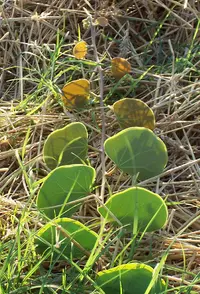
Marama bean, Tylosema esculentum, is a long-lived, drought-tolerant legume native to the dry regions of southern Africa. It grows from a large underground tuber and produces sprawling vines with rounded leaves and yellow pea-like flowers. The plant is adapted to poor, sandy soils and survives long dry periods, which can make it quite resilient once established. In cultivation, it needs warm conditions, good drainage, and plenty of sun, and it dislikes cold, wet roots. These traits mean it can be slow to start but rewarding for patient growers who want to learn how to care for Marama Bean.

Care Difficulty
Moderate Care

Light Preference
Full Sun

Water Requirements
Low Water

Temperature Preference
Tropical / Frost Sensitive

Hardiness Zone
10–12

Soil Texture
Sandy, Loamy, Rocky

Soil pH
Slightly acidic (6.5–7.0), Neutral (7.0)

Soil Drainage
Well-drained

Fertilization
Minimal (feed rarely)
Scan your plant to receive care tips personalized for your specific plant
Available on iOS and Android
This drought-adapted legume thrives in strong light but benefits from some protection during extreme heat.
This species stores water in a large tuber and prefers infrequent, deep watering rather than constant moisture.
This desert-edge perennial handles heat well but is sensitive to cold and frost.
This drought-adapted species has low humidity demand and suits typical indoor air.
This species prefers very fast-draining, sandy soil that mimics its native arid habitats.
This species can be grown in containers if the pot is adapted to its deep tuber and need for rapid drainage.
Tylosema esculentum is adapted to nutrient-poor soils, so use light, targeted feeding to support growth without overloading the roots.
Pruning Tylosema esculentum is mainly about light control of growth and removal of damaged material rather than heavy shaping.
This deep-rooted perennial forms a large tuber, so focus on careful transplanting and container upsizing to avoid root damage.
New plants are most reliably raised from seed, with vegetative methods much less common for home growers.
This species is sensitive to hard frost and benefits from protection of its tuber and above-ground growth in cold climates.

Plant Health Check
Not sure what's wrong with your plant? Check your plant's health inside the app.
This species forms a large underground tuber that stores water and nutrients, allowing it to survive long droughts in the Kalahari region.
Its seeds (often called marama beans) are unusually high in protein and oil, with a nutritional profile somewhat similar to soybeans and peanuts, making them an important traditional food in parts of southern Africa.
As a member of the legume family, it forms root nodules with symbiotic bacteria that fix atmospheric nitrogen, improving soil fertility in its natural habitats.

This plant is a perennial that can remain productive for many years in the wild, with individual tubers reported to reach very large sizes hidden below the sandy Kalahari soil, sometimes weighing several kilograms or more.
Yes, this species is edible. The large underground tuber and the seeds are both eaten after proper cooking, which removes natural bitter compounds. Seeds are high in protein and oil, similar to peanuts.
Keep your plants happy and healthy with plant identification, disease detection, and easy care guidance.