Low Trellis Training
Install a low, sturdy trellis or wire along the row and loosely tie new canes horizontally so they root less in unintended spots and produce more accessible fruiting laterals.

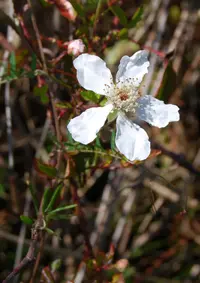
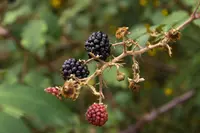
Southern dewberry, Rubus trivialis, is a low, trailing bramble native to the southeastern United States and parts of the south-central regions. It belongs to the blackberry group and forms arching or creeping canes that can root where they touch the ground.
Plants have slender, often prickly stems with glossy, three-part leaves and small white spring flowers that develop into dark, edible berries. It naturally occurs in open woods, fields, roadsides, and disturbed sites.
This species is generally vigorous and resilient, which makes it easy to establish but also capable of spreading quickly. Light, well-drained soils and full sun to light shade usually suit it best, and understanding this helps clarify how to care for southern dewberry in home landscapes.

Care Difficulty
Easy Care

Light Preference
Full Sun

Water Requirements
Moderate Water

Temperature Preference
Warm Climate

Hardiness Zone
6–9

Soil Texture
Sandy, Loamy, Clay

Soil pH
Acidic (5.5–6.5), Slightly acidic (6.5–7.0)

Soil Drainage
Well-drained

Fertilization
Minimal (feed rarely)
Scan your plant to receive care tips personalized for your specific plant
Available on iOS and Android
This trailing bramble prefers bright conditions with some protection from intense heat.
This species prefers consistently moist but not saturated soil once established.
This plant is adapted to mild to warm climates with cool winters for dormancy.
Rubus trivialis handles a wide humidity range and usually does not need special humidity management outdoors.
Rubus trivialis prefers loose, well-aerated soil that stays evenly moist but never waterlogged.
This species can be grown in containers if the pot is large and stable enough for its trailing, spreading habit.
Rubus trivialis is a tough native bramble that benefits from light, targeted feeding in poorer soils.
Pruning supports manageable growth and productive fruiting in Rubus trivialis thickets.
This species is usually grown in the ground, so focus on thoughtful transplanting rather than frequent repotting.
Rubus trivialis spreads readily, and propagation methods are simple for expanding a patch or renewing plants.
This bramble is generally cold hardy in its native range and usually needs minimal winter care.

Plant Health Check
Not sure what's wrong with your plant? Check your plant's health inside the app.
This species naturally forms low, trailing canes that root where they touch the soil, creating dense mats rather than upright bramble thickets typical of many other Rubus species.
The leaf surfaces and even the veins of southern dewberry can be noticeably prickly, a trait that helps distinguish it in the field from similar blackberry relatives with smoother leaves.
In much of its native range, this plant flowers in late winter to early spring, providing some of the first nectar and pollen resources of the year for native bees and other early-emerging pollinators.

Rubus trivialis is a characteristic component of southern pine and coastal prairie ecosystems in the southeastern United States, where its sprawling growth can both stabilize sandy soils and act as a protective, thorny understory layer that shelters small animals from predators.
This species spreads by arching canes that root where they touch soil and by underground stems. In favorable conditions it can form dense thickets, so plan space, edge beds, or use barriers to contain it.
Keep your plants happy and healthy with plant identification, disease detection, and easy care guidance.