


Controlled casing depth
Maintain a consistent 1–1.5 cm casing layer over the spawn run and patch any thin spots, as an even casing depth supports uniform mushroom size and reduces drying at the edges of trays or beds.

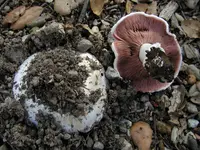
The pavement mushroom, Agaricus bitorquis, is a hardy, soil-dwelling fungus rather than a traditional leafy plant. It forms stout, white to cream mushrooms with thick stems and dense caps that often push up through compacted soil, gravel, or pavement edges.
This species is native to temperate regions and is frequently found in urban parks, gardens, and roadside verges. It is valued as an edible mushroom in some regions but requires correct identification to avoid confusion with toxic look-alikes.
Agaricus bitorquis tends to prefer nutrient-rich, well-drained soil and moderate moisture. For those who want to care for Pavement Mushroom, controlled conditions and good hygiene are important, since fungi are sensitive to contamination and competition from other microbes.

Care Difficulty
Hard Care

Light Preference
Shade

Water Requirements
Keep Soil Moist

Temperature Preference
Cool Climate

Hardiness Zone
Unknown

Soil Texture
Loamy, Silty, Organic-rich

Soil pH
Acidic (5.5–6.5), Slightly acidic (6.5–7.0)

Soil Drainage
Moist but well-drained

Fertilization
Minimal (feed rarely)
Scan your plant to receive care tips personalized for your specific plant
Available on iOS and Android
This soil-dwelling mushroom prefers low to moderate light rather than direct sun exposure.
This species needs consistently moist, not waterlogged, substrate to form healthy fruiting bodies.
This mushroom fruits best in cool to mild conditions with stable temperatures.
This mushroom needs consistently high humidity for reliable fruiting and healthy development.
Agaricus bitorquis performs best in a structured, compost-based substrate with stable moisture and air spaces.
This species can be grown in containers if they are deep, stable, and managed like small, insulated beds.
Agaricus bitorquis grown in beds or containers benefits from moderate, targeted feeding to maintain steady mushroom production.
Pruning is not a standard practice for Agaricus bitorquis, since the harvestable part is the fruiting body rather than a woody or leafy plant.
This species is usually grown in outdoor beds or trays, so management focuses on renewing the substrate rather than classic houseplant repotting.
Agaricus bitorquis is propagated from spawn rather than by typical houseplant methods such as cuttings or division.
Outdoor beds of Agaricus bitorquis show good cold tolerance and usually need only minimal winter management in temperate climates.

Plant Health Check
Not sure what's wrong with your plant? Check your plant's health inside the app.
This species fruits so forcefully that it can crack or lift asphalt and concrete paving slabs, a behavior that led to the common name pavement mushroom.
Unlike many temperate Agaricus species, it tolerates warmer soil and can fruit in compacted, sun‑exposed urban substrates where temperatures are relatively high.
The mushrooms often develop from deep in the soil, with thick, robust stems that push through compacted layers before the caps emerge at the surface.

This species is one of the few wild Agaricus that has been selectively cultivated in some regions as an edible mushroom because it is closely related to the common button mushroom Agaricus bisporus and has a similarly mild flavor when properly identified and cooked.
This species is considered an edible mushroom in many regions, but correct identification is critical. It may accumulate roadside contaminants such as heavy metals. Only harvest from clean, uncontaminated sites and avoid specimens from busy streets or polluted areas.
Keep your plants happy and healthy with plant identification, disease detection, and easy care guidance.

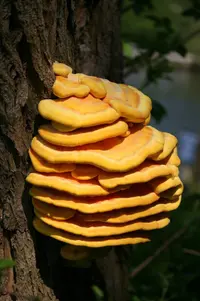
chicken of the woods
Laetiporus sulphureus
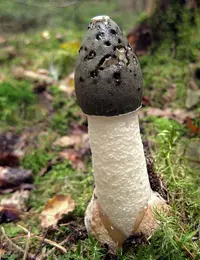
common stinkhorn
Phallus impudicus
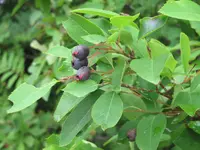
oblongfruit serviceberry
Amelanchier bartramiana
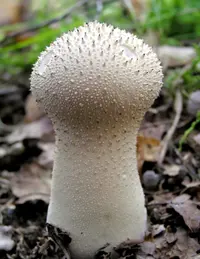
devil's snuff-box
Lycoperdon perlatum
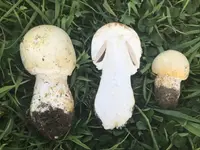
Agaricus crocodilinus
Agaricus crocodilinus
Mediterranean Asparagus
Asparagus aphyllus
California wild grape
Vitis californica
Utah serviceberry
Amelanchier utahensis