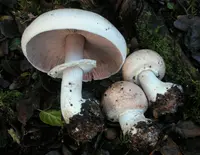
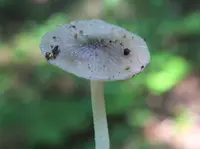
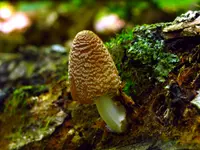
Nail Fungus Care (Poronia punctata)

Nail Fungus

About Nail Fungus

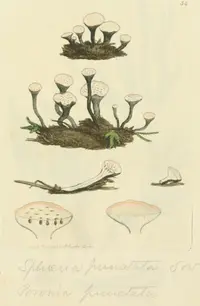
Poronia punctata, often called nail fungus, is a small, dung-loving fungus rather than a typical houseplant. It forms tiny, pale disks with dark spots that resemble nail heads, usually on old horse or pony droppings. This species naturally occurs in grasslands and pastures across parts of Europe and other temperate regions, where grazing animals are present. It plays a role in breaking down manure and returning nutrients to the soil. For those interested in how to care for Nail Fungus in cultivation, it is challenging, since it depends on very specific substrates and conditions that are difficult to recreate indoors or in gardens.

Main Plant Requirements

Care Difficulty

Hard Care

Light Preference

Partial Shade

Water Requirements

Keep Soil Moist

Temperature Preference

Warm Climate

Hardiness Zone

Unknown

Soil Texture

Loamy, Organic-rich

Soil pH

Acidic (5.5–6.5), Slightly acidic (6.5–7.0)

Soil Drainage

Moist but well-drained

Fertilization

Minimal (feed rarely)

Get Personalized Care Plan

Scan your plant to receive care tips personalized for your specific plant

Available on iOS and Android

How to Care for the Nail Fungus

Poronia punctata prefers stable, open light typical of sunny grassland or pasture habitats.

  • Provide 4–6 hours of direct morning sun with bright, open conditions the rest of the day; light dappled shade in early afternoon is acceptable in hot summers.
  • Avoid deep shade, which reduces the formation of the Nail Fungus fruiting bodies; sparse, filtered light under low vegetation is acceptable if not too dense.
  • Protect from intense, all-day midsummer sun in exposed sites, which can overheat the substrate and dry dung or soil too quickly, reducing fungal activity.

Poronia punctata depends on consistently moist, but not saturated, organic substrates such as dung or very rich soil.

  • Aim for evenly moist conditions; allow only the top 1–2 cm of surrounding soil or substrate to start drying before adding water, especially during active fruiting.
  • In warm seasons, monitor more often and water when the substrate feels slightly springy rather than hard and dry; in cooler seasons, reduce watering so it stays just damp.
  • Signs of excess water include foul anaerobic odor and slimy decay, while underwatering shows as brittle, overly dry dung or substrate that shrinks and pulls away from the surrounding soil.

Stable, mild temperatures support reliable development of Poronia punctata fruiting bodies.

  • Aim for 59–75°F (15–24°C) during active growth; this range supports both the fungus and its typical pasture microflora.
  • Avoid extended exposure below 41°F (5°C), which slows or halts visible growth; hard frost below 28°F (-2°C) can damage surface structures, especially in exposed sites.
  • In hot spells above 86°F (30°C), partial shade and higher ambient humidity help prevent the substrate from drying and overheating, which can shorten the lifespan of fruiting bodies.

Poronia punctata tolerates a wide humidity range, so moisture in the substrate matters more than air humidity.

Poronia punctata is a dung-inhabiting fungus that requires very specific organic-rich substrate conditions rather than standard garden soil.

  • Provide well-decayed herbivore dung (such as horse dung) mixed with a small amount of leaf litter for structure and moisture retention.
  • Ensure the substrate remains moist but not waterlogged by allowing excess water to drain away freely after any wetting.
  • Keep the substrate loosely packed to maintain air spaces, since compacted material quickly turns anaerobic and suppresses fungal growth.
  • Avoid mineral-heavy, sandy, or typical potting mixes, which lack the complex organic matrix this species needs to develop fruiting bodies.

This species is not realistically suited to standard container growing for home cultivation.

Poronia punctata usually grows on nutrient-rich dung and needs little to no additional fertilizer in cultivation.

  • If grown experimentally in containers, use a very dilute balanced NPK solution at 1/4 strength during active fungal growth.
  • Apply at most every 4–6 weeks, as excess nutrients can disrupt the dung-based substrate.
  • Do not feed during winter or when fruiting bodies are absent; maintain only even, moderate moisture.
  • For Nail Fungus indoor care, prioritize a fresh, well-decayed dung substrate over repeated liquid feeding.

Pruning is not applicable in the usual sense for Poronia punctata because it is a small dung-inhabiting fungus, not a leafy plant.

Transplanting this dung-loving fungus focuses on renewing its substrate rather than handling roots like a typical potted plant.

  • Replace the dung substrate when fruiting declines or contamination appears, instead of waiting for root-bound signs.
  • Best timing is early in the active growth period, when temperatures and humidity are stable.
  • Move small pieces of colonized substrate onto fresh, well-decayed dung to encourage new fruiting.
  • Handle material gently, keep it shaded and slightly moist during transfer, and avoid temperature shock.

Propagation of Poronia punctata is specialized and usually attempted only by experienced growers or researchers.

  • Use spore-based methods, collecting spores from mature fruiting bodies and placing them on fresh dung substrate.
  • Late spring to late summer with mild, stable temperatures suits spore germination and mycelial spread.
  • Keep the substrate consistently moist, not waterlogged, with good air exchange to limit competing molds.
  • Maintain very clean tools and containers, as contamination often outcompetes developing Poronia colonies.

Outdoor populations in suitable climates generally need no special winter care, as this fungus persists through spores and mycelium.

  • In cold regions, any experimental container cultures are best kept in a cool, frost-free space (35–50°F).
  • Maintain barely moist conditions, allowing the substrate surface to dry slightly between checks.
  • Avoid heavy mulching that traps excess moisture, which can encourage rot and competing fungi.

Care Tips

Substrate mimicry

Cultivate on well-composted horse dung mixed with a small amount of straw or wood shavings to mimic its natural dung habitat and support reliable fruiting.

Manure paste inoculation

Spread a thin layer of well-rotted horse manure “paste” onto partially decomposed dung pats, then press colonized material or spore-rich fragments into the surface to improve establishment.

Moisture-shield setup

Place dung cultures in shallow, perforated trays covered loosely with a translucent lid or breathable plastic to maintain surface moisture while still allowing gas exchange.

Rotation of dung batches

Prepare several small dung batches at staggered times so that as one becomes over-decomposed, a fresh substrate is ready to support continuous spore production when growing Nail Fungus.

Low-competition environment

Keep cultures away from rich garden soil and actively composting piles to reduce invasion by fast-growing molds and other fungi that can outcompete this specialist species.

Common Pests and Diseases

Dung beetle disturbance

This pest interferes with the horse dung substrate that the fungus needs to fruit, breaking apart the pats and drying them too quickly for normal development. Symptoms include scattered or fragmented dung with very few or aborted fungal fruiting bodies.

Solution

Limit access of large dung beetles to key fruiting areas by timing grazing and dung deposition so fresh pats have a few days to develop fungal tissue before heavy beetle activity, and leave some undisturbed dung in open, sun-exposed spots to support Poronia punctata care instructions in managed pasture settings.

Dung fly larvae

These insects colonize fresh dung rapidly and can consume much of the organic material before the fungus is able to develop, reducing or preventing fruiting. Symptoms include dung that becomes powdery and full of fly larvae or tunnels, with few or no visible fungal structures.

Solution

Reduce excessive dung fly pressure by rotating grazing animals, spreading or removing a portion of dung to interrupt fly breeding cycles, and maintaining a mix of slightly older, firm pats that remain intact long enough for fungal colonization.

Mite grazing

These insects feed on fungal tissue, nibbling fruiting bodies and reducing spore production on dung surfaces. Symptoms include pitted or eroded tops of the small fungal clubs and fine, crawling mites visible on close inspection.

Solution

Encourage a balanced soil and invertebrate community by avoiding broad-spectrum insecticides, and maintain varied microhabitats so predatory mites and small arthropods can keep grazing mites in check; in small monitored patches, heavily infested pats can be removed to reduce local pressure.

Competitive dung fungi

This disease pressure comes from faster-growing fungal species that colonize horse dung first, occupying the substrate and outcompeting the target species. Symptoms include dung covered by dense mats or different fruiting bodies with no or very sparse nail-like structures.

Solution

Support conditions that favor Poronia punctata by ensuring dung comes primarily from horses or similar grazing animals, avoiding heavy nitrogen enrichment or repeated manuring that strongly favors aggressive competitors, and maintaining open, sunny, moderately grazed pasture where dung dries at a moderate rate.

Substrate desiccation

This disease-like environmental stress occurs when horse dung dries too quickly, killing developing fungal tissue before it can form mature fruiting bodies. Symptoms include hard, crusted dung with only tiny, aborted primordia or no visible fungal growth at all.

Solution

Maintain a grazing pattern that leaves some dung in slightly sheltered but still open locations, avoid intensive harrowing or rapid mechanical breakup of pats, and in small conservation plots consider leaving light surrounding vegetation to slow extreme drying while still allowing adequate sun exposure.

Interesting Facts

Dung specialist fungus

This species almost exclusively fruits on old horse dung, where its small white fruiting bodies with black dots emerge as the substrate dries and weathers.

Spore-shooting perithecia

The black dots on the disc are perithecia, flask-shaped spore-producing structures that can forcibly discharge spores into the air when moisture and light conditions are suitable.

Decline with changing grazing

In several European regions this fungus has declined or disappeared as traditional horse grazing and pasture management changed, making it a useful indicator of old-style, low-intensity grazing systems.

Botan icon

Did you know?

The species has been used by ecologists as a bioindicator to trace historical horse-grazing routes and to reconstruct past land use, because its fruiting strongly reflects where horses once ranged and how dung was left to decompose in the landscape.

FAQs about Nail Fungus

This fungus is not suited to typical indoor conditions. It develops outdoors on old horse dung or similar manure in open, grazed grasslands. Without that specialized substrate and exposure, it will not establish or persist.

Grow Healthy Plants with Botan Care

Keep your plants happy and healthy with plant identification, disease detection, and easy care guidance.

Botan plant care app — identify plants on mobile

Explore More Plants