Use Rotting Wood
Place the culture on well-decayed hardwood logs or very rotted wood chips, as this species colonizes advanced wood decay much more reliably than fresh substrates.

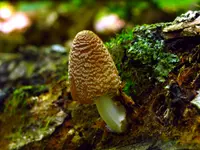
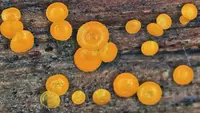
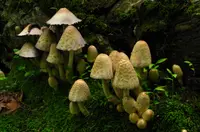
The firerug inkcap, Coprinellus domesticus, is a small saprophytic mushroom that grows on decaying hardwood, often on buried wood in soil or old boards. It is noted for its orange to rust-colored felt-like mycelial mat, sometimes called an ozonium, that forms a striking “rug” around the clustered caps.
Caps start pale and bell-shaped, then darken and dissolve into an inky liquid as the spores mature, a typical trait of inkcap fungi. It appears in temperate regions, especially in North America and Europe, during moist, mild periods.
Because it depends on rotting wood and consistent moisture, it is not an easy species to cultivate intentionally, and attempts to care for Firerug Inkcap usually focus on maintaining damp, woody substrate in shaded conditions.

Care Difficulty
Moderate Care

Light Preference
Partial Shade

Water Requirements
Keep Soil Moist

Temperature Preference
Cool Climate

Hardiness Zone
Unknown

Soil Texture
Loamy, Silty, Organic-rich

Soil pH
Acidic (5.5–6.5), Slightly acidic (6.5–7.0)

Soil Drainage
Moist but well-drained

Fertilization
Minimal (feed rarely)
Scan your plant to receive care tips personalized for your specific plant
Available on iOS and Android
This saprophytic fungus prefers low to moderate light and thrives on shaded, decaying wood.
This species needs consistently moist but not waterlogged wood or woody debris to fruit well.
This fungus fruits best in cool to mild conditions and is sensitive to both hard frost and extreme heat.
This saprophytic fungus needs consistently moist, humid conditions to fruit reliably.
Coprinellus domesticus fruits best on loose, organic-rich substrate that drains freely yet retains even moisture.
This species can be grown in containers when the setup mimics a moist, decaying wood habitat.
This saprophytic fungus usually needs no fertilizer when grown on nutrient-rich woody debris or mulch.
Pruning is not a standard practice for Coprinellus domesticus, since fruiting bodies are short-lived mushrooms rather than a long-lived plant structure.
Transplanting focuses on moving colonized substrate rather than the mushrooms themselves, which are only the fruiting bodies.
Propagation of this species relies on spreading mycelium or spores rather than conventional plant methods like cuttings or division.
This decomposer fungus is generally cold hardy and needs no active winter protection in most outdoor settings.

Plant Health Check
Not sure what's wrong with your plant? Check your plant's health inside the app.
This species often forms a conspicuous orange to rust-brown mycelial mat, sometimes called an ozonium, on damp wood or adjacent surfaces before the fruiting bodies appear.
The mature gills quickly liquefy into a black, inky fluid, a process called deliquescence that helps disperse spores over a short time window.
Fruiting bodies typically develop in dense clusters on very decayed, moisture-rich hardwood, especially in old floorboards, beams, or buried timber in humid buildings.

Coprinellus domesticus and a closely related species, Coprinellus radians, are so similar that modern identification often relies on microscopic features and DNA sequencing, and many older records of C. domesticus may actually belong to one or the other species.
This species is not recommended for eating. Identification within the inkcap group is difficult, and some related species cause gastric upset or interact with alcohol. Treat it as non-edible and enjoy it only for observation.
Keep your plants happy and healthy with plant identification, disease detection, and easy care guidance.