


Use Decaying Wood
Establish the fungus on well-rotted hardwood pieces (oak, maple, beech) rather than only in loose substrate, as burying or half-burying log chunks in a shaded, moist bed gives the mycelium a long-lasting food source.

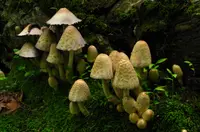
The scaly ink cap, Coprinopsis variegata, is a saprophytic mushroom that breaks down decaying wood rather than a typical leafy houseplant. It forms tall, slender caps with a pale background covered in dark, shaggy scales that eventually dissolve into inky black liquid as the spores mature.
This fungus usually appears in shaded woodland areas, on buried wood, stumps, or heavily mulched beds in temperate regions of North America. It is challenging to cultivate intentionally at home, since it depends on specific wood-based substrates and moisture conditions. For those who wish to care for scaly ink cap outdoors, stable shade and consistently damp, woody organic matter are key environmental factors.

Care Difficulty
Hard Care

Light Preference
Shade

Water Requirements
Keep Soil Moist

Temperature Preference
Cool Climate

Hardiness Zone
Unknown

Soil Texture
Loamy, Organic-rich

Soil pH
Acidic (5.5–6.5)

Soil Drainage
Moist but well-drained

Fertilization
Minimal (feed rarely)
Scan your plant to receive care tips personalized for your specific plant
Available on iOS and Android
This wood-decaying mushroom prefers low light similar to a shaded forest floor rather than direct sun.
This species thrives on consistently moist, but not waterlogged, wood or woody debris.
This fungus develops best in cool to mild conditions typical of shaded woodland environments.
This fungus does not have strict humidity needs but fruits best in consistently moist, sheltered conditions.
This species fruits on very organic, decaying material rather than typical garden soil.
This species can be grown in containers if the substrate and moisture are managed carefully.
Coprinopsis variegata is a saprophytic fungus that usually gains enough nutrients from its substrate and rarely benefits from added fertilizer in garden or container culture.
Pruning is not part of normal care for Coprinopsis variegata, since mushrooms are short-lived fruiting bodies that appear and collapse quickly.
This species is not managed like a potted plant, so focus on providing suitable woody, organic debris rather than traditional repotting or transplanting.
Propagation of Coprinopsis variegata is possible but not usually attempted by casual growers, as it behaves more like a decomposer than a conventional garden plant.
In most temperate climates, this woodland fungus needs no special winter care, as the mycelium typically survives cold periods within protected organic matter.

Plant Health Check
Not sure what's wrong with your plant? Check your plant's health inside the app.
This species has deliquescent gills that enzymatically break down and liquefy as spores mature, turning the cap into an inky fluid that helps disperse its spores over a short time window.
It typically fruits on very well-rotted hardwood, especially decayed logs and buried wood pieces, making it an indicator of advanced wood decomposition in temperate forests.
The cap shows a striking mottled pattern of pale, raised scales over a darker background, a feature that helps distinguish it from many other ink cap relatives with smoother caps.
This species is regarded as inedible and possibly poisonous. It can be confused with other ink caps, some of which interact dangerously with alcohol. Do not harvest or eat it; treat it as a look‑only fungus.
Keep your plants happy and healthy with plant identification, disease detection, and easy care guidance.

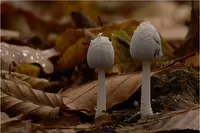
Snowy Inkcap
Coprinopsis nivea
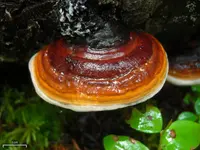
Red-banded polypores
Fomitopsis pinicola
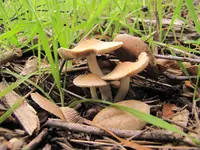
Coprinopsis uliginicola
Coprinopsis uliginicola
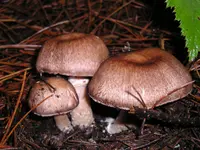
Wine-colored Agaricus
Agaricus subrutilescens
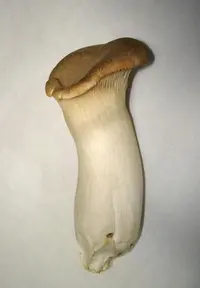
King Trumpet Mushroom
Pleurotus eryngii
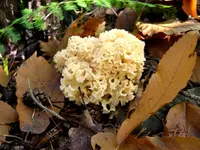
Cauliflower Fungus
Sparassis crispa
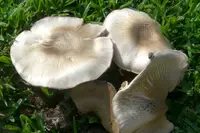
California Agaricus
Agaricus californicus
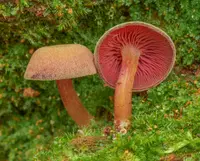
Purple-edged Lute
Callistosporium purpureomarginatum