Host selection
Only introduce this fungus onto freshly cut conifer wood from suitable host species, since it relies on dead or dying conifer tissue rather than healthy live plants for successful colonization.

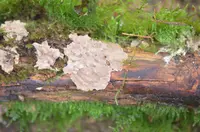
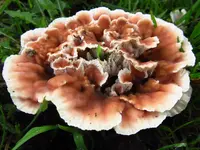
Powdered duster, Amylostereum chailletii, is a wood-decaying fungus rather than a traditional foliage houseplant. It forms flat, crust-like fruiting bodies on dead or weakened conifer wood, often with a pale, dusty surface. In nature it is found mainly in boreal and temperate forests, especially on spruce and other conifers.
This species relies on decaying wood and stable humidity, so it is not an easy subject for casual home cultivation. Conditions must mimic cool, shaded forest habitats with consistent moisture and suitable woody substrate. Most growers interested in how to care for powdered duster treat it as a specialized mycology project, not a decorative indoor plant.

Care Difficulty
Moderate Care

Light Preference
Partial Shade

Water Requirements
Moderate Water

Temperature Preference
Cool Climate

Hardiness Zone
Unknown

Soil Texture
Loamy, Organic-rich

Soil pH
Slightly acidic (6.5–7.0)

Soil Drainage
Moist but well-drained

Fertilization
Minimal (feed rarely)
Scan your plant to receive care tips personalized for your specific plant
Available on iOS and Android
This wood-decaying fungus in conifer forests prefers cool, shaded conditions rather than direct sun exposure.
Moist but not waterlogged wood is critical for stable colonization and fruiting of this fungus.
Stable cool to mild temperatures support the mycelium and fruiting of this conifer-associated fungus.
This wood-decaying fungus does not require controlled humidity and usually follows local outdoor moisture levels.
This saprophytic fungus grows on dead conifer wood rather than in conventional potting soil.
This species is not well suited to conventional container growing because it requires solid wood rather than a soil-filled pot.
Amylostereum chailletii, often associated with conifer wood, generally does not need supplemental fertilizer in natural or forestry settings.
Pruning is not a standard practice for Amylostereum chailletii, which is a wood-decay fungus rather than a garden ornamental.
Transplanting is rarely applicable, since this species naturally colonizes dead or stressed conifer wood rather than growing as a potted plant.
Propagation of Amylostereum chailletii is primarily a specialist task, handled in laboratories or forestry research rather than home settings.
This wood-decay fungus is naturally cold hardy in suitable conifer habitats and needs no dedicated winter care in outdoor conditions.

Plant Health Check
Not sure what's wrong with your plant? Check your plant's health inside the app.
This fungus forms an obligate symbiosis with certain woodwasps in the genus Sirex, which carry its spores in special sacs and inject them into conifer wood when they lay eggs.
It causes a brown-rot type of wood decay in conifers, breaking down cellulose and hemicellulose while leaving modified lignin, which leads to crumbly, brown wood.
The species produces powerful oxidative and hydrolytic enzymes that let it colonize relatively dry, resinous conifer wood that many other fungi cannot efficiently exploit.

This species was historically confused with closely related Amylostereum species until detailed microscopic and molecular studies in the late 20th century clarified its identity and host associations, especially in conifer forests of the Northern Hemisphere.
This wood-decay fungus is not suited to typical indoor cultivation. It establishes outdoors on conifer wood in cool, moist forests. Powdered duster indoor care is generally impractical, as the organism depends on dead or stressed host trees.
Keep your plants happy and healthy with plant identification, disease detection, and easy care guidance.