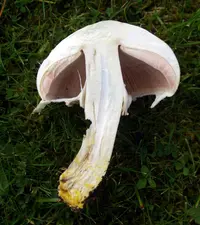
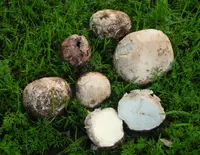
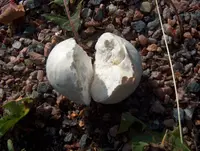
Curry Milkcap Care (Lactarius camphoratus)

Curry Milkcap

About Curry Milkcap

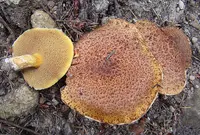
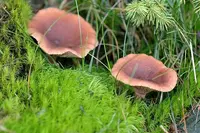
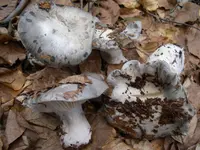
Curry milkcap (Lactarius camphoratus) is a small woodland mushroom, not a leafy houseplant. It produces reddish to brown caps with a matte, often slightly wrinkled surface and a pale stem. When cut, it exudes a watery to slightly milky juice and releases a strong curry-like or spicy odor.

This fungus typically grows on soil in coniferous and mixed forests, often among moss or leaf litter in temperate regions of Europe and North America. It relies on a symbiotic relationship with tree roots, which makes it difficult to cultivate at home and limits how to care for Curry Milkcap to specialized mycology setups rather than typical plant care conditions.

Main Plant Requirements

Care Difficulty

Hard Care

Light Preference

Partial Shade

Water Requirements

Regular Water

Temperature Preference

Cool Climate

Hardiness Zone

Unknown

Soil Texture

Loamy, Silty, Organic-rich

Soil pH

Strongly acidic (4.5–5.5), Acidic (5.5–6.5)

Soil Drainage

Moist but well-drained

Fertilization

Minimal (feed rarely)

Get Personalized Care Plan

Scan your plant to receive care tips personalized for your specific plant

Available on iOS and Android

How to Care for the Curry Milkcap

This ectomycorrhizal fungus prefers cool, dappled forest light rather than direct sun exposure.

  • Site Lactarius camphoratus under deciduous or coniferous trees where it receives 1–3 hours of weak morning sun and bright shade for the rest of the day.
  • Avoid strong midday or afternoon sun; prolonged direct exposure can dry the litter layer and mycelium, reducing fruiting and stressing host tree roots.
  • In summer, choose spots with dense canopy cover; in spring and fall, partial shade with shifting, filtered light supports stable moisture and temperature.

This species depends on consistently moist, not saturated, forest soil maintained through natural rainfall and mulch.

  • Aim for soil that stays evenly moist 5–10 cm deep; the litter layer should feel damp but not soggy when squeezed by hand.
  • Provide supplemental water only during prolonged dry spells, soaking the area slowly, then allowing the surface 2–3 cm to drain and lose surface gloss before any repeat.
  • Watch for signs of overwatering such as standing water, sour smell, and slimy litter; crisp, brittle needles or leaves and shrinking caps suggest insufficient moisture for Lactarius camphoratus fruiting.

This fungus thrives in cool to mild conditions typical of temperate woodlands.

  • Optimal growth and fruiting occur around 50–68°F (10–20°C), especially during cool, moist late summer to autumn periods.
  • It tolerates drops to about 32°F (0°C), but repeated hard frosts below 28°F (-2°C) can halt fruiting and damage exposed fruiting bodies.
  • Sustained heat above 77–82°F (25–28°C), especially with dry air, reduces activity; shade, leaf litter, and soil moisture help buffer temperature swings through summer.

This woodland fungus prefers consistently moist, cool air around its fruiting zone rather than dry conditions.

  • Aim for ambient humidity around 70–90% in cultivation tents or outdoor microhabitats to support reliable fruiting.
  • Dry air leads to smaller, cracked caps and rapid drying of fruiting bodies, indicating humidity stress.
  • Increase humidity with fine-mist fogging, damp leaf litter, and wind protection while still maintaining light air movement to limit fungal pathogens.

This mycorrhizal mushroom needs a loose, organic-rich forest-floor substrate rather than standard potting soil.

  • Use a mix of leaf litter, well-rotted hardwood chips, and a small amount of native forest soil to mimic its natural humus-rich layer.
  • Keep the substrate loose and crumbly so fine fungal mycelium can move easily; avoid compaction from walking or heavy containers.
  • Ensure slow, even drainage: moisture should persist but free water must not pool, or competing fungi and bacteria will dominate.
  • Maintain slightly acidic conditions (pH 5.0–6.5) by favoring oak or beech litter and avoiding lime, ash, or alkaline amendments around Lactarius camphoratus.

This species is generally unsuitable for conventional container growing because it relies on complex mycorrhizal partnerships with host tree roots.

This mycorrhizal fungus naturally partners with tree roots and usually does not need added fertilizer for healthy growth.

Lactarius camphoratus is not pruned like a garden plant, since the visible mushroom is only the fruiting body of a hidden fungal network.

Transplanting focuses on maintaining the tree–fungus association rather than moving Lactarius camphoratus as an isolated organism.

  • Attempt moves only when relocating young host trees whose roots already show mycorrhizal association, ideally in early spring or fall.
  • Choose a new site with similar soil type, drainage, light, and compatible tree species to support the fungus long term.
  • Dig a wide root ball, keeping as much original soil as possible to preserve the fine fungal threads.
  • Water gently after transplanting and limit disturbance, allowing the root–fungus partnership to re-establish with minimal stress.

Propagation of this fungus is specialized and rarely attempted by home growers, since it depends on complex mycorrhizal relationships with tree roots.

This woodland fungus is naturally cold hardy in its native range and needs no specific winter care in the ground.

Care Tips

Establish host trees

Plant or maintain suitable host trees such as beech, oak, or other local ectomycorrhizal species in the area, as this fungus relies on a mycorrhizal partnership with tree roots to survive and fruit.

Mimic forest litter

Create a loose layer of mixed leaf litter, fine wood chips, and small twigs over the soil to imitate a natural forest floor, which helps maintain the stable, cool, and moist microhabitat this species prefers.

Minimize soil disturbance

Avoid tilling, raking deeply, or compacting the soil where the fungus is established so that the fine mycelial network and tree root tips are not damaged.

Use gentle harvesting

When collecting fruiting bodies, cut them at the base with a clean knife rather than pulling, and leave some intact mushrooms to mature and release spores to support long-term population stability.

Manage seasonal moisture

In dry periods under host trees, apply light, infrequent irrigation in the early morning to keep the upper soil layer slightly moist without waterlogging, which supports mycelium activity when growing Curry Milkcap outdoors.

Common Pests and Diseases

Mycophagous slugs

This pest feeds directly on mushroom caps and gills, leaving irregular holes and slime trails on fruiting bodies. Symptoms include shredded margins, missing pieces of cap tissue, and silvery mucus on or around the fungi.

Solution

Hand-pick slugs during damp evenings, use beer traps or iron phosphate slug baits around the fruiting area, and reduce dense groundcover that shelters them. In outdoor beds, a coarse barrier of sharp grit or crushed eggshells can also reduce access to fruiting patches without harming soil organisms.

Mycophagous snails

These insects are actually mollusks that rasp at young and mature fruiting bodies, often hollowing caps from the edge inward. Symptoms include rounded, smoothed feeding scars and small fecal pellets near the damaged mushrooms.

Solution

Remove snails manually at dusk or after rain and relocate them away from the cultivation site. Copper tape barriers around raised beds, plus tidier leaf litter management and stacked boards as sacrificial snail traps, help keep pressure low on Lactarius camphoratus colonies.

Fungus gnat larvae

This pest develops in moist, organic substrates and tunnels through developing mushroom tissue. Symptoms include small holes, water-soaked or collapsing caps, and tiny white maggot-like larvae within stems or gills.

Solution

Improve drainage and avoid over-saturated substrates, then use sticky traps to reduce adult gnats near the fruiting area. In managed outdoor or controlled setups, a soil drench with Bacillus thuringiensis israelensis (BTI), a biological control, can lower larval populations without damaging the fungal mycelium.

Parasitic Hypomyces mold

This disease is caused by a parasitic fungus that overgrows mushroom surfaces, leading to discoloration, distortion, and a felt-like coating on caps and stems. Symptoms include loss of normal gill structure and a firm, crusty outer layer replacing the usual surface texture.

Solution

Promptly remove and discard all infected fruiting bodies, including nearby affected debris, to limit spore spread. Increase airflow, avoid heavy overhead watering in cultivated plots, and reduce overcrowding of fruiting clusters to create less favorable conditions for this parasite.

Bacterial blotch

This disease develops on wet, unventilated mushroom surfaces and causes greasy, water-soaked spots that turn yellow to brown. Symptoms include localized soft patches on caps that may collapse or develop an unpleasant odor.

Solution

Limit prolonged surface wetness by watering the surrounding substrate rather than directly on caps, and maintain good air movement across the fruiting area. Remove badly affected mushrooms and reduce humidity spikes above 90% to prevent new infections when growing Curry Milkcap in a controlled environment.

Interesting Facts

Strong curry aroma

When crushed or dried, the fruiting bodies release a distinct curry-like or fenugreek-like smell, which is much stronger than in most other milkcaps and is the origin of the common name curry milkcap.

Brown-staining milk

The white latex exuded from the gills slowly stains brown on exposure to air, a diagnostic trait used by field mycologists to separate this species from similar small, reddish Lactarius species.

Specialist forest associate

This fungus forms ectomycorrhizal partnerships with conifers such as spruce and pine, exchanging mineral nutrients for sugars and playing a role in nutrient cycling in cool, acidic forest soils.

Botan icon

Did you know?

The distinctive volatile compounds that give the curry milkcap its characteristic odor have made it a reference species in chemical ecology studies that examine how small structural changes in fungal aroma molecules alter scent from sweet-spicy to more pungent, curry-like notes.

FAQs about Curry Milkcap

This mushroom is technically edible but considered poor for eating due to its small size, tough texture, and strong curry-like odor. It is not widely collected for food and is usually left in place.

Grow Healthy Plants with Botan Care

Keep your plants happy and healthy with plant identification, disease detection, and easy care guidance.

Botan plant care app — identify plants on mobile

Explore More Plants