Rotate Log Sites
When cultivating this puffball on buried wood or woody debris, shift inoculated logs or branches to a new patch of soil every 1–2 seasons to reduce pathogen buildup and encourage fresh fruiting areas.

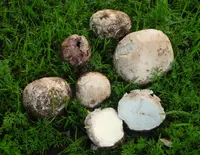
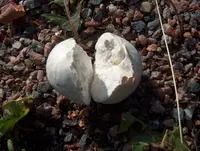
Lead-grey puffball, Bovista plumbea, is a small saprobic fungus, not a leafy houseplant. It grows on soil, lawns, and disturbed ground, feeding on decaying organic matter. Young fruiting bodies are round, smooth, and pale grey to whitish, later becoming darker and powdery as spores mature.
This species occurs widely in temperate regions, including North America and Europe, often appearing in groups after rainy periods. It is relatively easy to observe in the garden, but difficult to cultivate in controlled conditions, so most people do not actively care for Lead-grey Puffball.
It generally favors open sites with short grass or bare soil that stays evenly moist but not waterlogged.

Care Difficulty
Moderate Care

Light Preference
Partial Shade

Water Requirements
Regular Water

Temperature Preference
Cool Climate

Hardiness Zone
Unknown

Soil Texture
Loamy, Sandy, Organic-rich

Soil pH
Slightly acidic (6.5–7.0), Neutral (7.0)

Soil Drainage
Moist but well-drained

Fertilization
Minimal (feed rarely)
Scan your plant to receive care tips personalized for your specific plant
Available on iOS and Android
This fungus prefers open, lightly shaded grassland rather than dense forest or deep shade.
This grassland puffball needs moisture-retentive but free-draining soil rather than constant surface wetness.
This species is adapted to temperate climates with cool to mild conditions.
Humidity is not a significant factor for Bovista plumbea, which tolerates a wide range of ambient conditions.
Bovista plumbea develops best in dry, open soil that mimics short-grass pasture or compacted field conditions.
This species is generally not suitable for long-term container growing, as it prefers natural ground conditions and stable field-like substrates.
Bovista plumbea, the Lead-grey Puffball, is a saprobic fungus that normally does not need any targeted fertilization in gardens or lawns.
Bovista plumbea does not require pruning, since the fruiting body is short-lived and the organism lives mainly as unseen mycelium in the soil.
This puffball is rarely grown in containers; in gardens it is usually left undisturbed rather than transplanted.
Propagation of Bovista plumbea is not usually managed directly, since it spreads naturally by airborne spores from mature puffballs.
This species is naturally cold hardy in temperate climates and typically needs no special winter care.

Plant Health Check
Not sure what's wrong with your plant? Check your plant's health inside the app.
Mature fruiting bodies of this species develop a characteristic dull, lead-grey outer surface before the skin cracks and peels away, which is the feature behind both its scientific and common names.
The outer wall (peridium) of this puffball becomes very thin and fragile as it ages, so it flakes off in irregular patches and exposes the darker spore mass rather than forming a single large opening as in many other puffballs.
When the fruiting body is fully mature, it often detaches from the substrate and can be blown or rolled across open ground, releasing spores through surface cracks as it moves, an efficient wind-dispersal strategy in short-grass habitats.

Microscopic examination of Bovista plumbea reveals small, nearly spherical spores with fine surface ornamentation and well-developed capillitium threads, which help mycologists reliably distinguish it from similar grey puffball species in the field and in herbarium collections.
This fungus develops from a tiny button to a mature puffball within a few weeks under warm, moist conditions. After spores mature, the outer skin cracks and the fruiting body quickly collapses and decomposes.
Keep your plants happy and healthy with plant identification, disease detection, and easy care guidance.