Pacific Golden Chanterelle Care (Cantharellus formosus)

Pacific Golden Chanterelle

About Pacific Golden Chanterelle

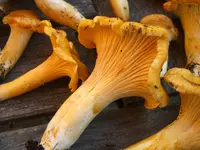
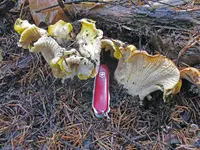
The Pacific golden chanterelle, Cantharellus formosus, is a wild mycorrhizal fungus, not a traditional houseplant. It forms a symbiotic partnership with the roots of certain trees, exchanging nutrients and improving tree health. The fruiting bodies show a golden to yellow funnel shape with blunt ridges instead of true gills.

This species is native to the Pacific Northwest of North America, especially in conifer and mixed forests with moist, well-drained, organic-rich soil. It is prized as an edible mushroom but is difficult to cultivate because it depends on a living host tree, so practical how to care for Pacific Golden Chanterelle usually focuses on maintaining suitable woodland conditions rather than pot culture.


Main Plant Requirements

Care Difficulty

Hard Care

Light Preference

Partial Shade

Water Requirements

Keep Soil Moist

Temperature Preference

Cool Climate

Hardiness Zone

7–9

Soil Texture

Loamy, Silty, Organic-rich

Soil pH

Strongly acidic (4.5–5.5), Acidic (5.5–6.5)

Soil Drainage

Moist but well-drained

Fertilization

Minimal (feed rarely)

Get Personalized Care Plan

Scan your plant to receive care tips personalized for your specific plant

Available on iOS and Android

How to Care for the Pacific Golden Chanterelle

This forest mushroom thrives in dappled, woodland-style light rather than direct, open sun.

  • Provide bright, filtered light with 2–4 hours of weak morning sun and shade or dappled light the rest of the day, mimicking a mixed conifer forest canopy.
  • Aim for partial shade, such as north-facing edges or under shrubs and trees, since strong afternoon sun can dry the soil surface and damage developing fruiting bodies.
  • In summer, increase shade cover if caps look pale or dry; in cooler seasons, slightly thinner canopy cover can improve light and ground warmth for Pacific Golden Chanterelle formation.

This mycorrhizal mushroom relies on consistently moist, not saturated, forest soil.

  • Maintain soil that feels evenly moist 5–8 cm deep, avoiding both cracking-dry and soggy conditions that can harm the fungal network.
  • Use well-drained, organic-rich soil; after rain or irrigation, water should drain within a few hours without pooling at the surface.
  • Increase moisture input during warm, dry periods if litter feels crisp and fungal patches stop fruiting; reduce it if you notice standing water, sour smells, or slimy mycelium mats around Cantharellus formosus hosts.

This species fruits best in cool to mild conditions typical of coastal and near-coastal forests.

  • Optimal fruiting usually occurs around 50–65°F (10–18°C), with mycelium growth continuing more broadly from about 40–70°F (4–21°C) in moist soil.
  • The fungus tolerates brief drops near 30°F (-1°C) when insulated by leaf litter but repeated hard freezes can slow or halt activity.
  • Sustained heat above 75–80°F (24–27°C) with dry conditions can suppress fruiting, so shaded, humid microsites are important during hot, dry spells.

Cantharellus formosus requires consistently moist, humid forest-like conditions to form mushrooms.

  • Aim for 70–90% humidity around the fruiting area, avoiding rapid swings that dry the substrate surface.
  • Dry air causes caps to crack, edges to curl, and pins to abort before developing fully.
  • Use a humidity tent, misting chamber, or ultrasonic humidifier with fresh air exchange to keep humidity high without stagnation.

This ectomycorrhizal fungus relies on specific forest soil conditions rather than a standard potting medium.

  • Soil must be loose, well-aerated, and organic-rich, typically a loamy mix under conifers with high leaf and needle litter.
  • Ensure rapid drainage with no standing water; a mix of forest duff, coarse sand, and fine bark can mimic natural structure.
  • Maintain slightly acidic conditions, roughly pH 4.5–6.0, avoiding liming or alkaline amendments that disrupt the fungal–root partnership.
  • Do not use sterile, peat-based potting mixes alone, since Cantharellus formosus needs living tree roots and undisturbed soil biology.

This species is not realistically suitable for standard container growing because it depends on long-term association with living tree roots in natural soil.

Cantharellus formosus forms a mycorrhizal partnership with trees and generally should not receive direct fertilizer applications.

Pruning is not applied to Cantharellus formosus itself, but limited habitat management can support fruiting.

  • Time any light habitat work for late winter or early spring, before main mushroom fruiting begins.
  • Remove only clearly dead or fallen woody debris if it blocks access, keeping most litter to conserve moisture.
  • Avoid cutting host tree roots or major branches, which can disrupt the mycorrhizal network and reduce mushrooms.
  • Use hand tools like pruners or a small saw with clean blades to minimize site disturbance.

This ectomycorrhizal fungus is rarely grown in containers, so care focuses on minimal-disturbance transplanting of inoculated trees.

  • Transplant only when a young host tree shows poor establishment or must be relocated, typically in late fall or early spring.
  • Choose a cool, overcast day and keep the root ball intact to preserve the fungal network on fine roots.
  • Move the tree to similar soil type, drainage, and light conditions to maintain compatible habitat for the fungus.
  • Water thoroughly after transplanting and keep soil evenly moist, avoiding waterlogging that can damage roots and mycelium.

Practical propagation of Cantharellus formosus is challenging and usually attempted only through habitat inoculation.

  • Use spore slurries made from mature chanterelle caps blended with non-chlorinated water and poured around compatible trees in late summer or fall.
  • Alternatively, transplant small plugs of colonized soil from a productive site into similar, disease-free forest soil with the same tree species.
  • Maintain shaded, moist, well-drained conditions with an intact leaf-litter layer to support mycelium establishment and spread.
  • Understand that colonization and fruiting can take multiple years and success rates are often low, even under good conditions.

In its native range, the Pacific Golden Chanterelle is naturally cold hardy and needs no special winter care.

  • Avoid disturbing forest soil or leaf litter during winter so the mycelium remains insulated and stable.
  • Do not remove snow cover from productive areas, as snow acts as a protective blanket over the fungal network.
  • Container-grown inoculated trees in very cold climates can be moved into an unheated but frost-sheltered space to limit root freeze–thaw cycles.

Care Tips

Host tree selection

Establish the fungus only near suitable host trees such as Douglas-fir, western hemlock, or Sitka spruce, and avoid planting non-mycorrhizal ornamentals that compete for the same soil space without providing a compatible root partner.

Minimal soil disturbance

Keep the forest floor as undisturbed as possible by avoiding digging, tilling, or frequent raking, since fine mycelial threads and mycorrhizal root tips are easily damaged and fruiting can drop for several seasons afterward.

Duff layer management

Maintain a loose, continuous layer of leaf litter and conifer needles 3–8 cm deep over the inoculated zone, adding similar organic material from healthy, unsprayed woodland if natural litter is sparse.

Controlled foot traffic

Mark the production area and restrict walking to a few narrow paths, since repeated compaction from feet, wheelbarrows, or equipment reduces soil aeration and limits fruit body formation.

Gentle harvesting technique

Cut mushrooms at the base with a clean knife and replace disturbed duff over the cut site, rather than pulling or kicking, which helps protect underlying mycelium and supports long-term yields when growing Pacific Golden Chanterelle.

Common Pests and Diseases

Fungal gnat larvae

This pest lives in moist organic layers and can feed on developing chanterelle primordia and mycelium, especially in cultivation beds with rich compost or debris. Symptoms include tunneling damage in young mushrooms and reduced or distorted fruit body formation.

Solution

Reduce excess surface moisture, remove decaying organic debris, and use fine mesh or covers over cultivation beds to limit adult access. In controlled setups, apply biological controls such as Bacillus thuringiensis israelensis (Bti) to the substrate, and harvest mushrooms promptly to reduce breeding sites.

Slugs and snails

These mollusks are strongly attracted to the fleshy fruiting bodies and can rapidly chew holes or consume entire chanterelles, leaving slime trails and ragged edges. Damage is most severe in damp, mossy forest or garden conditions where moisture remains high.

Solution

Hand-pick slugs and snails during cool, moist periods and use physical barriers such as copper tape or rough sand bands around small managed patches. In semi-cultivated or garden settings, reduce dense groundcover that shelters slugs and use iron phosphate bait placed away from the main fruiting area.

Mycophagous beetle larvae

These insects inhabit forest litter and can bore into chanterelle caps and stems, creating tunnels and internal browning. Symptoms include soft, discolored areas with small entry holes and fragmented tissue inside the mushroom.

Solution

Harvest fruiting bodies early, as soon as they reach usable size, and avoid leaving overmature mushrooms in place, which attract beetle adults. In managed patches, gently remove and dispose of heavily infested mushrooms and keep the immediate fruiting zone free of thick, rotting debris that favors beetle buildup.

Bacterial blotch

This disease occurs on wet mushroom surfaces and causes irregular, water-soaked spots that may turn darker or slimy, especially on stored or densely clustered chanterelles. Symptoms include localized softening of tissue and off odors if infection advances.

Solution

Minimize overhead wetting of fruiting bodies, improve air movement around the forest floor or cultivation area, and avoid handling mushrooms with dirty or wet tools. For harvested chanterelles, keep them dry, spread out in a single layer, and store cool with good ventilation to limit bacterial growth.

Parasitic mold overgrowth

This disease involves competitive molds colonizing damaged or old chanterelles, producing fuzzy or powdery growth that covers the surface and accelerates decay. Symptoms include rapid softening, discoloration, and visible mold on caps and gills-like ridges, particularly after heavy rain and warm conditions.

Solution

Remove and discard overmature or moldy mushrooms promptly to reduce spore load near healthy fruiting bodies. In semi-managed settings for growing Pacific Golden Chanterelle, avoid injuring mushrooms, maintain good air circulation at the forest floor or bed surface, and limit prolonged cover that traps humidity directly around the fruiting bodies.

Interesting Facts

Pacific Northwest specialist

This chanterelle is native to the Pacific Northwest of North America and is especially abundant in coastal and low-mountain conifer forests from northern California to British Columbia.

Conifer forest partner

It forms ectomycorrhizal partnerships with trees such as Douglas-fir, Sitka spruce, and western hemlock, exchanging mineral nutrients and water from the soil for sugars from the tree roots.

Late-season fruiting pattern

Fruiting bodies typically appear in autumn and early winter, often persisting through mild frosts in wet, mossy forests, which helps extend the mushroom foraging season in its native range.

FAQs about Pacific Golden Chanterelle

This species is a well-known edible wild mushroom, valued for its fruity aroma and mild, nutty flavor. It must be correctly identified, cooked thoroughly, and harvested from unpolluted areas to avoid contamination with toxic look-alikes or heavy metals.

Grow Healthy Plants with Botan Care

Keep your plants happy and healthy with plant identification, disease detection, and easy care guidance.

Botan plant care app — identify plants on mobile

Explore More Plants