Tumbling puffball Care (Bovista pila)

Tumbling puffball

About Tumbling puffball

The tumbling puffball, Bovista pila, is a small, round puffball fungus rather than a leafy plant. It forms firm, white balls that later dry, turn brown, and detach from the ground. As wind pushes them across open fields or lawns, they release clouds of brown spores through a small opening. This species is native to North America and is often found in grasslands, pastures, and disturbed soil. It is not commonly cultivated, so care for Tumbling puffball focuses mainly on understanding its natural habitat. It tends to appear where soils are open, somewhat compacted, and not heavily shaded.

Main Plant Requirements

Care Difficulty

Moderate Care

Light Preference

Partial Shade

Water Requirements

Moderate Water

Temperature Preference

Warm Climate

Hardiness Zone

Unknown

Soil Texture

Loamy, Sandy

Soil pH

Slightly acidic (6.5–7.0)

Soil Drainage

Well-drained

Fertilization

Minimal (feed rarely)

Get Personalized Care Plan

Scan your plant to receive care tips personalized for your specific plant

Available on iOS and Android

How to Care for the Tumbling puffball

This fungus prefers open habitats with moderate sun exposure rather than deep shade or intense all‑day sun.

  • Provide 3–6 hours of direct morning sun with bright, indirect or dappled light later in the day for stable development of Tumbling puffball fruiting bodies.
  • Allow light partial shade, especially in the afternoon, since prolonged strong midday sun can dry surface soil quickly and limit fruiting.
  • In autumn, when days shorten, ensure the site is not heavily shaded by taller vegetation, as very low light slows growth and reduces puffball size.

Bovista pila develops best in evenly moist but not saturated soil conditions.

  • Let the top 2–5 cm of soil surface dry slightly between natural rainfall or irrigation, then moisten the area without creating puddles.
  • Use free‑draining, sandy or loamy soil so water moves through quickly; standing water or compacted ground encourages rot and reduces fruiting.
  • In hot, dry periods, increase light watering frequency guided by soil feel and color, while in cool, wet seasons avoid extra watering if the surface remains visibly damp.

This species favors temperate conditions and forms fruiting bodies during mild, not extreme, weather.

  • Aim for active growth and fruiting in 60–75°F (16–24°C), which supports stable development of the round puffballs.
  • Tolerates brief drops to about 40°F (4°C), but repeated frost or hard freezes below 32°F (0°C) can damage or stop formation of new fruiting bodies.
  • Handles short warm spells up to about 85°F (29°C) if soil moisture is maintained, but prolonged higher heat with dry soil greatly reduces visible growth.

Humidity is not a major factor for Bovista pila, which thrives in typical outdoor air conditions.

This fungus develops best in loose, sharply drained substrate that mimics dry, open ground.

  • Use a sandy or sandy-loam mix with low organic content to reflect its natural, poor-soil habitats.
  • Ensure extremely fast drainage by blending coarse sand or fine grit with a small amount of sifted compost.
  • Keep the substrate only lightly moist during early development, then allow it to dry between light waterings.
  • Avoid compacted, clay-heavy, or water-retentive mixes, which encourage rot and prevent proper fruiting body formation.

This species is not well suited to container growing, as it naturally fruits on open ground and is difficult to manage in pots.

This saprobic fungus usually obtains all nutrients from its substrate, so caring for Tumbling puffball rarely involves added fertilizer.

Pruning needs for Bovista pila are minimal and focus only on hygiene and safety.

  • Remove collapsed, moldy, or insect-infested fruiting bodies as soon as they appear using gloved hands or a small knife.
  • Cut or lift spent puffballs at ground level to keep the area clean and reduce unwanted spore spread near paths.
  • Dispose of removed material in the trash rather than compost if you do not want further spread on-site.

This puffball is rarely grown in containers; management focuses on where it appears rather than classic repotting.

  • Transplant only if the fungus fruits in an unsuitable place, such as high-traffic lawns or play areas.
  • Move surface soil and underlying mycelium gently to a new area with similar well-drained, low-fertility ground.
  • Perform any relocation in cool, moist weather to reduce stress on the fungal network in the soil.
  • Avoid frequent disturbance of the site to allow the underground mycelium to re-establish after moving.

Propagation of Bovista pila is usually left to natural spore dispersal rather than controlled methods.

This temperate puffball is naturally cold hardy and needs no special winter care beyond normal site hygiene.

Care Tips

Use sterile substrate

Grow this fungus on a pasteurized or sterilized mix of well-aged compost and sand to reduce competing molds and other fungi that can quickly overtake the mycelium.

Surface disturbance control

Avoid raking, digging, or heavy foot traffic on the colonized surface, since damaging the shallow mycelial network will sharply reduce future puffball formation.

Moisture monitoring zones

Place a few small wooden skewers or dowels in different parts of the bed and check them for dampness at depth, adjusting irrigation only in the driest zones to avoid creating waterlogged pockets.

Seasonal rest management

After the main fruiting period, let the bed dry slightly and avoid adding fresh organic matter so the fungus can complete its natural cycle and sporulation without stress.

Spore distribution aid

Once mature puffballs have naturally dried and opened, gently roll them over suitable nearby substrate to help distribute spores and support growing Tumbling puffball in a wider area over time.

Common Pests and Diseases

Mycophagous springtails

These insects feed on fungal tissue and spores, creating small surface pits and irregular damage on developing puffballs, especially in overly damp cultivation trays or containers.

Solution

Reduce constant surface moisture by allowing the substrate top to dry slightly between mistings, then physically remove heavily infested puffballs and surrounding debris. Use fine mesh or tight‑fitting lids for containers, improve air exchange, and, if needed, apply a targeted insecticidal soap drench around but not directly on the fruiting bodies.

Fungus gnat larvae

This pest lives in damp organic substrates and can tunnel through forming puffballs, causing collapse, discoloration, or misshapen fruiting bodies in indoor or tightly covered setups.

Solution

Allow the substrate surface to dry lightly between waterings, use yellow sticky traps to catch adult gnats, and cover air inlets with fine mesh. For persistent problems, treat the substrate with a biological control such as Bacillus thuringiensis israelensis (Bti) while maintaining moderate moisture rather than constant saturation.

Mite feeding damage

These pests, often saprophytic or mycophagous mites, graze on the outer layer of the puffball, leading to rough, scarred surfaces and slowed development, especially in warm, poorly ventilated containers.

Solution

Improve ventilation and avoid overcrowding fruiting bodies to reduce favorable conditions for mites, then discard any severely damaged specimens. Clean and dry the growing chamber between cycles and, where allowed, use horticultural oil or sulfur-free miticidal products on the substrate and equipment rather than on the fruiting bodies themselves.

Green mold contamination

This disease, commonly caused by Trichoderma species, competes aggressively with the fungus, showing as fast-spreading green patches on the substrate and sometimes on immature puffballs, eventually halting normal development.

Solution

Promptly remove and discard contaminated sections of substrate and any puffballs in direct contact with visible green mold, then increase air circulation and slightly reduce humidity. Sterilize or replace tools and containers between runs and start new cultures from clean, uncontaminated material to re-establish healthy Bovista pila care conditions.

Bacterial soft rot

This disease causes water-soaked spots that quickly turn soft, slimy, and foul-smelling, especially when puffballs stay in contact with condensed water or sit directly on saturated surfaces.

Solution

Improve drainage and avoid standing water on or around the puffballs, handling them with clean tools to limit bacterial spread. Remove and dispose of any soft, discolored fruiting bodies immediately and sanitize trays or supports with a mild disinfectant before starting a new batch.

Interesting Facts

Rolling dispersal strategy

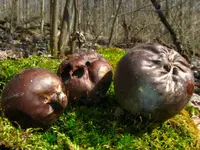
The mature fruit body dries, detaches from the ground, and tumbles in the wind across open habitats, releasing spores through a pore in the upper surface as it rolls.

Prairie and dune specialist

This species is strongly associated with dry, open, often sandy or prairie-like soils, and is frequently recorded from grasslands, sand dunes, and other sparsely vegetated areas in North America.

Thin double wall

Its puffball has a thin, two-layered outer wall that becomes brittle and flakes away with age, exposing a papery inner wall that helps regulate spore release as the fungus tumbles.

Botan icon

Did you know?

In some North American mycological field guides, this species is highlighted as a characteristic indicator of undisturbed, well-drained prairie and sand dune ecosystems, so its presence can help signal relatively intact dry grassland habitat.

FAQs about Tumbling puffball

Young, firm fruiting bodies with pure white flesh inside are considered edible when correctly identified. Once the interior yellows, browns, or becomes powdery, they are no longer edible. Never consume wild fungi without expert confirmation.

Grow Healthy Plants with Botan Care

Keep your plants happy and healthy with plant identification, disease detection, and easy care guidance.

Botan plant care app — identify plants on mobile

Explore More Plants