spring cavalier Care (Melanoleuca cognata)

spring cavalier

About spring cavalier

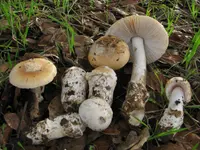
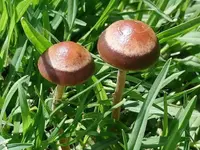
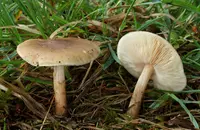
Spring cavalier (Melanoleuca cognata) is a saprotrophic mushroom that grows on soil, leaf litter, or short grass rather than a traditional leafy plant. It typically forms medium-sized, smooth, tawny to copper-brown caps with pale, crowded gills and a slender, slightly fibrous stem. This fungus is native to Europe but can appear in similar temperate regions, often in parks, lawns, and open woodland edges. It is considered a modest and somewhat inconsistent edible, so identification skill is essential before any use. For those who wish to care for spring cavalier in a controlled setting, it generally prefers cool, moist, well-drained substrates rich in organic matter.

Main Plant Requirements

Care Difficulty

Moderate Care

Light Preference

Partial Shade

Water Requirements

Moderate Water

Temperature Preference

Warm Climate

Hardiness Zone

Unknown

Soil Texture

Loamy

Soil pH

Slightly acidic (6.5–7.0)

Soil Drainage

Well-drained

Fertilization

Minimal (feed rarely)

Get Personalized Care Plan

Scan your plant to receive care tips personalized for your specific plant

Available on iOS and Android

How to Care for the spring cavalier

This woodland fungus prefers soft, indirect natural light rather than intense direct sun.

  • Provide dappled or filtered light, such as under sparse trees or along woodland edges, with 2–4 hours of gentle morning sun if possible.
  • Allow partial shade for most of the day; strong midday and afternoon sun can dry the substrate too quickly and stress spring cavalier fruiting bodies.
  • In late spring and early summer, watch for pale, dried caps as a sign of excessive sun, and for long, thin stems as a sign of insufficient light.

Moist, airy soil is essential for reliable fruiting of this woodland mushroom species.

  • Aim for consistently moist, not waterlogged, soil; the top 2–3 cm should feel damp but not sticky when fruiting bodies are present.
  • Increase moisture during dry spells by gently soaking the surrounding leaf litter or mulch, allowing excess water to drain away to prevent standing puddles.
  • Reduce supplemental watering in cool, wet seasons; signs of overwatering include slimy, collapsing caps, while deep cracking soil and shriveling caps suggest underwatering in Melanoleuca cognata patches.

This species fruits best in cool to mild conditions typical of temperate woodlands.

  • Optimal fruiting usually occurs around 50–65°F (10–18°C), with steady moisture and light shade supporting the longest-lasting caps.
  • It tolerates brief drops to about 32°F (0°C), but repeated hard frosts below 28°F (-2°C) can damage or halt new fruiting.
  • Sustained heat above 77–82°F (25–28°C) tends to shorten cap life; shaded, moist microhabitats reduce stress during warmer periods.

This fungus does not require managed air humidity and thrives in typical outdoor conditions.

For reliable fruiting, Melanoleuca cognata benefits from a well-structured, moderately fertile substrate.

  • Aim for a loose, loamy soil or decomposed wood-chip layer that holds moisture yet crumbles easily when squeezed.
  • Ensure rapid drainage; avoid compacted clay or standing water, which reduce oxygen around developing mycelium.
  • A slightly acidic to neutral pH around 6.0–7.0 tends to support stable mycelial growth.
  • In garden beds, mix leaf litter, fine bark, and coarse sand to improve aeration and prevent dense, soggy patches.

This species is not well suited to container growing and is better established directly in the ground or wood-chip beds.

Melanoleuca cognata, sometimes called spring cavalier, usually needs minimal fertilization when grown in naturally rich woodland or meadow soils.

Melanoleuca cognata does not require structured pruning in naturalistic plantings and is usually left undisturbed.

Transplanting Melanoleuca cognata is rarely needed and often stressful, so it is best established directly in its final position.

  • If moving a clump, do so in cool, moist conditions during early spring or early fall to limit shock.
  • Choose a new site with matching light, soil type, and drainage to the original location.
  • Dig a wide, deep hole, keep as much root mass and surrounding soil intact as possible, and replant promptly.
  • Water gently after transplanting and maintain consistent moisture until new growth indicates recovery.

Propagation of Melanoleuca cognata is typically left to natural spore production and is not a routine garden practice.

Melanoleuca cognata is generally cold hardy in temperate climates and needs no special winter care beyond normal site conditions.

Care Tips

Accurate species ID

Use a reliable mushroom field guide or local mycology group to confirm specimens from spore print, gill color, and habitat, since correct identification is essential before attempting any Melanoleuca cognata care instructions in the landscape.

Spore print monitoring

Take regular spore prints on white and dark paper from several caps in the same patch to track color consistency, which helps detect misidentified look-alike species that may share the same habitat but require different management or removal strategies.

Habitat mapping

Record the exact substrate (lawn, wood chip bed, leaf litter), nearby tree species, and moisture patterns where fruiting bodies appear so site conditions can be replicated or avoided when planning future beds or turf renovation.

Sanitation of tools

Disinfect knives, brushes, and collecting tools with 70% isopropyl alcohol between sites to reduce the chance of transferring fungal spores or soil-borne pathogens into areas where they are not desired.

Targeted patch management

If fruiting bodies appear in high-traffic lawns or play areas, remove mushrooms promptly by cutting at the base and disposing in sealed bags, then lightly top-dress and overseed the area to discourage repeated dense fruiting in the same compacted spots.

Common Pests and Diseases

Mycophagous springtails

These insects feed on fungal tissue and can cluster on and around fruiting bodies, sometimes scarring caps and stems. Symptoms include small pits, surface roughening, and accelerated decay of mushrooms in very moist conditions.

Solution

Reduce excess surface moisture and improve ventilation around the fruiting area so the substrate is moist but not waterlogged. Remove heavily damaged mushrooms, keep debris cleared, and if populations are high in cultivation, use sticky traps and allow the top of the substrate to dry slightly between mistings to break their life cycle.

Fruiting body maggots

This pest is caused by fly larvae that tunnel into caps and stems, leaving soft, waterlogged patches and fine exit holes. Symptoms include premature collapse of mushrooms and the presence of small white larvae inside the flesh.

Solution

Harvest mushrooms promptly at maturity and remove any infested material to deny larvae a food source. In outdoor settings, use fine mesh netting over the fruiting area where practical, and keep surrounding organic waste managed to reduce egg-laying sites for adult flies.

Parasitic Hypomyces mold

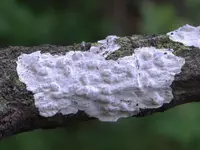
This disease appears as a white to yellowish mold that spreads over caps and gills, eventually deforming and hardening the fruiting bodies. Symptoms include loss of normal gill structure, poor spore production, and mottled or crusty growth on the mushroom surface.

Solution

Remove and discard all affected mushrooms and nearby debris as soon as symptoms appear, taking care not to spread spores. Improve airflow, avoid overhead watering directly onto fruiting bodies, and maintain moderate humidity to discourage dense, stagnant moisture where this mold thrives.

Green Trichoderma contamination

This disease is caused by aggressive Trichoderma molds that colonize the substrate, forming bright to dark green patches and suppressing mushroom formation. Symptoms include stalled or distorted primordia and a strong earthy or musty odor from the growing medium.

Solution

Physically remove and discard contaminated substrate sections, including a small margin of apparently healthy material. In cultivation, sterilize or thoroughly pasteurize new substrate, maintain clean tools and containers, and provide adequate but not excessive humidity to favor mushroom mycelium over competitive molds.

Interesting Facts

Warm-climate fruiting pattern

This saprotrophic fungus is frequently recorded fruiting in late winter to spring in milder European climates, especially in urban parks and lawns where soil and litter stay relatively warm.

Preference for grassy sites

It shows a marked ecological preference for nutrient-rich, grassy habitats such as lawns, roadside verges, and park edges rather than deep forest, often appearing in small groups or loose troops.

Confusing look-alike

The species has a smooth, tawny to orange-brown cap and pale, crowded gills that can resemble several Clitocybe or other Melanoleuca species, so reliable identification typically requires checking microscopic features such as spore ornamentation.

FAQs about spring cavalier

This fungus is generally regarded as edible but can be confused with toxic Melanoleuca and other brown mushrooms. Only experienced foragers should eat it, after confident identification and thorough cooking. When uncertain, do not consume it.

Grow Healthy Plants with Botan Care

Keep your plants happy and healthy with plant identification, disease detection, and easy care guidance.

Botan plant care app — identify plants on mobile

Explore More Plants