


Select Proper Wood
Use freshly fallen, small-diameter hardwood sticks (2–6 cm) with intact bark and minimal existing fungal growth to provide the best substrate for growing Hair Ice outdoors or in a controlled cold frame.

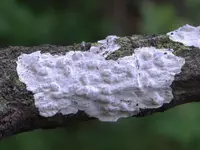
Hair ice is a rare, naturally occurring ice formation associated with the fungus Exidiopsis effusa. It is not a true plant but a fungus-influenced phenomenon on dead wood. Fine, silky ice strands form on rotting branches of broadleaf trees, mainly in cool, humid forests of temperate regions. The threads resemble white hair and melt easily when touched or warmed. In nature, it appears only under specific temperature and moisture conditions, which makes it difficult to replicate reliably at home. Anyone who wants to learn how to care for Hair Ice should focus on providing consistently damp, decaying hardwood, cool air, and shade, similar to its natural forest habitat.

Care Difficulty
Hard Care

Light Preference
Shade

Water Requirements
Keep Soil Moist

Temperature Preference
Cool Climate

Hardiness Zone
Unknown

Soil Texture
Loamy, Silty, Organic-rich

Soil pH
Acidic (5.5–6.5)

Soil Drainage
Moist but well-drained

Fertilization
Minimal (feed rarely)
Scan your plant to receive care tips personalized for your specific plant
Available on iOS and Android
This fungus forms best on shaded, moist wood with very limited direct sun exposure.
Moisture around the host wood is crucial, but standing water quickly damages the mycelium.
This species favors cool conditions and loses activity when temperatures are too warm or severely cold.
This wood-inhabiting fungus requires consistently moist, cool air close to saturated conditions to produce Hair Ice.
This fungus develops on decaying hardwood rather than in mineral soil, so focus on wood substrate condition instead of traditional soil preparation.
This species is not well suited to container growing, since it naturally colonizes decaying hardwood in cool, outdoor forest conditions rather than confined pots.
Exidiopsis effusa is a saprophytic fungus that grows on decaying wood and usually does not require additional fertilizer in garden or woodland settings.
Exidiopsis effusa does not need structured pruning, but some light cleanup can help manage appearance and wood hygiene.
This fungus is rarely grown in containers, so management focuses on positioning suitable wood rather than traditional repotting.
Propagation of Exidiopsis effusa is specialized and usually left to natural spore dispersal on suitable deadwood.
Exidiopsis effusa is naturally cold hardy in temperate climates and needs minimal specific winter care outdoors.

Plant Health Check
Not sure what's wrong with your plant? Check your plant's health inside the app.
This fungus is directly responsible for forming hair ice on rotting wood, as its metabolic activity controls the extrusion and stabilization of fine ice filaments under specific winter conditions just below 0°C.
The mycelium, the filamentous body of the fungus, lives hidden inside decaying hardwood and can remain physiologically active at subzero air temperatures, enabling ice formation on cold, humid nights.
Research has shown that this species produces organic substances that modify ice crystal growth, preventing the delicate hair-like structures from clumping or melting quickly, which explains the stable, silky appearance of hair ice.

Hair ice only appears on wood that is colonized by this fungus, and when E. effusa is experimentally removed or inactivated from the wood, the hair ice phenomenon completely disappears, demonstrating a unique and specific fungus–ice interaction in nature.
Growth is slow and highly dependent on constant cool, moist conditions and suitable dead hardwood. The fungus colonizes wood internally, then produces ice filaments seasonally. It does not rapidly cover substrates like many common decay fungi.
Keep your plants happy and healthy with plant identification, disease detection, and easy care guidance.

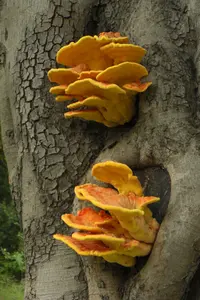
Western Hardwood Sulphur Shelf
Laetiporus gilbertsonii
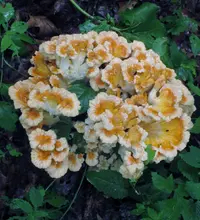
White-pored Chicken of the Woods
Laetiporus cincinnatus
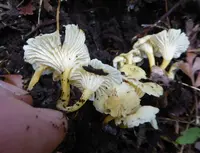
Cantharellus wellingtonensis
Cantharellus wellingtonensis
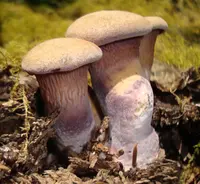
Lilac oysterling
Panus conchatus
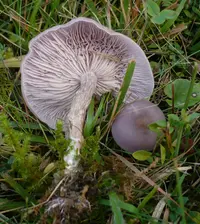
sordid blewit
Lepista sordida
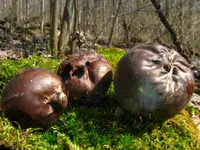
Tumbling puffball
Bovista pila
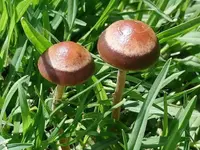
belted panaeolus
Panaeolus cinctulus
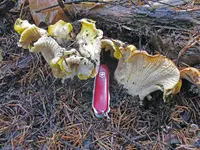
Cascade chanterelle
Cantharellus cascadensis