Use fresh logs
Inoculate recently cut, disease-free hardwood logs rather than old, decaying wood, since fresher substrate gives Panus conchatus a competitive advantage over wild fungi and ensures more reliable colonization.

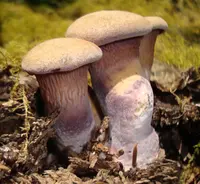
Lilac oysterling, Panus conchatus, is a small wood-decaying mushroom rather than a leafy plant. It typically forms shell- or fan-shaped caps in lilac to pale purple tones that fade with age.
This fungus grows on dead or decaying hardwood, especially in temperate forests of Europe, Asia, and North America. It appears in clusters on logs, stumps, or fallen branches.
The species is considered inedible and is not commonly cultivated, so it is mainly of interest to foragers and mushroom enthusiasts. Anyone who wants to care for Lilac oysterling should focus on providing well-decayed wood and stable, moist conditions outdoors, since it does not adapt well to typical indoor setups.

Care Difficulty
Moderate Care

Light Preference
Partial Shade

Water Requirements
Keep Soil Moist

Temperature Preference
Cool Climate

Hardiness Zone
Unknown

Soil Texture
Loamy, Silty, Organic-rich

Soil pH
Acidic (5.5–6.5), Slightly acidic (6.5–7.0)

Soil Drainage
Moist but well-drained

Fertilization
Minimal (feed rarely)
Scan your plant to receive care tips personalized for your specific plant
Available on iOS and Android
This wood-decaying fungus prefers low to moderate light typical of shaded forest habitats.
This fungus needs consistently moist, not waterlogged, woody substrate to fruit and persist.
This species thrives in cool to mild outdoor conditions typical of temperate woodlands.
Humidity is not a key factor for Panus conchatus grown on suitable damp substrate.
Panus conchatus grows on decaying wood rather than mineral soil, so focus on a moist, lignin-rich substrate.
This fungus can be grown in containers filled with woody substrate rather than conventional potting mix.
Panus conchatus, commonly called Lilac oysterling, generally grows on decaying wood and needs little to no fertilization in cultivation.
Pruning Panus conchatus is limited to hygiene and safety rather than shaping.
This wood-decaying fungus is not a typical container subject, so focus on transplanting colonized wood rather than repotting.
Propagation of Panus conchatus is possible but not usually attempted by casual growers.
This fungus is cold hardy in most temperate climates and usually needs minimal winter care.

Plant Health Check
Not sure what's wrong with your plant? Check your plant's health inside the app.
The gills of this fungus remain firm and flexible even in older specimens, instead of becoming brittle as in many other mushrooms. This toughness is due to a dense, fibrous structure rich in chitin, the same structural polymer found in insect exoskeletons.
Young fruiting bodies often show a distinct lilac to violet tone that fades to pale buff or grayish-brown with age and exposure to light. This color shift likely reflects changes in pigment stability and oxidation over time.
This species commonly fruits on dead hardwood, especially birch and aspen, in cool to cold seasons, sometimes appearing after frost. It contributes to forest nutrient cycling by breaking down lignin-rich wood that many other organisms cannot efficiently decompose.

Molecular studies have shown that this species, long placed in the genus Panus based mainly on appearance, is more closely related to so-called tough polypores than to true oyster mushrooms, which has led some mycologists to treat it under the genus Lentinus instead.
This fungus is considered inedible or only marginally edible due to its tough, fibrous texture and limited culinary value. Identification mistakes with similar species also increase risk, so it is not recommended for eating.
Keep your plants happy and healthy with plant identification, disease detection, and easy care guidance.