Candlesnuff Fungus Care (Xylaria hypoxylon)

Also known as: carbon antlers
Candlesnuff Fungus

About Candlesnuff Fungus

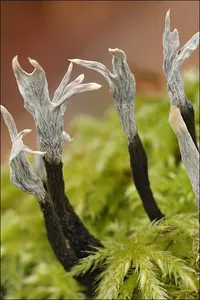
Candlesnuff fungus, Xylaria hypoxylon, is a small, club-shaped fungus rather than a true plant. It typically forms clusters of black, upright stems with white, powdery tips that resemble burnt candle wicks.

This species grows on decaying wood, especially rotting stumps and buried roots in damp, shaded forests and gardens. It plays an important role in breaking down dead wood and recycling nutrients.

Because it depends on consistently moist, decomposing wood and stable humidity, it is not easy to grow in typical home settings. Those who want to learn how to care for Candlesnuff Fungus usually focus on replicating cool, shaded woodland conditions with plenty of rotting wood substrate.

Main Plant Requirements

Care Difficulty

Moderate Care

Light Preference

Shade

Water Requirements

Keep Soil Moist

Temperature Preference

Cool Climate

Hardiness Zone

Unknown

Soil Texture

Loamy, Silty, Organic-rich

Soil pH

Strongly acidic (4.5–5.5), Acidic (5.5–6.5)

Soil Drainage

Moist but well-drained

Fertilization

Minimal (feed rarely)

Get Personalized Care Plan

Scan your plant to receive care tips personalized for your specific plant

Available on iOS and Android

How to Care for the Candlesnuff Fungus

This wood-decaying fungus prefers cool, shaded forest light rather than direct sun exposure.

  • Site Candlesnuff Fungus in full shade to dappled light, such as the north side of logs or stumps, avoiding direct midday and afternoon sun that can dry substrates rapidly.
  • Allow brief early morning or late-afternoon sun (1–2 hours) at most; stronger exposure can overheat the decaying wood and slow fruiting body development.
  • In summer, use leaf litter or low understory plants to maintain low, filtered light; in winter, reduced canopy cover is usually acceptable due to weaker sun intensity.

This fungus depends on consistently moist, not saturated, decaying wood or woody debris.

  • Check the host log or stump; it should feel evenly moist but not spongy or dripping, with no standing water around the base.
  • In dry spells, lightly moisten surrounding leaf litter or the surface of decaying wood when it feels dry to the touch, then allow excess water to drain away completely.
  • If Xylaria hypoxylon patches fade, shrink, or become brittle, the substrate is too dry; if moldy, slimy growth appears, conditions are staying too wet and aeration is poor.

This species is adapted to cool to mild outdoor woodland temperatures.

  • Best fruiting typically occurs around 50–68°F (10–20°C), though growth may continue more slowly from about 40–75°F (4–24°C).
  • Short exposures down to about 23–28°F (-5 to -2°C) are usually tolerated in dormant stages, but repeated deep freezes can damage fruiting bodies.
  • Prolonged heat above 80°F (27°C), especially with dry air and sun exposure, can desiccate the substrate, so shaded, humid microclimates are important in summer.

This wood-decay fungus prefers consistently moist, humid microclimates around decaying wood rather than specific room humidity targets.

  • Aim for a local humidity of 70–90% by keeping its substrate and surrounding wood evenly damp, not waterlogged.
  • Dry air combined with drying substrate causes shriveling, pale club tips, and halted new fruiting bodies.
  • Increase local humidity by misting nearby surfaces and wood, or by using a loose-cover humidity dome with ventilation holes outdoors or in sheltered setups.

This fungus does not grow in conventional potting soil and instead colonizes very decayed wood or woody debris.

  • Provide a substrate of well-rotted hardwood pieces mixed with crumbly, organic-rich, wood-based material that mimics a forest floor rather than mineral soil.
  • Ensure the decomposed wood matrix drains freely yet stays evenly moist, with no standing water around the colonized pieces.
  • Aim for slightly acidic to neutral conditions, around pH 5.5–7, by using leaf litter, aged bark, and hardwood sawdust instead of alkaline materials.
  • Avoid compacted garden soil, high-sand mixes, or fresh resinous softwoods, as these restrict air spaces, slow decay, and discourage Xylaria hypoxylon establishment.

This species can be maintained in containers only as a specialty outdoor culture on decaying wood rather than as a typical potted plant.

  • Use a wide, shallow, heavy container to stabilize the colonized wood pieces and reduce tipping as fruiting bodies emerge in clusters.
  • Drill or ensure generous side and base drainage holes so excess rainwater exits quickly while the decayed wood stays moist but not submerged.
  • Raise the container slightly on blocks to improve air movement under and around the wood, preventing stagnant, anaerobic pockets in the decomposing substrate.

This wood-decaying fungus usually gains enough nutrients from its substrate and does not need added fertilizer.

Xylaria hypoxylon does not require true pruning; management focuses on hygiene rather than shaping growth.

Candlesnuff Fungus is not suited to conventional repotting; any movement focuses on shifting colonized wood rather than handling roots.

  • Transplant only when the colonized log or stump must be moved, since disturbing the fungal network can reduce fruiting.
  • Move wood during cool, moist weather to limit desiccation of the mycelium, the feeding body of the fungus.
  • Lift and set the wood gently in a similar shaded, humid location with comparable tree or wood type.
  • Avoid frequent relocation; give the fungus time, often several seasons, to re-establish and resume fruiting.

Propagation of this fungus is specialized and generally left to experienced growers or natural spread in the landscape.

This species is naturally cold hardy in temperate climates and usually requires no special winter care.

Care Tips

Substrate Refresh Cycles

Replace or top up the decaying wood or woodchip substrate every 6–12 months to keep a steady supply of fresh lignin-rich material that supports continuous fruiting.

Use Decayed Hardwood

Select well-rotted pieces of hardwood like oak, beech, or maple rather than fresh logs, since partially decomposed wood is colonized more quickly and produces more reliable fruiting bodies.

Moisture Buffer Layer

Cover inoculated wood with a thin layer of damp leaf litter or coarse bark chips to reduce surface drying while still allowing enough air movement to prevent anaerobic conditions.

Shaded Microclimate Setup

Position the inoculated wood in a stable, shaded spot such as the north side of a structure or under dense shrubs to minimize rapid wet–dry cycles and create a consistent microclimate for growing Candlesnuff Fungus.

Minimal Handling Practice

Avoid frequent touching or moving of the fruiting bodies and colonized wood, as mechanical disturbance can damage the delicate mycelial network and reduce repeat flushes.

Common Pests and Diseases

Competing wood-decay fungi

This disease issue arises when other wood-decay fungi colonize the same log or stump, outcompeting the existing fruiting bodies. Symptoms include patchy, stunted, or misshapen candlesnuff clusters and replacement by other fungal mats or brackets on the substrate.

Solution

Remove and discard heavily overgrown sections of wood, leaving only pieces where candlesnuff fruiting bodies look firm and regular. For those interested in growing Xylaria hypoxylon, use fresh but already dead hardwood and avoid mixing many different wild fungi on the same log to reduce direct competition.

Fungal fruitbody desiccation

This condition develops when fruiting bodies experience prolonged low humidity or direct drying air, causing shriveling, cracking, and loss of the characteristic white dusting on the tips. Symptoms include dry, brittle, grey-black structures that stop elongating.

Solution

Increase ambient humidity around the wood by misting the surrounding area (not soaking the substrate) and shielding from strong sun or direct heaters. In outdoor settings, move the colonized wood to a more shaded, sheltered, and consistently moist microhabitat such as under shrubs or near a moist fence line.

Secondary mold overgrowth

This disease occurs when fast-growing molds colonize overly wet or poorly ventilated substrates, covering the surface with fluffy white, green, or gray growth and smothering the candlesnuff structures. Symptoms include a fuzzy film over the wood and reduced visibility or deformation of the normal club-shaped fruiting bodies.

Solution

Improve air circulation and reduce surface wetness by spacing logs apart and avoiding frequent overhead watering. If practical, gently scrape away heavy mold growth and allow the substrate to dry slightly between moisture events while still remaining cool and shaded.

Interesting Facts

Bioluminescent-like appearance

The pale, powdery tips of the fruiting bodies can reflect ambient light at night, which makes the fungus appear faintly glowing even though it does not produce true bioluminescence.

Specialized wood decomposer

This species is a saprotroph that specializes in breaking down dead hardwood, especially beech and oak, contributing to nutrient cycling in temperate forests.

Distinct seasonal morphology

Young fruiting bodies often appear white and slightly club-shaped, while older ones turn black and more branched, which is why it is commonly confused with small burnt matchsticks on logs and stumps.

Botan icon

Did you know?

Molecular studies have shown that what was once treated as a single widespread species may actually represent a complex of closely related lineages, so some populations traditionally identified as Xylaria hypoxylon may be reassigned as genetic and morphological data improve.

FAQs about Candlesnuff Fungus

This species spreads locally through spores that colonize decaying wood, but it is not considered aggressive in gardens. It usually appears in small clusters on rotting stumps or logs and rarely becomes a management problem.

Grow Healthy Plants with Botan Care

Keep your plants happy and healthy with plant identification, disease detection, and easy care guidance.

Botan plant care app — identify plants on mobile

Explore More Plants