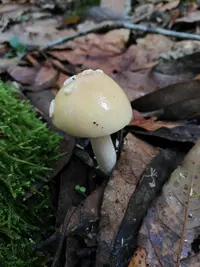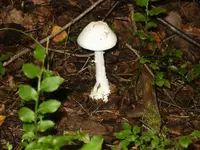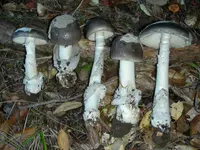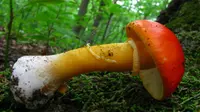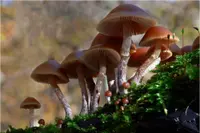












Funeral Bell Care (Galerina marginata)

Also known as: Deadly Galerina, autumn skullcap
Funeral Bell

About Funeral Bell

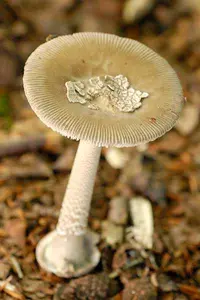
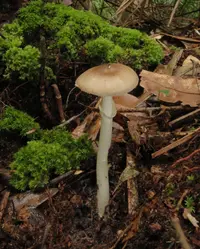
Funeral bell (Galerina marginata) is a small, brown, wood-rotting mushroom, not a houseplant. It typically grows in clusters on decaying conifer or hardwood logs and stumps. Caps are smooth and tawny to honey-brown, with slender pale stems and often a faint ring zone. It is common in temperate forests of North America, Europe, and parts of Asia. This fungus is extremely poisonous and is not suitable for casual cultivation or home projects. Any attempt to care for Funeral Bell is strongly discouraged; it is best left to trained mycologists observing it in the wild.

Main Plant Requirements

Care Difficulty

Hard Care

Light Preference

Partial Shade

Water Requirements

Keep Soil Moist

Temperature Preference

Cool Climate

Hardiness Zone

Unknown

Soil Texture

Loamy, Organic-rich, Peaty

Soil pH

Acidic (5.5–6.5), Slightly acidic (6.5–7.0)

Soil Drainage

Moist but well-drained

Fertilization

Minimal (feed rarely)

Get Personalized Care Plan

Scan your plant to receive care tips personalized for your specific plant

Available on iOS and Android

How to Care for the Funeral Bell

This highly toxic wood-decay fungus fruits best in cool, low to moderate light forest conditions.

  • Provide dappled or filtered light under trees, with no more than 1–3 hours of weak morning sun and full shade by midday.
  • Avoid direct midday or afternoon sun, which can dry the substrate quickly and inhibit fruiting of Funeral Bell clusters.
  • In summer, prioritize full shade; in cooler, overcast seasons, slightly brighter but still indirect light is tolerated without stressing the mycelium.

This fungus depends on consistently moist but not waterlogged wood or woody debris for reliable fruiting.

  • Maintain substrate moisture so it feels damp but not dripping; if the top 1–2 cm of wood or mulch feels dry, gently moisten it.
  • Use well-drained, decaying wood or bark; standing water or waterlogged logs promote anaerobic conditions and can suppress Galerina marginata.
  • Reduce supplemental wetting in cool, rainy seasons, and increase light misting during hot, dry spells, watching for cracking, shrunken caps as a dehydration sign.

This species fruits in cool to mild conditions and declines in very hot or freezing weather.

  • Optimal fruiting occurs around 50–65°F (10–18°C), often in spring and autumn in temperate forests.
  • Growth slows markedly above about 75°F (24°C); prolonged heat near 85°F (29°C) can dry substrates and prevent mushroom formation.
  • Tissue tolerates short drops near 32°F (0°C), but repeated hard frosts below 28°F (-2°C) damage fruiting bodies, while mild, moist weather supports sustained activity.

Humidity management is irrelevant for this highly poisonous wood-decaying fungus, which does not belong in home cultivation.

Soil preparation guidance is not appropriate because this deadly fungus should never be purposefully grown.

  • This saprobic fungus naturally colonizes decaying conifer and hardwood substrates, not potting mixes or garden beds.
  • Any attempt to provide nutrient-rich, moist substrates risks unintended spread and serious poisoning hazards to humans and animals.
  • Practical Galerina marginata care focuses on identification and removal from play areas, not on encouraging its growth.
  • Gardeners should promptly discard unknown small brown mushrooms rather than experimenting with substrates or culture conditions.

This species is not suitable for container growing and must not be intentionally cultivated due to extreme toxicity.

Galerina marginata is a wild, wood-decay fungus that does not require or benefit from fertilization in cultivation or in nature.

Pruning is not applicable to Galerina marginata, as it is a small, short-lived mushroom that naturally completes its life cycle without structural maintenance.

When encountered on logs or soil, this fungus is not suited to standard repotting, but transplanting substrate can move an existing colony.

  • Shift only small sections of colonized wood or bark, keeping the mycelium-laced material intact and undisturbed.
  • Transplant during mild, moist weather to limit drying of the mycelium network and fruiting bodies.
  • Handle gently to avoid crumbling the substrate, which can break up feeding and growth zones.
  • After moving, maintain similar moisture, shade, and host material so the colony can re-establish.

Deliberate propagation of this highly toxic species is strongly discouraged; it is a hazardous mushroom that is best left unmanaged.

No special winter care is recommended, as this fungus is naturally adapted to its local climate and appears only when conditions suit it.

Care Tips

Strict site containment

Always cultivate this fungus only in a clearly confined, labeled area such as a dedicated tray in a locked shed or lab space, so there is no risk of it spreading into outdoor beds where it could be confused with edible mushrooms.


Dedicated tools only

Use a separate set of tools and containers for this species, disinfecting them with 70% isopropyl alcohol after each use, and never use those tools on edible mushrooms to avoid dangerous cross-contamination.

Secure waste disposal

Collect all spent substrate, trimmings, and aborted fruiting bodies in sealed bags and send them to municipal trash rather than compost, so no living fragments can establish in a garden or woodland.

Clear hazard labeling

Attach durable, waterproof labels that state the full botanical name, toxicity, and a skull-and-crossbones symbol on all culture vessels, grow tents, and storage areas to prevent accidental handling or ingestion by children, visitors, or pets.

Access and hygiene control

Limit access to the growing area to responsible adults only, wash hands thoroughly after handling any part of the fungus or substrate, and treat all surfaces as potentially contaminated when caring for Funeral Bell.

Common Pests and Diseases

Mycophagous springtails

These insects feed on fungal mycelium and developing fruiting bodies, sometimes tunneling into caps and stems and altering normal development. Symptoms include pitted caps, small surface holes, and distorted or aborted mushrooms.

Solution

Limit chronically wet, stagnant conditions in cultivation trays, use well-draining, pasteurized substrate, and remove heavily damaged clusters promptly. For persistent problems, introduce sticky traps near propagation containers and, if necessary, apply a targeted, label-approved insecticidal drench for mushroom production while following all safety directions.

Fungus gnat larvae

These insects lay eggs in damp, organic substrates and the larvae feed on fine mycelium, which can weaken or locally kill developing colonies. Symptoms include thin, patchy mycelial growth and stunted or collapsing small fruiting bodies near the substrate surface.

Solution

Reduce standing moisture in growing containers, improve drainage, and cover substrate with a fine mesh or breathable barrier to limit egg-laying. Use yellow sticky cards to monitor adults and apply a biological control, such as Bacillus thuringiensis israelensis (Bti), according to label directions if infestation levels rise.

Mite colonization

These pests, including some grain and soil mites, can graze on spores, mycelium, and young fruiting bodies, leaving fine pits and a dull, scarred surface. Symptoms include slow colonization, speckled cap surfaces, and visible tiny moving dots under magnification.

Solution

Keep any cultivation or observation containers clean, avoid introducing unsterilized grain or compost, and discard heavily infested substrates. If mites persist in a controlled growing setup, reduce humidity slightly, isolate affected cultures, and consider using predatory mites sold for mushroom production while monitoring carefully.

Green Trichoderma mold

This disease is caused by Trichoderma species that outcompete the target fungus, quickly covering the substrate with dense white growth that turns green as spores form. Symptoms include a strong earthy or slightly sour odor, rapidly spreading green patches, and arrested or deformed Funeral Bell fruiting bodies.

Solution

Immediately remove and discard contaminated substrate and any nearby disposable surfaces to prevent spore spread. For future growing Funeral Bell attempts in controlled settings, use well-sterilized or pasteurized substrate, minimize airborne dust, and maintain good air exchange while avoiding direct drafts from mold-prone areas.

Bacterial blotch

This disease develops on mushroom caps under cool, stagnant, overly wet conditions when opportunistic bacteria colonize the surface. Symptoms include slimy, greasy, or water-soaked spots on caps, sometimes with a yellowish to brown discoloration and soft tissue breakdown.

Solution

Increase air movement around fruiting bodies without causing strong drying winds, avoid overhead misting that leaves standing water on caps, and remove badly affected mushrooms promptly. Between flushes, clean trays and nearby hard surfaces with a mild disinfectant and allow them to dry thoroughly before restarting cultivation.

Interesting Facts

Deadly amatoxin content

This species contains amatoxins, the same group of cyclic peptide toxins found in the death cap Amanita phalloides, which can cause fatal liver and kidney failure even in very small amounts.

Saprobe on conifer wood

It is a saprobic fungus that decomposes dead wood, with a particular association with well-rotted conifer logs, stumps, and buried wood in temperate forests and landscaped areas.

Misleading ring and cap

The small brown cap and persistent ring on the stem closely resemble several edible honey fungi and other wood-inhabiting mushrooms, which is why mycologists treat it as one of the most dangerous look-alike species in mushroom identification guides.

Botan icon

Did you know?

Molecular studies have shown that what was once treated as several separate species across Europe, North America, and Asia is actually a single, genetically cohesive species, so many older regional names have now been synonymized under Galerina marginata.

FAQs about Funeral Bell

Yes, this species is extremely poisonous to both humans and animals. It contains amatoxins that can cause severe liver and kidney damage. Ingestion is a medical emergency and requires immediate hospital treatment, even if symptoms seem mild.

Grow Healthy Plants with Botan Care

Keep your plants happy and healthy with plant identification, disease detection, and easy care guidance.

Botan plant care app — identify plants on mobile

Explore More Plants