reddening lepiota Care (Leucoagaricus americanus)

reddening lepiota

About reddening lepiota

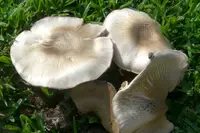
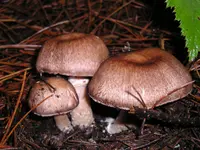
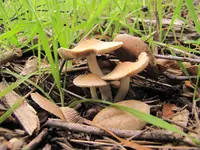
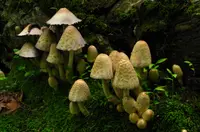
Reddening lepiota (Leucoagaricus americanus) is a saprobic mushroom, not a true houseplant. It grows on decaying wood, leaf litter, and rich organic debris. The caps and stems bruise or stain reddish when handled or damaged, which is a key identifying feature. It often appears in groups in lawns, gardens, and woodland edges across much of North America. This fungus prefers moist, humus-rich substrates and moderate shade, similar to many woodland fungi. In managed landscapes it is usually allowed to appear and disappear naturally rather than being cultivated, so how to care for reddening lepiota focuses more on safe identification and habitat awareness than on deliberate growing techniques.

Main Plant Requirements

Care Difficulty

Hard Care

Light Preference

Partial Shade

Water Requirements

Keep Soil Moist

Temperature Preference

Cool Climate

Hardiness Zone

Unknown

Soil Texture

Loamy, Organic-rich

Soil pH

Acidic (5.5–6.5)

Soil Drainage

Moist but well-drained

Fertilization

Minimal (feed rarely)

Get Personalized Care Plan

Scan your plant to receive care tips personalized for your specific plant

Available on iOS and Android

How to Care for the reddening lepiota

Leucoagaricus americanus prefers woodland-style light that mimics its natural forest habitat.

  • Provide bright, indirect light or dappled shade, similar to light under trees, with about 2–4 hours of soft morning sun if grown at a garden edge.
  • Protect reddening lepiota from harsh midday and afternoon sun, which can dry the substrate quickly and stress the developing fruiting bodies.
  • In summer, increase shade using leaf litter or nearby plants; in spring and fall, slightly more open light is acceptable as long as the surface does not bake.

Watering for Leucoagaricus americanus focuses on keeping the substrate evenly moist without becoming waterlogged.

  • Maintain consistently damp conditions in leaf litter or wood-rich substrate; the top 1–2 cm should feel moist but not soupy when touched.
  • Increase moisture during active fruiting periods, misting lightly if surfaces start to look dry or caps crack, and reduce input once mushrooms decline.
  • Avoid standing water or compacted soil; signs of overwatering include sour odor and slimy mycelium, while underwatering shows as dry, hardened substrate and stalled growth.

This woodland mushroom favors mild temperatures and is sensitive to both hard frost and extreme heat.

  • Optimal growth generally occurs around 55–75°F (13–24°C), conditions commonly found in shaded forest floors during spring and fall.
  • It tolerates short dips near 40°F (4°C) but prolonged freezing can damage mycelium, so fruiting typically slows or stops after hard frosts.
  • High temperatures above 85°F (29°C), especially with low humidity, can dry the substrate and abort developing caps, so deep shade and moisture retention become important in midsummer.

This fungus develops well in naturally moist outdoor air rather than tightly controlled humidity.

  • Target 60–80% humidity typical of shaded, damp woodland or a humid garden corner for reliable fruiting.
  • It tolerates brief drier spells, but extended air below about 40% slows growth and may reduce reddening lepiota cap size.
  • Watch for caps cracking or drying at the edges as signs of low humidity stress, and increase moisture with nearby damp leaf litter or a gently misted mulch layer.

Leucoagaricus americanus relies on loose, organic-rich substrate that drains freely yet retains consistent moisture.

  • Use a mix built around well-rotted hardwood leaf litter, composted wood chips, and a small portion of garden soil for structure.
  • Aim for slightly acidic to neutral conditions, roughly pH 5.5–7.0, avoiding limed or strongly alkaline ground that can limit mycelium spread.
  • Ensure excess water can percolate away; avoid compacted clay, standing water, and plastic sheeting that traps runoff around the substrate.
  • Improve aeration by layering coarse wood chips or shredded bark at the base, then finer organic matter above to hold moisture without waterlogging.

This species can be grown in containers, mainly as an outdoor experimental culture rather than a decorative feature.

  • Choose a wide, shallow tote or tub to spread substrate horizontally, which better supports mycelium colonization than a deep, narrow pot.
  • Drill numerous side and bottom holes so excess water exits quickly while still allowing air exchange through the container walls.
  • Use an opaque, rigid container that blocks light to the substrate and keeps it thermally stable, reducing rapid moisture and temperature swings.

Leucoagaricus americanus is a wild saprophytic mushroom that normally needs no fertilization when growing in natural soil or woody debris.

Leucoagaricus americanus does not require pruning, since the mushroom fruiting bodies are short lived and decompose naturally.

This species is not managed like a conventional potted plant; instead, focus on providing suitable organic substrate where the fungus can colonize.

  • Transplant only cultured mycelium or spawn into fresh, pasteurized wood chips, composted sawdust, or rich leaf litter.
  • Work in mild weather in spring or early fall to limit temperature stress on the developing mycelium.
  • Minimize disturbance of existing colonized substrate and gently spread it into the new medium rather than compacting it.
  • Keep the new bed evenly moist, not waterlogged, for several weeks so the mycelium can re-establish and spread.

Propagation of Leucoagaricus americanus is specialist work and is usually left to experienced mycologists or mushroom growers.

In its native range, Leucoagaricus americanus is a woodland decomposer that overwinters in soil or woody debris and requires no special winter care.

Care Tips

Use clean substrate

Prepare a sterile growing medium by pressure-sterilizing hardwood sawdust or a sawdust–grain mix, as contamination control is one of the most important factors in caring for reddening lepiota.

Control fresh air

Provide periodic, gentle fresh-air exchange in the fruiting area to prevent carbon dioxide buildup, which helps caps form normally instead of producing long, thin, oxygen-starved stems.

Adjust surface moisture

Mist the fruiting surface lightly and allow excess moisture to evaporate between sessions so the mycelium stays moist but the caps do not remain wet, which reduces bacterial blotch and deformities.

Harvest at right stage

Cut mushrooms at the substrate surface when caps are expanded but not fully flattened, using a clean knife, to reduce substrate damage and lower the risk of infections after harvest.

Rest between flushes

After a flush, remove spent mushroom stems, gently scrape any slimy tissue, and let the block rest with moderate humidity and fresh air so the mycelium can recover and produce subsequent flushes more reliably.

Common Pests and Diseases

Mycophagous springtails

These insects feed on fungal tissue and can heavily graze developing caps and gills in damp cultivation trays or mushroom beds. Symptoms include pitted, scarred, or misshapen fruiting bodies and noticeable movement of tiny white insects on or around the mushrooms.

Solution

Reduce excess moisture by improving drainage and ventilation, and avoid overwatering or constantly saturated substrates. Remove heavily infested mushrooms, then use fine mesh or physical barriers on vents and openings, and, if needed in larger setups, apply targeted biological controls such as beneficial predatory mites labeled for springtail management around but not directly on harvestable mushrooms.

Fungus gnat larvae

This pest thrives in constantly moist substrates and the larvae tunnel through developing fungal tissue. Symptoms include soft, water-soaked stems, deformed caps, and small black adult gnats flying near trays or beds.

Solution

Allow the surface of the substrate to dry slightly between soakings while still maintaining overall humidity, and promptly remove damaged fruiting bodies. Use yellow sticky traps to catch adults, cover substrate surfaces with a thin inert casing layer or fine mesh, and where permitted use a biological larvicide containing Bacillus thuringiensis israelensis (Bti) as a soil drench around, not on, harvest-stage mushrooms.

Parasitic Hypomyces infection

This disease is caused by competing parasitic fungi such as Hypomyces species that colonize mushroom surfaces. Symptoms include white, yellow, or reddish felt-like growth over caps and stems that eventually distorts or arrests normal development.

Solution

Immediately remove and discard any affected fruiting bodies and nearby substrate to reduce spore load, then lower humidity slightly and increase air exchange to discourage persistent surface moisture. Disinfect tools and containers with 70% alcohol or a dilute bleach solution between batches, and start new cultures from clean spawn or from an uncontaminated area well away from previous infections when aiming to grow Leucoagaricus americanus.

Interesting Facts

Distinct reddening reaction

When the cap or stem is bruised or cut, the white flesh of this mushroom often turns orange, pink, or red before darkening, a color change linked to oxidation of specific pigments in its tissues.

Woodchip and lawn specialist

This species is frequently found in urban and suburban environments, especially in woodchip mulch, compost-rich garden beds, and lawns, where it helps break down woody and leaf litter.

Cap texture transformation

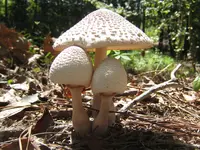
Young specimens start with smooth, whitish caps, but as they mature, the surface often breaks into reddish-brown scales, giving older fruiting bodies a distinctly rough and mottled appearance.

Botan icon

Did you know?

Although sometimes confused with edible or toxic look‑alike species, this mushroom has a combination of traits—reddening flesh, ringed stem, and habitat in disturbed, woody substrates—that makes it a useful teaching example in field mycology for illustrating why precise identification is essential before any wild mushroom is considered for consumption.

FAQs about reddening lepiota

This mushroom is considered inedible and potentially poisonous. Identification is difficult, and similar species can be seriously toxic. It should never be eaten, offered as food, or used in home cooking under any circumstances.

Grow Healthy Plants with Botan Care

Keep your plants happy and healthy with plant identification, disease detection, and easy care guidance.

Botan plant care app — identify plants on mobile

Explore More Plants