Host tree selection
Establish the fungus only near compatible host trees such as beech, spruce, fir, or pine, and avoid isolated lawn spots without these partners, since the mycorrhizal association is essential for long‑term colony survival.

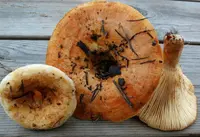
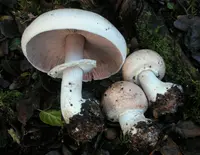
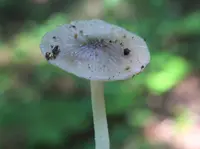
The fruity milkcap, Lactarius evosmus, is a wild mushroom-forming fungus, not a typical houseplant. It forms fleshy caps with gills that exude white, milky latex when damaged. Caps are usually pale to orange-brown and grow in soil among leaf litter.
This species is associated with trees in mixed or coniferous forests, where it forms mycorrhiza, a root partnership that helps both fungus and tree exchange nutrients. It is recorded from parts of Europe and possibly neighboring regions, usually in undisturbed woodland.
Because it depends on specific tree partners and natural forest conditions, it is difficult to cultivate intentionally. Gardeners generally do not actively care for fruity milkcap, but protect suitable host trees and avoid disturbing the soil where it appears.

Care Difficulty
Hard Care

Light Preference
Partial Shade

Water Requirements
Keep Soil Moist

Temperature Preference
Cool Climate

Hardiness Zone
Unknown

Soil Texture
Loamy, Silty, Organic-rich

Soil pH
Acidic (5.5–6.5)

Soil Drainage
Moist but well-drained

Fertilization
Minimal (feed rarely)
Scan your plant to receive care tips personalized for your specific plant
Available on iOS and Android
This mycorrhizal mushroom prefers dappled woodland light rather than direct open sun.
This ectomycorrhizal fungus depends on consistently moist, but not waterlogged, soil around its host trees.
This woodland species thrives in cool to mild conditions typical of temperate forests.
This ectomycorrhizal fungus needs consistently moist, humid conditions for reliable fruiting.
Lactarius evosmus fruits best in loose, moist, organic-rich forest-type substrates rather than standard potting soil.
This species is generally unsuitable for conventional container growing, as it depends on forming ectomycorrhizae with tree roots in open ground.
This forest-dwelling fungus usually gains nutrients from its tree partners and soil, so additional fertilization is rarely needed when caring for fruity milkcap.
Lactarius evosmus does not require pruning in the horticultural sense, but basic mushroom hygiene is useful in managed settings.
This mycorrhizal mushroom is not suited to normal pot culture, so management focuses on establishing and moving outdoor inoculated sites rather than repotting.
Propagation of this wild, mycorrhizal fungus is specialized and usually done through inoculation rather than standard garden techniques.
This fungus is generally cold hardy in climates where its host trees grow and needs little targeted winter care.

Plant Health Check
Not sure what's wrong with your plant? Check your plant's health inside the app.
This milkcap produces a notably sweet, fruity smell, often described as reminiscent of fruit liqueur or overripe fruit, which helps distinguish it from many other orange-brown Lactarius species in the field.
When the gills are damaged, the fruit body exudes white latex that stains tissues and can slowly change color on exposure to air, a diagnostic trait used by mycologists to separate it from visually similar species.
It forms ectomycorrhizal associations with certain coniferous trees, exchanging mineral nutrients and water from the soil for sugars produced by its host through photosynthesis, and tends to occur in specific, often nutrient-poor forest soils.
This mushroom is generally regarded as edible but is not widely collected due to modest flavor and potential for confusion with toxic Lactarius species. Always confirm identification with an expert and cook thoroughly before any consumption.
Keep your plants happy and healthy with plant identification, disease detection, and easy care guidance.