Encourage Strong Framework
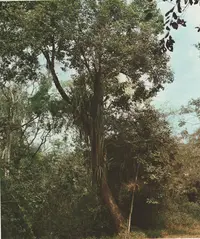
Allow only 3–5 main scaffold branches to develop from the trunk, then remove competing shoots early so the plant forms an open, accessible canopy that supports heavy fruit loads without breaking.

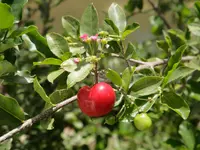
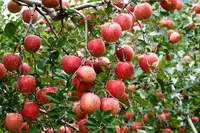
Barbados cherry, Malpighia emarginata, is a small evergreen fruiting shrub or tree valued for its bright red, vitamin C–rich berries. It is often grown as an ornamental edible in warm climates or containers.
The plant has a dense, branching habit, small glossy leaves, pink flowers, and can be pruned to form a compact hedge or patio specimen. It naturally occurs in tropical and subtropical regions of the Caribbean and Central and South America.
This species is generally considered manageable for home growers but needs warmth, good light, and protection from frost. Understanding how to care for Barbados cherry begins with providing sun, regular moisture, and well-drained soil.

Care Difficulty
Moderate Care

Light Preference
Full Sun

Water Requirements
Moderate Water

Temperature Preference
Tropical / Frost Sensitive

Hardiness Zone
9–11

Soil Texture
Sandy, Loamy, Organic-rich

Soil pH
Acidic (5.5–6.5), Slightly acidic (6.5–7.0)

Soil Drainage
Well-drained

Fertilization
Light (every 4–6 weeks)
Scan your plant to receive care tips personalized for your specific plant
Available on iOS and Android
This species needs strong light to flower and fruit well.
Malpighia emarginata prefers evenly moist but not saturated soil.
This tropical shrub requires warm, frost-free conditions for reliable growth and fruiting.
This species prefers moderately humid air and benefits from extra moisture in dry homes.
This shrub performs best in freely draining, slightly acidic, moderately fertile soil.
This species adapts well to container growing when the pot is chosen for drainage and root room.
This tropical fruit shrub responds well to consistent, moderate feeding during its active growing season.
Pruning helps Malpighia emarginata maintain a compact, productive canopy with good light penetration.
Container-grown or young landscape plants benefit from thoughtful repotting or transplanting to support steady growth.
New plants are most often produced from semi-hardwood cuttings, though seeds are also used for Malpighia emarginata.
This subtropical species is sensitive to frost and needs protection anywhere temperatures drop near freezing.

Plant Health Check
Not sure what's wrong with your plant? Check your plant's health inside the app.
The fruits contain extremely high vitamin C levels, often far exceeding those of citrus fruits, which is why they are widely studied and used as a reference fruit in food science and nutrition research.
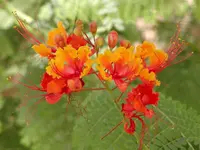
Its flowers have oil-producing glands that attract specialized oil-collecting bees, which use the floral oils to feed their larvae and in return pollinate the plant efficiently.
This species is native to tropical regions of the Americas, especially the Caribbean and parts of Central and South America, and has been widely cultivated in warm climates for both fresh consumption and processed products such as juices and jams.

In some Caribbean and Latin American regions, the fruit is so valued for home use that older rural gardens often maintain long-lived, semi-wild trees as a stable seasonal source of fresh juice and preserves, making it a traditional backyard crop closely tied to local food culture.
Lack of flowers usually comes from insufficient light, heavy pruning at the wrong time, or nutrient imbalance with too much nitrogen. Poor pollination, root stress, or a plant that is still immature can also delay flowering.
Keep your plants happy and healthy with plant identification, disease detection, and easy care guidance.