


Bredia oldhamii Care

Bredia oldhamii

About Bredia oldhamii

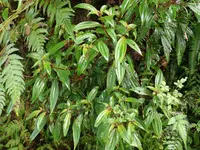
Bredia oldhamii is a compact, evergreen shrub from the Melastomataceae family, usually grown as a foliage plant. It forms low, bushy clumps with softly hairy, oval leaves that often show subtle veining and a slightly puckered surface. Small, starry flowers may appear, but the foliage is usually the main attraction.

This species comes from forested, humid regions of East Asia, so it prefers mild conditions, filtered light, and consistently moist but not waterlogged soil. Its relatively slow growth and sensitivity to drying out or strong sun mean it suits attentive growers who want to learn how to care for Bredia oldhamii.

Main Plant Requirements

Care Difficulty

Moderate Care

Light Preference

Partial Shade

Water Requirements

Keep Soil Moist

Temperature Preference

Warm Climate

Hardiness Zone

9–11

Soil Texture

Loamy, Peaty, Organic-rich

Soil pH

Acidic (5.5–6.5), Slightly acidic (6.5–7.0)

Soil Drainage

Moist but well-drained

Fertilization

Light (every 4–6 weeks)

Get Personalized Care Plan

Scan your plant to receive care tips personalized for your specific plant

Available on iOS and Android

How to Care for the Bredia oldhamii

This woodland shrub prefers soft, filtered light similar to a bright forest edge.

  • Provide bright shade or dappled light with 2–4 hours of gentle morning sun and protection from harsh midday and afternoon sun.
  • Tolerates partial shade, but in very low light stems may stretch, foliage thins, and flowering is reduced; move slightly closer to light in that case.
  • Outdoors, give Bredia oldhamii more light in autumn and winter, but increase shade or use 30–50% shade cloth during strong summer sun to prevent leaf scorch.

This plant prefers evenly moist, never soggy soil that dries slightly at the surface between waterings.

  • Water when the top 2–3 cm of soil feels dry, allowing moisture deeper down to stay faintly damp, especially during active growth.
  • Reduce watering in cooler months, letting the top 3–5 cm dry; drooping, thin leaves signal underwatering, while yellowing and mushy stems indicate excess moisture.
  • Use loose, humus-rich soil with good drainage so Bredia oldhamii roots receive air; avoid standing water in saucers or low garden spots after rain.

This species prefers mild, frost-free conditions with stable, moderate temperatures.

  • Aim for 60–80°F (16–27°C) for best growth; short spikes up to 85°F (29°C) are tolerated if soil moisture and shade are adequate.
  • Protect from cold below 40°F (4°C); prolonged exposure near this level can slow growth, and light frost can damage or kill young shoots.
  • In regions with cool winters, treat it as a tender shrub, overwintering in a sheltered, frost-free spot and avoiding sudden swings between warm days and cold nights.

This species prefers consistently humid air for best foliage and growth.

  • Aim for 50–70% humidity, as very dry indoor air slows growth and can crisp leaf edges.
  • Tolerates brief dips to 35–40%, but prolonged dryness causes curling leaves, brown tips, and stalled shoots.
  • Increase humidity with a nearby humidifier, grouped plants, or a pebble tray, keeping Bredia oldhamii above, not sitting in, water.

This plant grows best in loose, moisture-retentive yet free-draining soil.

  • Use a peat- or coco-based mix with added compost for organic matter and steady moisture.
  • Improve drainage and aeration with 20–30% perlite or fine bark to prevent waterlogging around the roots.
  • A slightly acidic pH around 5.5–6.5 suits Bredia oldhamii and supports nutrient uptake.
  • Avoid heavy garden soil, unamended clay, or mixes that stay soggy, which encourage root rot.

This species is well suited to container cultivation outdoors or in sheltered positions.

  • Choose a wide, shallow pot to match its spreading habit, allowing surface stems to root without deep, unused soil staying wet.
  • Select a stable container material like ceramic or heavy plastic to prevent tipping as foliage spreads laterally.
  • Ensure drainage holes are large and unobstructed so frequent watering can flush salts without leaving water pooled at the base.

Nutrient needs are moderate, so focus on steady, light feeding during the active growing season for Bredia oldhamii.

  • Use a balanced liquid fertilizer (around 10-10-10) at 1/2 strength every 4–6 weeks in spring and summer.
  • Slow-release granules or well-rotted compost can be mixed lightly into the topsoil once each spring.
  • Always water before and after feeding to limit root burn and distribute nutrients evenly.
  • Stop fertilizing in fall and winter when growth slows, resuming only as new shoots appear.

Pruning helps maintain a compact, branching form and encourages fresh flowering wood on Bredia oldhamii.

  • Carry out main pruning in late winter or early spring before strong new growth begins.
  • Remove dead, diseased, or damaged stems first, then thin crowded interior shoots to improve light and airflow.
  • Shorten long, leggy stems by up to 1/3 to keep a bushy outline and stimulate side shoots.
  • Use clean, sharp hand pruners, cutting just above a leaf node or side branch to guide future growth.

Container-grown plants benefit from occasional repotting to refresh soil and prevent root congestion in Bredia oldhamii.

  • Check for roots circling the pot, pushing through drainage holes, or unexplained slow growth as signs a larger container is needed.
  • Plan repotting for early spring, every 2–3 years, just before vigorous growth starts.
  • Choose a pot 2–5 cm wider with drainage holes and a loose, well-drained mix, handling the root ball gently.
  • Loosen circling roots lightly, trim any rotten sections, water thoroughly after repotting, and keep in bright shade for 3–5 days to limit stress.

New plants are most often produced from softwood or semi-ripe stem cuttings, which root reliably under warm, humid conditions.

  • Take 7–10 cm non-flowering shoot tip cuttings in late spring or early summer from healthy Bredia oldhamii growth.
  • Remove lower leaves, dip the cut base in rooting hormone, and insert into a moist, free-draining mix such as peat-free compost with perlite.
  • Maintain 70–75°F, high humidity, and bright, indirect light, using a clear cover or propagator to hold moisture.
  • Keep the medium just slightly moist; once roots form and new growth appears, gradually increase ventilation before potting on individually.

Cold sensitivity means this species needs protection from freezing, especially in regions with frosty winters.

  • In USDA zones warmer than 9, apply a 5–8 cm mulch layer around the root zone in late fall, keeping it off stems.
  • In cooler areas or containers, move plants indoors to a bright, cool room before night temperatures drop near 40°F.
  • Avoid waterlogged soil during winter; keep slightly moist but never saturated to reduce root rot risk.

Care Tips

Pinch For Bushiness

Regularly pinch back the soft growing tips by 1–2 nodes to keep stems compact, encourage branching, and maintain a dense canopy rather than lanky growth when caring for Bredia oldhamii.

Staggered Repotting

Instead of jumping several pot sizes, shift the plant only 2–4 cm wider at a time to reduce transplant shock and keep roots filling the pot evenly, which supports stable foliage growth.

Use Shallow Containers

Select a relatively wide, shallow pot rather than a deep narrow one so the fine, fibrous roots spread horizontally and the substrate dries more evenly between waterings.

Rotate For Even Growth

Turn the pot 90° every 1–2 weeks to prevent one-sided leaning, reduce shading of lower leaves, and keep the plant evenly foliated on all sides.

Prevent Fungal Spots

Water at the substrate level and provide gentle horizontal air movement so leaves dry within a few hours, which helps reduce leaf spot issues and general fungal problems on the foliage.

Common Pests and Diseases

Spider mites

This pest often appears on Bredia foliage in warm, dry indoor air, causing fine stippling and a dull, dusty look on the leaves. Symptoms include very fine webbing on the undersides of leaves and along stems.

Solution

Rinse the plant thoroughly with a strong but gentle stream of lukewarm water, focusing on leaf undersides, then repeat every few days for 1–2 weeks. Increase humidity around the plant, isolate it from others, and, if needed, apply insecticidal soap or horticultural oil according to label directions until new growth appears clean, which is an important part of Bredia oldhamii care instructions.

Mealybugs

These insects hide in leaf axils and along stems, appearing as white, cottony clusters that feed on sap and weaken the plant. Symptoms include sticky honeydew and distorted new growth.

Solution

Dab visible clusters with cotton swabs dipped in 70% isopropyl alcohol, then rinse the plant after treatment. Inspect weekly and repeat removal; for larger populations, use insecticidal soap or a light horticultural oil, ensuring good coverage in crevices where mealybugs shelter.

Leaf spot

This disease causes irregular brown or dark purple spots on the leaves, sometimes with a yellow halo and a tendency for older leaves to drop prematurely. Symptoms include patches that may enlarge and merge, marring the textured foliage that is valued in Bredia oldhamii indoor care.

Solution

Remove and discard affected leaves and any fallen debris from the pot surface, then improve airflow and avoid wetting the foliage during watering. If spotting continues, apply a copper-based or other broad-spectrum fungicide labeled for ornamental foliage plants, following the label closely and repeating as directed.

Botrytis blight

This disease develops in cool, humid, low-airflow conditions, causing soft, water-soaked spots on leaves and stems that may become covered with gray, fuzzy mold. Symptoms include rapid collapse of tender new growth if the infection progresses.

Solution

Promptly prune and discard all affected plant parts and any surrounding debris, then increase air circulation and reduce overhead watering. Allow the top of the potting mix to dry slightly between waterings, and if conditions stay humid, use a fungicide labeled for botrytis on ornamentals as a preventive measure.

Aphids

These insects gather on soft new shoots and the undersides of young leaves, sucking sap and causing curling, distortion, and sticky honeydew deposits. This pest can also encourage sooty mold growth on the leaf surface where honeydew accumulates.

Solution

Spray the plant with a firm stream of water to dislodge aphids, then treat remaining insects with insecticidal soap, making sure to coat new growth and leaf undersides. Repeat applications every 5–7 days until no new aphids appear, and avoid excessive nitrogen fertilization, which encourages very soft, aphid-prone growth.

Interesting Facts

Shade-stream specialist

This species is naturally found along shaded, moist stream banks and forest floors in Taiwan, where it forms low, spreading colonies on humus-rich, acidic soils.

Velvety textured foliage

Its leaves are finely hairy with a slightly rough, velvety surface, an adaptation that helps reduce water loss and protect the tissue in its humid but sometimes variable understory habitat.

Short-lived purple flowers

The plant produces small, soft purple to lilac flowers in loose clusters, each bloom lasting briefly but appearing in succession so that the plant can flower over an extended period in favorable conditions.

FAQs about Bredia oldhamii

This species performs best outdoors in mild, frost-free climates where humidity stays moderate to high. Indoors, it can be grown under bright, filtered light with stable warmth and good air circulation, following general Bredia oldhamii indoor care principles.

Grow Healthy Plants with Botan Care

Keep your plants happy and healthy with plant identification, disease detection, and easy care guidance.

Botan plant care app — identify plants on mobile









