colocynth Care (Citrullus colocynthis)

Also known as: Paddymelon
colocynth

About colocynth

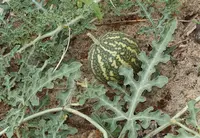
Colocynth, or Citrullus colocynthis, is a vining plant in the cucumber family, known for its round, hard fruits that look like small ornamental melons. The plant has scrambling or climbing stems, deeply lobed gray-green leaves, and small yellow flowers. It naturally occurs in arid and semi-arid regions of North Africa, the Middle East, and parts of South Asia, where it grows in sandy, dry, and open habitats. This species is drought-tolerant and heat-loving, but sensitive to cold and excess moisture, which can make cultivation challenging in humid or cool climates. Gardeners who learn how to care for colocynth usually focus on strong light, warmth, and sharply draining soil.

Main Plant Requirements

Care Difficulty

Moderate Care

Light Preference

Full Sun

Water Requirements

Low Water

Temperature Preference

Tropical / Frost Sensitive

Hardiness Zone

10–12

Soil Texture

Sandy, Loamy, Rocky

Soil pH

Slightly acidic (6.5–7.0), Slightly alkaline (7.0–7.5)

Soil Drainage

Well-drained

Fertilization

Minimal (feed rarely)

Get Personalized Care Plan

Scan your plant to receive care tips personalized for your specific plant

Available on iOS and Android

How to Care for the colocynth

This desert annual thrives in strong sun but still has limits that matter for long-term health.

  • Provide 8–10 hours of direct sun daily in open ground; full, unobstructed exposure suits colocynth in arid and semi-arid climates.
  • Plant where it receives early morning to mid-afternoon sun; light afternoon shade helps in very hot regions to reduce leaf scorch above 105°F (40°C).
  • In cooler seasons, avoid heavy shade from buildings or shrubs, as prolonged low light leads to weak vines, fewer fruits, and increased disease risk.

This species is highly drought-tolerant and needs careful, sparing watering once established.

  • Use very well-drained, sandy or gravelly soil so water never pools around Citrullus colocynthis roots after rain or irrigation.
  • In the growing season, water only when the top 5–7 cm of soil are completely dry; leaves that wilt in the evening and stay limp by morning indicate underwatering.
  • Reduce or stop supplemental watering as fruits mature and in cooler weather; pale, swollen stems or sour-smelling soil suggest overwatering and root stress.

This plant is adapted to hot, arid climates and needs sustained warmth for strong growth.

  • Aim for 80–95°F (27–35°C) during active growth, which supports rapid vine and fruit development in open, sunny sites.
  • Avoid temperatures below 55°F (13°C); growth slows sharply, and brief drops near 40°F (4°C) can damage foliage.
  • Citrullus colocynthis is extremely heat-tolerant up to about 110°F (43°C) if soil is dry to moderately dry, but it is frost-sensitive and should not be exposed to freezing.

This desert species tolerates very dry air and usually does not need special humidity management.

This plant prefers very sandy, fast-draining soil that mimics arid, rocky habitats.

  • Use a coarse mix such as 60–70% sharp sand or grit blended with 30–40% loam-based potting soil.
  • Aim for slightly alkaline to neutral pH around 7.0–8.0, avoiding acidic mixes high in peat.
  • Ensure water drains through within seconds; add extra grit or perlite if water lingers on the surface.
  • Avoid compacted, clay-heavy, or constantly moist substrates, which promote root rot in Citrullus colocynthis.

This species can be grown in containers if its deep roots and sprawling vines are allowed enough space and support.

  • Choose a tall, heavy container to balance the extensive vine growth and prevent tipping in wind.
  • Provide a wide soil surface so vines can spread from the base without crowding emerging stems.
  • Use a very fast-draining mineral-rich mix and elevate the pot on feet so drainage holes never sit in runoff.

This desert annual needs only light feeding under poor soils; excessive fertilizer can reduce fruit quality in colocynth.

  • Use a low to moderate strength balanced NPK granular or liquid feed, diluted to 25–50% of label rate.
  • Apply every 3–4 weeks during the main growing season, once seedlings have 2–3 true leaves.
  • On fertile garden soil, rely mainly on compost or well‑rotted manure worked in before sowing.
  • Stop feeding in late season as growth slows, and avoid fertilizing during winter dormancy in frost‑free climates.

Pruning Citrullus colocynthis is minimal and is mainly used to manage spread and remove unhealthy growth.

  • Carry out light pruning in late spring or early summer once vines are established.
  • Remove dead, diseased, or storm‑damaged stems first, using clean, sharp bypass pruners.
  • Thin congested, crossing vines to improve airflow and sun exposure along the row.
  • Shortening overly long runners can slightly compact the plant’s spread but may also reduce fruit set if overdone.

Citrullus colocynthis is usually grown as an outdoor annual and is more often transplanted than long‑term potted.

  • Start seeds in small cells or biodegradable pots and transplant when they have 2–3 true leaves and roots just fill the plug.
  • Choose late spring, after frost risk, when soil is warm for transplanting into the ground or larger containers.
  • Avoid allowing roots to circle tightly in containers; pot on only once if needed to limit stress.
  • Transplant on a cloudy day, disturb roots as little as possible, water deeply, and mulch lightly to reduce shock.

This species is typically propagated from seed, which is straightforward under warm, bright conditions.

  • Sow fresh or stored seed in late spring when daytime temperatures are consistently above 70°F.
  • Use a free‑draining sandy mix, plant seeds 1–2 cm deep, and keep evenly moist but never waterlogged.
  • Maintain 75–85°F at the root zone to encourage fast, uniform germination.
  • Provide high light after emergence and thin weaker seedlings, keeping the strongest plants for planting out.

In most climates Citrullus colocynthis is grown as a warm‑season annual and needs little winter care once frosts end it.

  • Plants are frost sensitive and typically die back completely with the first hard frost.
  • In cooler regions, collect ripe fruits and seeds before winter to maintain the line for next season.
  • Container plants in marginal zones can be discarded after harvest; long‑term overwintering is rarely practical.

Care Tips

Horizontal vine training

Train young vines to sprawl in a broad, horizontal pattern by gently repositioning them during rapid growth, which improves light penetration and air movement around fruits and foliage and reduces fungal problems.

Fruit load management

Limit each vine to a moderate number of fruits by removing very small or late-season set ones, so the remaining fruits size up more uniformly and ripen more reliably before cool weather.

Targeted mulch zones

Apply a light, coarse organic mulch only along the root zone while keeping a bare, well-drained patch under each developing fruit to reduce rot risk and keep rinds clean.

Dry-surface irrigation

Use drip lines or a soaker hose buried slightly or covered by mulch so that water reaches the root zone while foliage and fruits stay dry, lowering the chance of foliar diseases when growing colocynth.

Staggered sowing rows

Sow in offset, zigzag rows rather than strict straight lines to give each plant better airflow and working space for inspections, pest scouting, and fruit harvest.

Common Pests and Diseases

Powdery mildew

This disease commonly affects colocynth foliage in dry, warm conditions, forming white, powdery patches on leaves and stems. Symptoms include yellowing, leaf distortion, and reduced vigor when infections are heavy.

Solution

Remove heavily infected leaves to reduce spore load and avoid overhead watering to keep foliage dry. Improve air circulation around plants and apply a sulfur or potassium bicarbonate fungicide labeled for cucurbits at the first sign of infection, repeating as directed during favorable weather conditions.

Downy mildew

This disease appears during humid, mild to warm weather and produces yellow angular spots on upper leaf surfaces with gray to purplish downy growth underneath. Symptoms include rapid leaf blighting, which can severely reduce plant growth and fruit development.

Solution

Remove and destroy affected leaves, avoid overhead irrigation, and water early in the day so foliage dries quickly. Use resistant seed where available, rotate cucurbit crops for at least 2–3 years, and apply a copper-based or phosphonate fungicide labeled for cucurbits as a preventive treatment when conditions favor disease.

Cucumber beetles

These insects feed on leaves, flowers, and young fruits, leaving small holes and ragged edges, and they also transmit bacterial wilt in cucurbits. This pest can stunt young plants and reduce fruit set if populations are high.

Solution

Use floating row covers to protect young plants, removing them at flowering for pollination. Hand-pick beetles in small plantings, use yellow sticky traps to monitor populations, and consider a targeted treatment with a neem-based or pyrethrin product in the evening when beneficial insects are less active.

Melon aphids

This pest colonizes the undersides of leaves and tender shoots, sucking sap and causing curling, yellowing, and distortion. These insects also excrete honeydew, which can lead to sooty mold on leaves and reduce photosynthesis.

Solution

Spray plants with a firm stream of water to dislodge aphids and prune heavily infested shoots in small plantings. Encourage natural enemies such as lady beetles, and when needed use insecticidal soap or horticultural oil, coating the undersides of leaves and repeating every 5–7 days until populations decline.

Fusarium wilt

This disease is favored by warm soils and infects the vascular system, causing one-sided wilting, yellowing, and eventual collapse of vines. Symptoms include brown discoloration in stem tissue just above the soil line when cut open lengthwise.

Solution

Remove and destroy affected plants, including roots, and avoid planting cucurbits in the same area for at least 3–4 years. Use clean, disease-free seed, improve soil drainage, and consider grafting onto resistant rootstocks in regions where Fusarium is persistent, as part of long-term Citrullus colocynthis plant care.

Interesting Facts

Extreme desert survival

This species can complete its entire life cycle on as little as a few small rainfall events, surviving intense drought by storing water and reserves in its thick root and developing quickly after brief moisture.

Bitterness as defense

The fruits are intensely bitter due to cucurbitacin compounds, which discourage most herbivores from eating them and help protect the seeds until they are dispersed.

Ancient cultivated crop

Archaeological evidence from North Africa and the Middle East shows that this plant was already known and used in antiquity, long before the domestication of the modern dessert watermelon.

Botan icon

Did you know?

The seeds of this desert gourd are edible after proper processing and have been used as a traditional oilseed in arid regions, providing a concentrated source of fat and calories where few other crops can be produced.

FAQs about colocynth

Yes. This species is usually started from seed. Sow fresh or properly dried seeds in warm soil, provide good drainage, and avoid overwatering. For reliable results, follow basic Citrullus colocynthis plant care suited to arid-climate cucurbits.

Grow Healthy Plants with Botan Care

Keep your plants happy and healthy with plant identification, disease detection, and easy care guidance.

Botan plant care app — identify plants on mobile

Explore More Plants