Wire Training System
Install a 2–3 wire trellis before planting and loosely tie new canes with soft ties, guiding them horizontally along the wires to improve air flow, fruit exposure, and ease of harvest.

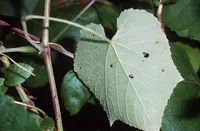
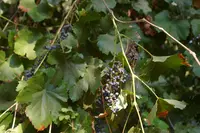
Graybark grape, Vitis cinerea, is a woody, deciduous vine native to the central and southeastern United States. It often grows along forest edges, riverbanks, and fencerows, climbing trees or supports with tendrils. Its leaves are medium to dark green, turning yellow in fall, and it produces clusters of small, dark berries that attract wildlife. The vine is vigorous and long-lived, which makes it robust but sometimes demanding in small gardens. It adapts to a range of soils and tolerates periodic drought once established, but grows best in well-drained soil with consistent moisture. Understanding how to care for graybark grape starts with giving it enough sun and strong support for its climbing habit.

Care Difficulty
Moderate Care

Light Preference
Full Sun

Water Requirements
Moderate Water

Temperature Preference
Cold Hardy

Hardiness Zone
5–9

Soil Texture
Sandy, Loamy, Clay

Soil pH
Acidic (5.5–6.5), Slightly acidic (6.5–7.0)

Soil Drainage
Well-drained

Fertilization
Minimal (feed rarely)
Scan your plant to receive care tips personalized for your specific plant
Available on iOS and Android
This vigorous North American vine performs best with ample sun exposure for strong growth and fruiting.
This deep-rooted wild grape prefers evenly moist, well-drained soil rather than constant saturation.
This hardy grape species tolerates a wide temperature range once established outdoors.
This species tolerates a wide humidity range and usually does not need special humidity management outdoors.
Vitis cinerea prefers moderately fertile, deep, well-drained mineral soil that still holds some moisture.
This species can be grown in large outdoor containers if the pot provides enough volume and stability for vigorous vine growth.
This wild grape usually needs little feeding, but light, targeted nutrition supports steady growth in lean soils when caring for graybark grape.
Thoughtful pruning keeps Vitis cinerea manageable and maintains healthy, well-lit vines.
This species is usually grown in the ground, so focus on careful transplanting rather than frequent repotting.
Vitis cinerea is most often propagated from cuttings or seeds for restoration, screening, or rootstock use.
Mature Vitis cinerea is cold hardy in most temperate climates and usually needs minimal winter attention.

Plant Health Check
Not sure what's wrong with your plant? Check your plant's health inside the app.
This species naturally favors clay-rich, periodically wet soils along streams and bottomlands, tolerating conditions that stress many other grapes. Its roots cope well with low-oxygen substrates, which helps stabilize riverbanks and floodplain edges.
Mature stems develop a characteristically gray, shredding bark that inspired the name graybark grape. This bark texture provides extra shelter for insects and small invertebrates, adding microhabitats to woodland edges.
The small, dark berries are highly palatable to songbirds, wild turkeys, and small mammals, which disperse the seeds across large areas. Browsing animals also use the foliage and tendrils as a seasonal food resource in its native range.

Vitis cinerea plays a documented role as a genetic resource in grape breeding programs, where its natural tolerance to humid, disease-prone environments is studied and occasionally used to introduce improved disease resistance and environmental resilience into cultivated grape lines.
This species can spread widely by long, woody vines and bird-dispersed seeds. In favorable conditions it may become difficult to manage, so use sturdy supports, prune regularly, and remove unwanted seedlings near fences, trees, and structures.
Keep your plants happy and healthy with plant identification, disease detection, and easy care guidance.