Prickly Water Lily Care (Euryale ferox)

Also known as: Gorgon, euryale, gorgon plant, fox nut
Prickly Water Lily

About Prickly Water Lily

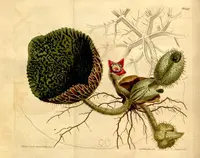
Prickly water lily, Euryale ferox, is an aquatic flowering plant best known for its floating, armored leaves and spiny flower stalks. It forms dense rosettes that spread across still or slow-moving freshwater surfaces.

This species is native to parts of Asia, especially India, China, and Southeast Asia, where it is grown both ornamentally and for its edible seeds. Its robust growth, sharp spines, and need for consistently warm, sunny, shallow water make it more suitable for outdoor ponds than small containers.

Understanding how to care for Prickly Water Lily begins with providing calm, nutrient-rich water, ample sun, and space for its leaves to expand without heavy disturbance from fish or pumps.

Main Plant Requirements

Care Difficulty

Hard Care

Light Preference

Full Sun

Water Requirements

Aquatic

Temperature Preference

Warm Climate

Hardiness Zone

9–12

Soil Texture

Loamy, Silty, Organic-rich

Soil pH

Slightly acidic (6.5–7.0), Neutral (7.0)

Soil Drainage

Waterlogged tolerant

Fertilization

Moderate (every 2–4 weeks)

Get Personalized Care Plan

Scan your plant to receive care tips personalized for your specific plant

Available on iOS and Android

How to Care for the Prickly Water Lily

Euryale ferox is a sun-loving aquatic plant that performs best in warm, bright conditions in outdoor ponds or large water features.

  • Provide 6–8 hours of direct sun daily, with at least 3–4 hours of gentle morning sun; in very hot regions, light afternoon shade helps prevent leaf scorch.
  • Tolerates light partial shade (around 4–5 hours sun), but fewer flowers and smaller pads may develop if light is below this level for long periods.
  • In summer, monitor for pale, elongated leaves as a sign of low light; in peak heat, intense afternoon sun can burn older pads of Prickly Water Lily.

This species is a rooted aquatic plant that needs stable, consistently flooded conditions rather than typical soil watering.

  • Grow plants in 20–60 cm of still or slow-moving water; the crown and roots must remain submerged at all times, with no exposure of the planting medium.
  • Use heavy loam or clay-rich pond soil that stays saturated but does not float or cloud the water; avoid very loose potting mixes that wash away.
  • Watch leaves for cues: wilting, curling, or exposed crown indicates water level too low, while foul odor or black, mushy rhizomes signals stagnant, oxygen-poor conditions for Euryale ferox.

This tropical aquatic species needs warm water and air to grow strongly and is very sensitive to frost.

  • Aim for 77–86°F (25–30°C) water during active growth; plants can survive in 68–90°F (20–32°C) but growth slows noticeably at the lower end.
  • Avoid any frost: damage often occurs below 41°F (5°C), and plants usually die if water or air temperatures drop near 32°F (0°C).
  • In hot summers, it tolerates brief spikes to 95°F (35°C) if water depth is sufficient; in cooler seasons, growth stalls and plants may go dormant or die back.

This aquatic species relies on water rather than air humidity, so ambient humidity is rarely limiting.

Euryale ferox grows best in heavy, organic-rich mud under still, shallow water.

  • Use a dense loam or clay-based garden soil mixed with 30–40% well-rotted compost to create a cohesive, nutrient-rich substrate.
  • Pack soil firmly into the planting container so it does not float or cloud the water when submerged.
  • Avoid sandy or highly porous mixes, which disperse easily and fail to anchor roots in ponds or tubs.
  • Keep the soil fully submerged under 10–30 cm of water, avoiding strong currents that can erode the substrate.

This species can be grown in large containers set inside ponds or water features.

  • Choose a wide, heavy tub or aquatic basket to resist tipping as floating leaves spread outward.
  • Line slotted aquatic baskets with burlap or fine mesh before filling so dense soil does not wash out.
  • Place the container where water depth stays stable to prevent sudden exposure of the crown during evaporation or topping up.]},

Euryale ferox benefits from moderate, well-timed feeding in warm weather to support leaf and flower production.

  • Use a balanced NPK aquatic fertilizer tablet or slow-release pellets pushed into the soil near the rhizomes.
  • Feed every 4–6 weeks during the active growing season, following product label rates for water lilies.
  • Apply at half-strength for young plants and in small containers to avoid fertilizer burn in shallow water.
  • Stop feeding in late fall and withhold fertilizer through dormancy or winter, when Prickly Water Lily growth slows.

Pruning Euryale ferox focuses on removing spent and unhealthy growth to maintain water quality and plant vigor.

  • Trim yellowing, torn, or diseased leaves at the base using clean, long-handled aquatic scissors.
  • Remove faded flower stalks once seed is set or unwanted, preventing decay in the water.
  • Thin overcrowded leaves to increase light penetration and water circulation across the pond surface.
  • Inspect weekly in the growing season so pruning remains light and avoids sudden, heavy removal.

Euryale ferox is usually grown in ponds or large tubs, so management centers on occasional transplanting rather than frequent repotting.

  • Plan transplanting in late spring when water temperatures warm and new growth starts actively.
  • Move plants when growth slows, leaves stay small, or rhizomes and roots crowd the planting basket.
  • Shift into a wider, shallow aquatic container or larger pond pocket with heavy loam, keeping rhizomes just covered.
  • Handle roots and spiny petioles gently, keep them moist, and replant quickly to limit stress and air exposure.

Euryale ferox is most reliably propagated from seeds under warm, stable water conditions.

  • Harvest mature, dark seeds and sow them in warm water, ideally 75–86°F, in shallow trays or tubs.
  • Use a heavy loam layer topped with a thin sand cover, placing seeds just under the surface.
  • Provide full sun and still or very gently circulating water to encourage steady germination and seedling growth.
  • Transplant seedlings once they develop several floating leaves, disturbing roots and substrate as little as possible.

In cool and cold climates, Euryale ferox needs thoughtful winter care because aerial parts die back and storage organs must stay unfrozen.

  • In mild zones, allow foliage to die back naturally while ensuring rhizomes remain below the ice line in deeper water.
  • In colder areas, move containers to a deeper, unfrozen section of the pond or to a cool, frost-free indoor tank.
  • Keep dormant plants in still, clean water and avoid disturbing rhizomes until temperatures rise and growth restarts.

Care Tips

Reinforce Pond Liners

Line the planting zone with an extra layer of pond liner or heavy geotextile fabric to protect against the plant’s sharp leaf undersides puncturing standard liners as it matures.

Use Containment Baskets

Grow plants in rigid, perforated aquatic baskets filled with heavy loam and topped with a 2–3 cm layer of washed gravel to confine spreading roots and make future thinning or relocation safer and easier.

Seasonal Tuber Harvest

At the end of the growing season, gently lift baskets and collect firm, healthy tubers for overwinter storage or replanting, discarding any soft or damaged ones to reduce rot and disease carryover.

Overwintering Indoors

In cold climates, store harvested tubers in damp (not wet) sand or sphagnum at 40–50°F in a dark, frost-free place, then reintroduce them to warm water in spring to restart growth.

Surface Debris Management

Regularly skim off fallen leaves, flowers, and algae mats from around the plant to maintain good water quality and reduce habitat for pests and fungal pathogens when caring for Prickly Water Lily.

Common Pests and Diseases

Leaf-mining larvae

This pest tunnels inside floating leaves, creating winding, pale galleries that reduce photosynthesis and weaken the plant. Symptoms include distorted, yellowing pads that may die back early.

Solution

Remove and discard heavily mined leaves to break the life cycle, and scoop out any visible larvae or pupae from the water surface and leaf undersides. In small ponds, encourage fish that eat insect larvae and avoid broad-spectrum chemicals that could harm aquatic life when planning how to take care of Prickly Water Lily.

Aquatic snails

These insects are not insects but mollusks that rasp away leaf tissue, leaving holes, scalloped edges, and transparent patches on the pads. Severe feeding can stunt growth and reduce flowering.

Solution

Hand-pick snails in the early morning or evening and remove egg masses from the undersides of leaves and hard surfaces. If populations stay high, use physical barriers or floating rings around young plants and adjust fish stocking to include species that safely feed on small snails without disturbing the substrate.

Water lily aphids

These insects cluster on leaf petioles and the upper surface of floating leaves, sucking sap and causing curling, yellowing, and sticky honeydew deposits. Honeydew can attract ants and promote sooty mold on nearby emergent structures.

Solution

Spray colonies off with a firm stream of clean water directed at the affected pads, taking care not to tear them. In larger ponds, rely on natural predators such as lady beetles and avoid overfertilizing, which encourages soft, aphid-prone growth.

Leaf spot fungus

This disease produces small brown to black spots on the leaves, often with yellow halos that may merge into larger dead areas. Symptoms include premature breakdown of older pads, reducing the effective leaf area on the water surface.

Solution

Promptly remove and discard spotted, decaying leaves from the pond to reduce spore spread, and avoid overhead watering from fountains directly onto foliage. Improve water circulation and avoid crowding with other aquatic plants to limit prolonged leaf wetness, which favors infection.

Bacterial soft rot

This disease causes mushy, foul-smelling decay in petioles and young leaf bases, leading to sudden collapse of pads and deformation of new growth. Symptoms include water-soaked, slimy tissue and rapid deterioration in warm, stagnant water.

Solution

Cut away and discard all affected tissue and remove any rotting plant debris from the pond. Maintain good water quality with adequate circulation, avoid mechanical injury to crowns and petioles, and reduce organic buildup in the substrate to lower bacterial load.

Interesting Facts

Ancient floating rosettes

This aquatic plant forms large, spiny, floating leaf rosettes that can reach over 1 m across, resembling a smaller, heavily armored version of a giant water lily and providing shade and habitat in still, shallow waters.

Edible starchy seeds

Its mature seeds, often called fox nuts or makhana, have a hard outer shell but a starchy, puffable interior and have been cultivated for centuries in parts of South and East Asia as a traditional food crop.

Spine-covered protection

Leaves, buds, and even flower stalks are covered in sharp spines, an adaptation that likely helps deter herbivorous fish and animals from feeding on the plant’s soft tissues.

Botan icon

Did you know?

This species is considered a living fossil within the water lily family, with fossil records indicating that closely related forms already existed in the Cretaceous period, more than 65 million years ago.

FAQs about Prickly Water Lily

Lack of flowers usually comes from insufficient warmth, shallow or nutrient-poor water, or too much shade. Ensure long, warm days, at least 20–30 cm water depth, and regular fertilization formulated for aquatic plants to support bud formation.

Grow Healthy Plants with Botan Care

Keep your plants happy and healthy with plant identification, disease detection, and easy care guidance.

Botan plant care app — identify plants on mobile

Explore More Plants