Secure Attachment Points
Use inert plastic mesh, fishing line, or silicone bands to fasten fronds securely to rough rock or ceramic bases so holdfasts can anchor without being crushed or shaded.

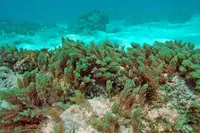
The red sea plume, Asparagopsis taxiformis, is a marine red alga rather than a traditional houseplant. It forms soft, feathery, branching fronds that resemble a delicate underwater fern. Color ranges from pale pink to deep red, depending on light and depth.
This species occurs in warm, shallow coastal waters worldwide, often attached to rocks or other hard surfaces. It grows best in clean, well-lit, gently moving seawater, which makes home cultivation technically demanding. Hobbyists who want to learn how to care for red sea plume usually need marine aquarium experience and stable water quality.
Its main challenges are sensitivity to changes in temperature, salinity, and nutrients, so it is not ideal for complete beginners to marine plants or algae.

Care Difficulty
Hard Care

Light Preference
Full Sun

Water Requirements
Aquatic

Temperature Preference
Tropical / Frost Sensitive

Hardiness Zone
Unknown

Soil Texture
Sandy, Organic-rich

Soil pH
Slightly alkaline (7.0–7.5)

Soil Drainage
Waterlogged tolerant

Fertilization
Minimal (feed rarely)
Scan your plant to receive care tips personalized for your specific plant
Available on iOS and Android
This marine red alga needs bright, clean, well-lit water rather than terrestrial-style sun exposure.
Asparagopsis taxiformis is fully aquatic and depends on stable, well-flushed seawater rather than discrete watering events.
This warm-temperate to tropical seaweed prefers stable, moderate water temperatures.
This marine alga needs fully submerged, high-humidity conditions and does not tolerate dry air.
This marine red alga does not use soil and instead anchors to hard underwater surfaces.
This species can be maintained in containers when grown in marine aquaria or specialized seawater systems.
Asparagopsis taxiformis grown in closed or recirculating marine systems benefits from light, controlled nutrient input rather than heavy fertilization.
Asparagopsis taxiformis responds well to thoughtful thinning, which maintains healthy biomass and stable water conditions in culture systems.
This marine macroalga is usually cultured on substrates, racks, or within baskets, so focus on gentle transplanting rather than classic repotting.
In cultivation, this seaweed is commonly expanded by vegetative division rather than by relying on its complex sexual life cycle.
This tropical to subtropical marine alga is not frost tolerant and requires warm, stable water conditions through winter in most temperate regions.

Plant Health Check
Not sure what's wrong with your plant? Check your plant's health inside the app.
When added in small amounts to cattle feed, this red alga has been shown in peer‑reviewed studies to cut methane emissions from the animals’ digestion by up to around 80–98%, due to its halogenated compounds that disrupt methane‑forming microbes in the rumen.
It naturally produces high levels of halogenated metabolites such as bromoform, which help deter herbivores and fouling organisms and also contribute to its strong, distinctive odor when dried.
This species has a triphasic life cycle with two morphologically different stages, one finely branched and feathery and another more compact and turf‑like, which led early phycologists to describe its stages as separate species before their connection was understood.

This alga is native to warm temperate and tropical oceans but has established invasive populations in parts of the Mediterranean Sea, where it can form dense stands on rocky substrates and compete with native seaweed communities.
Growth is moderate when conditions match its natural environment: strong water movement, stable salinity, good light, and steady nutrients. In stable marine setups, new fronds typically appear within weeks, but dense colonies take several months.
Keep your plants happy and healthy with plant identification, disease detection, and easy care guidance.